When Wix Becomes a Bottleneck for Growing Businesses
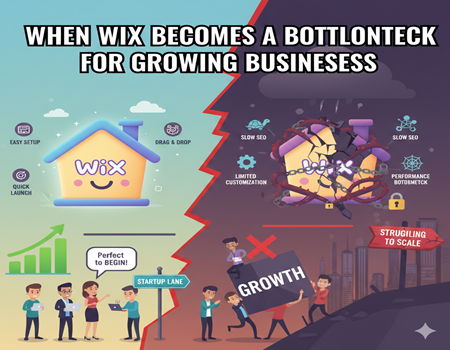
For many small businesses and startups, Wix feels like the perfect place to begin. It offers an easy setup, ready-made designs, and the ability to get a website live without technical stress. In the early days, this simplicity is often exactly what a growing business needs. You can focus on launching your brand, attracting your first customers, and validating your idea without worrying about hosting, code, or complex website management.
However, as a business starts gaining traction, the role of a website changes. It is no longer just an online presence but a critical part of marketing, lead generation, and customer experience. More traffic, more content, and more marketing activities demand better performance, deeper customization, and greater control behind the scenes. This is where some businesses begin to feel restricted by the same platform that once helped them move fast.
These limitations do not always appear overnight. They surface gradually through slower load times, limited SEO flexibility, and challenges in integrating advanced tools. For business owners, this can feel frustrating, especially when growth opportunities are held back by technical boundaries. Understanding when a website platform supports growth—and when it starts slowing it down—is essential for making informed, future-focused decisions.
Why Wix Is a Good Choice for Early-Stage Businesses
Wix is often the go-to platform for early-stage businesses because it removes many of the common barriers associated with building a website. Its drag-and-drop editor allows anyone to create a professional-looking site without needing coding skills or technical knowledge. For startups, freelancers, and small local businesses, this ease of use makes it possible to launch quickly and start building an online presence right away.
Another reason Wix works well at the beginning is its all-in-one nature. Hosting, security, updates, and basic maintenance are handled within the platform, which saves time and reduces operational stress. Business owners can focus on their products, services, and customers instead of managing backend website issues. The availability of modern templates also helps new brands present themselves confidently, even with limited resources.
Cost is another important factor for early-stage businesses. Wix plans are generally affordable at the entry level, making them suitable for companies that are still testing their market or operating on a tight budget. Built-in features like contact forms, basic SEO settings, and simple analytics are often enough to support initial marketing efforts.
What Changes When a Business Starts Growing
When a business begins to grow, its website naturally takes on a much bigger role. What once functioned as a simple digital brochure now becomes a key driver of traffic, leads, and sales. Increased visibility often brings higher visitor numbers, more pages, and a steady flow of new content. At this stage, businesses also start relying more heavily on their website to support marketing campaigns, search engine visibility, and customer engagement.
Growth also introduces complexity. Businesses may need advanced tracking to understand user behavior, stronger SEO strategies to compete for valuable keywords, and better performance to handle rising traffic without slowing down. The website must work smoothly across devices, load quickly, and adapt to evolving customer expectations. Even small performance or usability issues can start impacting conversions and brand perception.
At the same time, internal needs change. Marketing teams look for deeper integrations with analytics tools, email platforms, and CRM systems. Content teams need better control over structure, categories, and publishing workflows. Business owners want flexibility to test new ideas, landing pages, or features without running into technical limitations.
This shift marks a turning point. The website is no longer just about being online—it becomes a core business asset. When the platform cannot easily support these growing demands, it can start to feel more like a constraint than a support system.
SEO Limitations That Appear Over Time
Search engine optimization becomes increasingly important as a business grows, and this is often where limitations in Wix start to surface. In the early stages, basic SEO features such as page titles, meta descriptions, and simple URL editing may be enough to gain some visibility. However, as competition increases and businesses target more valuable keywords, deeper SEO control becomes essential.
One common challenge is limited flexibility in technical SEO. Growing businesses often need more control over site structure, advanced schema markup, and crawl optimization. Wix handles many technical elements automatically, which can be helpful for beginners but restrictive for businesses that want to fine-tune performance. Implementing advanced SEO fixes or custom solutions can feel difficult or, in some cases, not fully possible.
URL structure is another area where limitations become noticeable. Clean, fully customizable URLs play a role in both search visibility and user experience. While Wix offers some level of control, businesses scaling their content strategies may find it harder to create an ideal hierarchy for blogs, categories, and resource pages. This can affect how search engines understand and rank the site over time.
Page speed also directly impacts SEO performance, especially with increasing focus on Core Web Vitals. As websites grow with more content, scripts, and design elements, performance optimization becomes critical. Wix’s closed environment limits access to server-level optimizations, making it harder to address speed issues at scale.
For businesses aiming for long-term organic growth, these SEO constraints can slow momentum. When rankings plateau despite consistent effort, it often signals that the platform may no longer align with ambitious SEO goals.
Performance and Page Speed Challenges at Scale
Website performance plays a crucial role in user experience and business growth, especially as traffic increases. In the early stages, Wix websites often perform well enough to meet basic expectations. However, as a business adds more pages, images, apps, and marketing tools, performance issues can begin to appear. What once felt smooth can slowly turn into longer load times and inconsistent user experiences.
One of the main challenges comes from the way Wix handles templates and built-in features. Many templates include heavy scripts and design elements that cannot be fully optimized or removed. As more functionality is added, these elements can increase page weight and slow down load times. For growing businesses, this becomes a concern because even a small delay can lead to higher bounce rates and lost conversions.
Page speed is also closely tied to search engine rankings. Search engines prioritize fast, stable websites, especially with the growing importance of Core Web Vitals. When businesses have limited control over server settings, caching, and advanced optimization techniques, improving performance becomes difficult. Wix manages hosting and infrastructure internally, which reduces complexity but also restricts customization for speed improvements.
As traffic grows, performance issues become more noticeable across devices, particularly on mobile. Slow-loading pages can frustrate users and negatively affect brand perception. For businesses investing in marketing and SEO, poor performance can weaken the return on those efforts.
At scale, performance is not just a technical detail; it directly impacts user satisfaction, search visibility, and revenue. When optimization options are limited, businesses may find it harder to keep up with rising expectations.
Design and Customization Constraints for Growing Brands
Design flexibility is one of the areas where growing brands often start to feel limited on Wix. In the beginning, pre-built templates make it easy to create a visually appealing website quickly. These templates are designed to look modern and professional, which works well for businesses that need a fast launch. However, as a brand evolves, design needs usually become more specific and detailed.
One common challenge is template lock-in. Once a website is built on a particular Wix template, making major structural changes later can be difficult. Growing businesses often want to refine layouts, improve user journeys, or introduce new design elements based on customer behavior and data. On Wix, these changes may require workarounds or compromises that limit creative freedom.
Customization beyond the editor also has its limits. Advanced UI and UX improvements, custom animations, or highly tailored layouts are harder to implement without full access to the underlying code. As a result, brands may struggle to fully reflect their identity or stand out from competitors using similar templates.
Consistency becomes another concern as websites expand. Maintaining a uniform design across multiple pages, landing sections, and campaigns can be challenging when customization options are restricted. This can impact brand perception, especially for businesses aiming to appear more established and professional.
For growing brands, design is not just about appearance; it supports usability, trust, and conversions. When a platform limits how much a brand can adapt and refine its visual experience, it can slow down both creative and business growth over time.
Content Expansion Becomes Harder to Manage
Content plays a major role in long-term growth, especially for businesses investing in SEO, blogging, and educational resources. In the early stages, Wix’s content tools are usually sufficient for publishing a few pages or blog posts. However, as content volume increases, managing and scaling that content can become more challenging.
One of the key issues growing businesses face is limited control over content structure. Organizing large numbers of blog posts, service pages, or resources into clear categories and hierarchies is essential for both users and search engines. On Wix, these structures can feel restrictive, making it harder to build a well-organized content ecosystem that supports long-term SEO strategies.
Publishing workflows can also become less efficient as teams grow. Businesses with multiple contributors often need better control over roles, permissions, and content scheduling. When these features are limited, managing consistent publishing and updates can become time-consuming and prone to errors.
Another challenge appears when businesses want to repurpose or expand content. Creating topic clusters, internal content relationships, or scalable landing page frameworks requires flexibility in content management. Wix’s closed environment can make these strategies harder to implement effectively.
As content libraries grow, performance and usability also come into play. Large blogs or resource sections need efficient navigation and fast load times to keep users engaged. When content management tools struggle to support expansion, growth-focused content strategies can lose momentum and impact.
Marketing and Third-Party Integration Restrictions
As businesses grow, marketing strategies naturally become more advanced and data-driven. What once worked with basic tools and simple tracking often evolves into a need for deeper insights, automation, and seamless integration across platforms. This is where many businesses begin to feel restricted when using Wix.
Wix offers a range of built-in marketing features, but these tools may not always scale well with complex requirements. Integrating advanced CRM systems, marketing automation platforms, or custom analytics setups can be challenging. Businesses often rely on multiple third-party tools for email marketing, lead nurturing, and customer relationship management, and limited integration flexibility can disrupt these workflows.
Tracking and attribution are another area of concern. Growing businesses need accurate data to understand which campaigns drive traffic, leads, and conversions. When tracking options are limited or difficult to customize, it becomes harder to make informed marketing decisions. This can affect everything from paid advertising performance to content strategy and conversion optimization.
Paid marketing efforts also demand precise control. As ad budgets increase, businesses need reliable event tracking, conversion goals, and audience segmentation. Restrictions in customization can lead to incomplete data, making it difficult to measure return on investment accurately. Even small gaps in tracking can create uncertainty when scaling campaigns.
For businesses focused on growth, marketing systems must work together smoothly. When a website platform limits integration and customization, it can slow down experimentation, reduce efficiency, and limit the impact of marketing efforts. Over time, these restrictions can hold back both reach and revenue potential.
Conversion Optimization and E-Commerce Constraints
As businesses grow, improving conversions becomes just as important as attracting traffic. A website must guide users smoothly from entry to action, whether that action is making a purchase, filling out a form, or signing up for a service. While Wix provides basic e-commerce and conversion features, limitations can emerge as businesses aim for more advanced optimization.
One common challenge is limited customization of checkout and user flows. Growing online stores often want to test different layouts, payment options, or messaging to reduce friction and increase conversions. On Wix, customization options may be restricted, making it harder to tailor the experience based on user behavior or market trends.
Upselling and cross-selling are also key strategies for increasing revenue. Businesses may want to offer personalized product recommendations, bundles, or dynamic offers. When these features are limited or difficult to implement, it can restrict opportunities to maximize customer value. For service-based businesses, creating advanced funnels or multi-step forms can face similar constraints.
As product catalogs expand, managing inventory, pricing rules, and tax configurations becomes more complex. Wix can handle simple stores well, but businesses with large inventories or region-specific requirements may encounter scalability challenges. These issues can slow down operations and affect customer satisfaction.
Conversion optimization relies heavily on testing and flexibility. A/B testing, heatmaps, and behavioral analysis tools are essential for refining user journeys. When integration or customization options are limited, businesses may struggle to continuously improve performance. Over time, these constraints can impact revenue growth and limit the effectiveness of marketing investments.
Platform Dependency and Long-Term Control Risks
As businesses grow more established, control and ownership of their digital assets become increasingly important. One of the concerns that can arise with Wix is platform dependency. Since Wix operates within a closed ecosystem, businesses have limited access to the backend and underlying infrastructure. While this simplifies management in the early stages, it can feel restrictive as technical and strategic needs increase.
Long-term control is closely tied to flexibility. Growing businesses often want the freedom to customize functionality, integrate emerging technologies, or adapt quickly to market changes. When these decisions depend heavily on what the platform allows, innovation can slow down. Businesses may find themselves waiting for platform updates or relying on workarounds rather than implementing solutions that fully align with their goals.
Cost is another factor that becomes more noticeable over time. As feature requirements grow, businesses may need higher-tier plans or paid add-ons to support essential functionality. These ongoing costs can add up, especially when compared to platforms that offer more control over hosting and features.
There is also the question of future-proofing. A website should be able to evolve alongside the business without major disruption. Limited portability and restricted access to core systems can make long-term planning more difficult. For businesses thinking beyond short-term needs, platform dependency can become a strategic risk that influences growth, flexibility, and overall digital independence.
Common Signs Wix Is Slowing Down Your Business Growth
Recognizing when a website platform is holding back growth is not always easy, especially if it worked well in the past. However, there are clear signs that often indicate Wix may no longer fully support a growing business. One of the most common signals is stagnation in search engine performance. Despite consistent effort in content creation and optimization, rankings and organic traffic may stop improving or grow very slowly.
Another sign is the increasing need for workarounds. When simple changes start requiring complex fixes or external tools, it can slow down execution and frustrate teams. Businesses may notice that implementing new landing pages, marketing campaigns, or design updates takes longer than expected due to platform limitations.
Performance issues also tend to become more noticeable. Slower page load times, mobile usability complaints, or inconsistent user experiences can negatively affect engagement and conversions. If customers or team members frequently raise concerns about speed or functionality, it may indicate deeper platform constraints.
Marketing limitations can also surface. Difficulty integrating advanced analytics, automation tools, or CRM systems often impacts campaign effectiveness and decision-making. When data feels incomplete or hard to access, growth strategies become harder to scale confidently.
Finally, if business goals consistently outpace what the website can deliver, it’s a strong signal for reassessment. When the platform creates friction instead of enabling progress, it may be time to explore more flexible options that better support long-term growth.
Why Growing Businesses Often Look for More Flexible Platforms
As businesses move beyond the early growth stage, their website needs often become more complex and strategic. At this point, flexibility becomes just as important as ease of use. Many growing businesses start looking for platforms that allow them to adapt quickly, customize deeply, and scale without running into constant limitations.
One major reason is the need for advanced customization. Growing brands often require tailored layouts, custom features, and improved user journeys based on real data and customer behavior. Flexible platforms make it easier to test ideas, refine experiences, and implement changes without relying on restrictive templates or predefined structures.
SEO and performance control also play a key role. Businesses aiming for competitive search visibility need the ability to optimize technical elements, improve page speed, and implement advanced SEO strategies. Platforms that offer deeper access to site architecture and optimization tools help businesses maintain momentum as competition increases.
Content scalability is another important factor. As blogs, resources, and service pages expand, businesses need efficient content management systems that support structured growth. Better control over categories, internal linking, and publishing workflows allows content strategies to grow sustainably over time.
Marketing integration is equally important. Flexible platforms support smoother connections with analytics tools, automation systems, and CRM software. This enables teams to track performance accurately and make data-driven decisions. For growing businesses, choosing a platform with long-term flexibility is not just a technical choice—it’s a strategic investment in sustainable growth and adaptability.
Migration as a Strategic Growth Decision
Moving away from a familiar website platform is often seen as a risky or unnecessary step, but for many growing businesses, migration becomes a strategic decision rather than a reactive one. As goals expand and digital requirements become more complex, the website needs to support long-term scalability, performance, and control. When a platform can no longer keep up with these needs, planning a transition becomes part of responsible growth.
A well-timed migration allows businesses to address limitations before they start impacting revenue or customer experience. Instead of constantly working around restrictions, teams can focus on building a website that aligns with future goals. This shift is not about abandoning what worked in the past, but about upgrading to support what comes next.
Scalability is often a key driver behind this decision. As traffic, content, and marketing activities grow, businesses look for platforms that offer deeper customization, stronger SEO capabilities, and better integration options. It is common for growing companies to evaluate options and decide to Migrate Website From Wix To WordPress when they need greater flexibility and ownership without sacrificing performance.
The most important part of this process is planning. A structured approach helps preserve existing content, maintain search visibility, and ensure a smooth user experience. When handled thoughtfully, migration becomes a growth-enabling step rather than a disruption, helping businesses build a more resilient digital foundation.
Planning the Transition Without Losing SEO or Users
A website transition can feel intimidating, especially for growing businesses that depend on consistent traffic and user engagement. One of the biggest concerns during a platform change is the risk of losing SEO rankings or confusing existing users. With proper planning, however, these risks can be effectively managed and often turned into opportunities for improvement.
Protecting search visibility should be the top priority. This starts with carefully mapping existing URLs and ensuring that every important page is redirected correctly. When search engines and users are guided seamlessly to the right content, ranking drops and traffic loss can be avoided. Preserving metadata such as page titles, descriptions, and structured content also helps maintain continuity in search results.
User experience is just as important. Familiar navigation, logical page structure, and consistent branding help users adapt quickly to the updated website. Any major design or layout changes should be intentional and focused on improving clarity and usability rather than creating unnecessary disruption.
A transition also provides a chance to improve performance. Optimizing page speed, refining mobile responsiveness, and cleaning up outdated content can significantly enhance overall experience. These improvements often lead to better engagement and stronger long-term SEO results.
Finally, alignment across teams is essential. When marketing, content, and technical teams work together with clear goals, the transition becomes smoother and more predictable. With the right strategy, a platform change can protect existing value while supporting future growth.
Conclusion: Choosing a Platform That Supports Long-Term Growth
Every business reaches a point where its digital needs begin to change. Platforms like Wix are excellent for getting started, helping businesses launch quickly and establish an online presence with minimal effort. However, as goals expand and growth accelerates, the same simplicity that once felt empowering can start to feel limiting.
A growing business needs a website that can adapt to increasing traffic, support advanced SEO strategies, integrate seamlessly with marketing tools, and offer flexibility in design and performance. When a platform struggles to meet these demands, it can slow down progress and create unnecessary challenges. Recognizing these signs early allows businesses to make proactive decisions instead of reacting to setbacks later.
Choosing the right platform is not about following trends or abandoning what worked in the past. It is about aligning your website with where your business is heading. A future-ready platform should support experimentation, scalability, and long-term control while maintaining a strong user experience.
Ultimately, a website should act as a growth enabler, not a constraint. By regularly evaluating whether your current platform supports your evolving goals, you can ensure that your digital foundation remains strong. Making informed, strategic choices today helps create a website that grows alongside your business and continues to deliver value over time.