When Liferay Still Makes Sense (And When It Doesn’t)
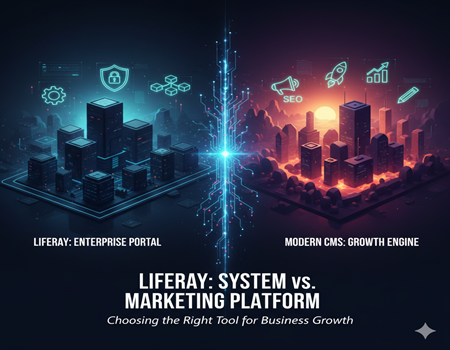
For many years, Liferay has been a trusted platform for organizations that needed secure and complex digital systems. Large companies, universities, and government departments adopted it because it could handle multiple users, permissions, and integrations in one place. At that time, websites were mainly information portals, so a heavy enterprise platform made sense.
But the role of websites has changed. Today, a website is not just a portal — it is a marketing engine. Businesses want to publish content quickly, improve search rankings, run campaigns, and make updates without waiting for developers. This shift is why many organizations now question whether Liferay still fits their needs.
The answer is not simply that Liferay is good or bad. The real question is whether it matches the purpose of your website. For some companies, it remains the perfect solution. For others, it slows growth and increases cost.
This guide will help you understand both sides clearly. By the end, you will be able to decide whether continuing with Liferay is the right choice or if moving to a more flexible platform would better support your goals.
Understanding What Liferay Is Actually Built For
Before deciding whether to keep or replace Liferay, it is important to understand what it was originally designed to do. Many businesses judge the platform as a website CMS, but Liferay was never meant to be a typical content management system.
Enterprise Portal Platform (Not a Typical CMS)
Liferay is an enterprise portal framework. It is built to connect systems, users, and processes in one place. Instead of focusing mainly on publishing pages or blogs, it focuses on managing structured digital environments. That means it works best where different departments need access to shared data and tools.
Designed for Internal Systems & Integrations
The platform is strong at integrating with enterprise software such as HR systems, CRMs, or internal databases. Employees can log in, view personalized dashboards, submit forms, or access private resources. In such cases, the website behaves more like a software application than a marketing site.
Built for Complex Workflows & Permissions
Liferay allows organizations to control who can view, edit, or manage specific content. Different roles — employee, manager, partner, or customer — can see different interfaces. This level of permission control is essential for organizations handling sensitive data or structured processes.
Why Developers Love It but Marketers Struggle
Developers appreciate Liferay because it is flexible and powerful at a system level. However, marketers often find it restrictive. Creating landing pages, optimizing SEO elements, or making quick layout changes usually requires technical involvement.
Understanding this difference helps businesses evaluate Liferay correctly — not as a simple website builder, but as a platform meant for complex organizational ecosystems.
When Liferay Still Makes Sense
Even though many companies are moving toward lighter CMS platforms, Liferay is still the right choice in specific situations. Replacing it without understanding its strengths can create more problems than it solves. Below are scenarios where keeping Liferay is usually the better decision.
Large Organizations With Internal Portals
If your website mainly works as an employee or partner portal, Liferay fits naturally. Large organizations often need dashboards, document sharing, internal communication areas, and personalized access. In these cases, the website behaves more like a workplace system than a public website. Migrating to a marketing-focused CMS may reduce functionality and require rebuilding many features from scratch.
Multiple User Roles & Access Control Systems
Some businesses must control who sees what. For example, vendors may see pricing data, employees may access internal documents, and customers may access support resources. Liferay handles these layered permissions smoothly. Simpler platforms can manage basic logins, but complex hierarchical access structures become difficult to maintain.
Complex Integrations (ERP, CRM, HR Systems)
When the website is connected to enterprise tools such as ERP, HR, or customer management systems, stability matters more than flexibility. Liferay works well as a central interface that brings multiple systems together. Moving away from it could require rebuilding integrations, which increases cost and risk.
Secure Intranet & Extranet Platforms
Security-focused environments often choose Liferay because it supports structured authentication, secure document access, and controlled collaboration. Industries like banking, healthcare, and education frequently rely on this type of controlled environment rather than public marketing visibility.
Highly Customized Business Applications
Some organizations use Liferay not as a website but as a custom application platform. For example, internal approval workflows, request management systems, or service dashboards may run inside it. In these cases, migration is not just moving content — it means recreating software functionality.
Government & Enterprise Compliance Requirements
Enterprises and public institutions often need strict compliance, audit trails, and standardized processes. Liferay is built with enterprise governance in mind, making it easier to maintain policy-driven workflows and records.
In short, Liferay still makes sense when the website acts as a system platform rather than a marketing tool. If your primary goal is operations, access control, and integration stability, staying on Liferay is usually the safer and more cost-effective decision.
When Liferay Becomes a Problem
While Liferay works well for enterprise portals, it starts creating challenges when the website’s main goal is growth, marketing, and frequent updates. Many businesses continue using it simply because they already have it, not because it still fits their needs. Below are common situations where Liferay becomes a limitation instead of a solution.
Marketing-Focused Websites
If your website is meant to generate leads, attract search traffic, or promote services, speed of execution matters. Marketing teams need to create landing pages, update offers, and run campaigns quickly. In Liferay, even small changes often require technical support, which slows down marketing activities and reduces responsiveness to market trends.
Frequent Content Publishing Needs
Modern SEO depends heavily on consistent content publishing. Blogs, resource pages, and guides must be added regularly. When content creation requires complex workflows or developer involvement, publishing frequency drops. Over time, this directly affects organic growth and search visibility.
SEO & Growth-Driven Businesses
Search engine optimization requires constant adjustments — editing metadata, improving headings, testing keywords, and refining internal links. In rigid environments, these tasks become time-consuming. Instead of optimizing daily, teams delay improvements, which limits ranking potential and traffic growth.
Need for Fast Changes Without Developers
Businesses today run time-sensitive campaigns. Pricing updates, banner changes, or seasonal pages must go live immediately. If every change depends on development cycles, opportunities are missed. Marketing teams often feel blocked rather than empowered.
Performance & Page Speed Issues
Enterprise architecture makes Liferay powerful but sometimes heavy. Pages may load slower compared to lightweight platforms, especially when multiple modules run together. Slow loading affects user experience and search rankings, particularly on mobile devices.
High Maintenance Cost
Licensing, hosting infrastructure, and development hours add ongoing cost. Over time, businesses spend more maintaining the platform than improving their website performance. The real expense is not only money but also time — delayed updates and slow execution reduce competitive advantage.
When a website’s primary goal shifts toward growth, visibility, and flexibility, Liferay can become restrictive. At that stage, the platform no longer supports business objectives efficiently, even though it still functions technically.
Hidden Costs of Staying on Liferay
Many organizations evaluate Liferay only by visible expenses like licensing or hosting. However, the bigger impact comes from hidden operational costs that appear over time. These costs do not always show in invoices, but they directly affect business growth and efficiency.
Development Dependency Cost
Every time the marketing team needs a change — new landing page, layout edit, or small design update — it often requires developer involvement. This slows execution and increases internal workload. Instead of focusing on strategy, teams spend time coordinating technical tasks.
Upgrade & Hosting Cost
Enterprise platforms require stronger servers and maintenance planning. Version upgrades may also demand compatibility testing and code adjustments. Businesses often delay updates to avoid disruption, which later creates larger upgrade efforts and higher cost at once.
Opportunity Cost (Slow Marketing Execution)
The biggest hidden expense is missed opportunity. When campaigns launch late or content publishing becomes irregular, competitors gain visibility first. The cost here is not technical — it is lost leads, reduced traffic, and slower growth momentum.
SEO Growth Limitations
Search optimization depends on continuous improvements. If editing metadata, improving structure, or publishing content becomes complicated, SEO efforts naturally decrease. Over time, rankings plateau not because the strategy is wrong, but because execution is slow.
These hidden costs accumulate gradually. The platform may still function correctly, yet the business silently loses efficiency, speed, and potential growth.
Liferay vs Modern CMS Platforms
Choosing between Liferay and a modern CMS is not about which platform is more powerful — it is about which one matches your daily work. Both serve different purposes, and understanding the difference helps avoid unnecessary migration or unnecessary limitation.
Control & Ease of Use
Liferay provides deep technical control but requires structured workflows and technical knowledge. It is designed for system administrators and developers managing complex environments.
Modern CMS platforms focus on usability. Marketing teams can edit pages, update content, and publish campaigns without depending on development cycles.
SEO Flexibility
In Liferay, optimizing titles, headings, schema, and internal links may involve multiple steps or permissions. This makes quick experimentation difficult.
Modern CMS tools allow real-time SEO adjustments. Teams can test keywords, update metadata, and refine pages frequently, which supports continuous growth.
Speed & Performance
Liferay’s architecture supports enterprise applications, but that also makes it heavier. Performance depends heavily on configuration and infrastructure.
Lightweight CMS platforms are optimized for public websites, making page speed improvements easier and more predictable, especially for mobile users.
Cost & Maintenance
Liferay often requires dedicated maintenance planning, server resources, and developer availability. Even routine updates can involve technical effort.
Modern platforms reduce operational overhead. Many tasks become part of normal website management instead of technical projects.
Team Independence
In Liferay environments, marketing and development teams work closely because changes need coordination.
In flexible CMS environments, marketing teams operate independently while developers focus only on advanced features. This improves productivity for both sides.
Scalability
Liferay scales well for internal systems and integrations.
Modern CMS platforms scale better for content, traffic, and SEO expansion.
For organizations whose primary goal is visibility, campaigns, and content growth, many choose to Migrate Website from Liferay to WordPress to simplify management while maintaining performance.
The right choice depends on whether your website behaves like a software system or a marketing platform.
Decision Framework — Should You Keep or Move?
After understanding strengths and limitations, the decision becomes clearer when matched with your primary business objective. The platform itself is not the problem — misalignment with purpose is.
You should keep Liferay if:
- Your website mainly works as an internal portal or dashboard
- Multiple user roles need controlled access to private data
- You rely heavily on integrations with enterprise systems
- Stability and security are more important than frequent updates
- Content publishing is occasional rather than continuous
You should consider moving if:
- Your website is a lead generation or marketing channel
- You publish blogs, landing pages, or campaigns regularly
- SEO and traffic growth are key goals
- Marketing teams need independence from developers
- You want faster updates and easier optimization
This framework simplifies the decision. If your website operates like a system, Liferay fits. If it operates like a growth engine, a flexible CMS will support your goals better.
What Happens After Migration
After moving away from Liferay, results are not immediate. Search engines need time to understand the new structure and transfer trust signals. Small ranking fluctuations in the first few weeks are normal.
However, once stability returns, teams usually notice faster updates, easier content publishing, and smoother optimization workflows. Marketing activities become quicker because fewer technical dependencies exist.
Migration does not automatically increase traffic, but it removes operational barriers. Over time, consistent improvements, better performance, and regular publishing typically lead to stronger visibility and steady growth compared to the previous setup.
Conclusion — Choosing the Right Tool for the Right Job
Liferay is neither outdated nor unnecessary. It simply serves a specific purpose. When a website functions as a secure system with integrations, structured workflows, and controlled access, Liferay remains a strong and reliable choice. Replacing it in such cases can increase complexity instead of reducing it.
However, when a website becomes a growth channel — focused on marketing, content, SEO, and continuous updates — the same strengths can turn into limitations. The need for speed, flexibility, and team independence becomes more important than enterprise-level structure.
The decision should always be based on business goals, not platform popularity. A system-oriented organization benefits from stability, while a marketing-driven organization benefits from agility.
Before making any change, evaluate what your website actually does every day. If it operates like software, keep Liferay. If it operates like a communication and acquisition channel, consider a more flexible approach that supports ongoing improvement and faster execution.