Why Wix SEO Hits a Ceiling
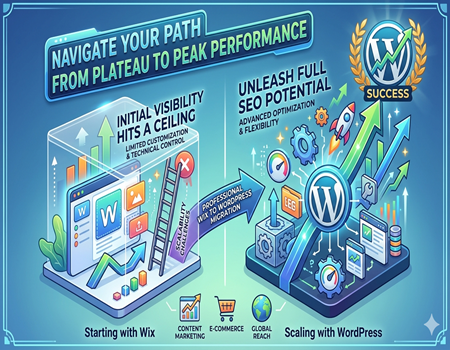
Wix has become one of the most popular website builders for small businesses, freelancers, and startups. Its drag-and-drop interface allows users to create a website quickly without needing technical skills. Many beginners choose Wix because it simplifies website creation and offers built-in tools for design, hosting, and basic SEO setup.
In the early stages, Wix often works well for businesses that simply need an online presence. The platform provides basic SEO features such as meta tag editing, automatic sitemaps, and mobile-friendly templates. These tools help websites get indexed on search engines and start gaining visibility. For many small websites, this level of SEO functionality is enough at the beginning.
However, as a website grows and competition increases, businesses often begin to notice that their SEO growth slows down. Even after publishing more content and optimizing pages, rankings may stop improving. This situation is commonly described as an SEO ceiling, where a website reaches a point beyond which further growth becomes difficult due to platform limitations.
The SEO ceiling does not mean Wix websites cannot rank on Google. Instead, it means the platform may start limiting advanced optimization strategies that growing businesses need. Issues such as restricted technical SEO customization, limited scalability, and performance constraints can make it harder to compete with websites built on more flexible platforms.
Because of these limitations, many businesses eventually start exploring other platforms that provide greater control over SEO. One common solution is migrating to WordPress, which offers extensive customization and a large ecosystem of SEO tools. In fact, companies facing these challenges often consider a professional Wix To WordPress Migration Service to move their website while preserving existing SEO value.
Understanding why this SEO ceiling occurs is important for businesses planning long-term digital growth. In the following sections, we will explore the key reasons why Wix SEO sometimes reaches its limits and what options businesses have when that happens.
Understanding the Concept of an SEO Ceiling
Many website owners experience an SEO plateau, often referred to as an SEO ceiling. This occurs when a website stops improving in search engine rankings despite ongoing efforts. Businesses may continue publishing content, optimizing keywords, and building backlinks, yet traffic growth stagnates. For Wix users, this phenomenon is particularly common as the platform has certain technical and structural limitations.
An SEO ceiling doesn’t mean your website is failing; it indicates that the platform itself may be restricting advanced optimization. Google evaluates websites based on multiple factors, including site structure, speed, internal linking, schema markup, and technical SEO settings. Wix provides basic tools for these, but as websites grow, businesses often need more control to implement sophisticated SEO strategies. Without these capabilities, growth slows, and competitors with more optimized websites may surpass you in search rankings.
The impact of an SEO ceiling is noticeable in several ways. Organic traffic may plateau, top-ranking pages stop improving, and your website may fail to appear for competitive keywords. Over time, this can affect lead generation, conversions, and overall online visibility.
Understanding the concept is essential for planning the next steps. Recognizing the point where Wix’s limitations begin to restrict SEO allows businesses to make informed decisions about whether to stay on the platform or migrate. Many companies facing stagnation choose a Wix To WordPress Migration Service to unlock advanced SEO capabilities, better technical control, and more flexibility for growth.
By identifying the factors that contribute to an SEO ceiling, website owners can anticipate challenges and plan a strategy that ensures long-term visibility and performance in search engines. This understanding sets the foundation for exploring Wix’s strengths and limitations in the next section.
Wix SEO: What It Does Well
Wix is designed to make website creation easy, especially for beginners who don’t have technical experience. One of its biggest strengths is user-friendliness. The drag-and-drop interface allows anyone to build a visually appealing website without writing code. This simplicity extends to SEO, where Wix provides built-in tools that guide users through basic optimization steps.
The platform offers features such as meta tag editing, which lets users set custom page titles and descriptions. Wix automatically generates sitemaps, making it easier for search engines to crawl and index pages. Mobile-friendly templates are another strong point, as responsive design is a key factor in Google rankings. These tools are enough for small websites or businesses just starting their online journey.
Another strength of Wix is the SEO Wiz, a step-by-step guide that helps users optimize their website for search engines. It provides actionable suggestions, from adding keywords to improving page speed. For beginners, this is a helpful way to understand the basics of SEO without feeling overwhelmed by technical jargon.
Wix also includes SSL certificates by default, which improves security and can positively impact SEO. Users do not need to worry about installing certificates or managing security separately. Hosting is included, so websites are live quickly and can be maintained with minimal effort.
However, while Wix handles basic SEO well, it’s important to note that these features are limited in scalability. As a website grows, businesses often need advanced tools for schema markup, custom redirects, URL structure control, and plugin integrations. These are areas where Wix starts to show its limitations.
Despite its beginner-friendly SEO, many businesses eventually find that basic tools are not enough for long-term growth. At this point, they consider a Wix To WordPress Migration Service to gain access to more advanced SEO capabilities and greater control over their website’s technical structure.
In summary, Wix is excellent for small websites and beginners, but its SEO features may only support initial growth, not long-term scalability.
Technical SEO Limitations of Wix
While Wix is beginner-friendly, it has technical SEO constraints that can hold back growing websites. These limitations often cause what’s called the SEO ceiling, where traffic and rankings stop improving despite best efforts. Understanding these constraints is crucial for businesses planning long-term SEO growth and advanced optimization strategies.
Limited Server Control
Wix is a fully hosted platform, meaning users cannot access server settings or hosting configurations. This restricts advanced optimizations like server-level caching, custom redirects, or security configurations. Without this control, websites may face slower load times or difficulty implementing technical strategies that improve search engine rankings, especially for large websites.
Restricted Advanced SEO Settings
While Wix allows basic SEO settings, it limits robots.txt customization, canonical tags, and HTTP headers. These elements are essential for guiding search engine crawlers and preventing duplicate content issues. Lack of control over these settings can make it challenging to optimize complex websites and scale SEO efforts for competitive keywords.
URL Structure Limitations
Wix generates URLs that are not always ideal for SEO. Some templates add unnecessary subdirectories or extra characters. Clean, keyword-rich URLs are crucial for search engines and user experience. The inability to fully customize URLs can hinder SEO performance, especially for websites with multiple pages or blog categories.
JavaScript Rendering Challenges
Many Wix elements rely on JavaScript for dynamic content. While Google can crawl JavaScript, it can slow page load times and complicate indexing. Heavy JavaScript can impact Core Web Vitals, affecting rankings. Websites with significant interactive content may find these limitations restrictive.
Limited Schema Markup
Structured data improves search visibility with rich snippets. Wix provides basic schema options but does not allow advanced customization for articles, products, or events. Businesses requiring detailed schema to enhance CTR may find Wix limiting.
For businesses looking to overcome these technical limitations, migrating to a platform like WordPress is often a solution. Using a professional Wix To WordPress Migration Service ensures that all content, SEO value, and rankings are preserved while unlocking advanced SEO capabilities.
In summary, Wix’s technical SEO limitations—restricted server control, advanced settings, URL structure issues, JavaScript dependence, and limited schema flexibility—can prevent websites from reaching their full SEO potential. Recognizing these constraints early helps businesses decide when it’s time to upgrade their platform to support long-term growth.
Site Speed and Performance Constraints
Website speed is a critical factor for SEO, user experience, and conversions. Wix websites often face performance limitations due to platform architecture and template design. While Wix provides fast setup and hosting, sites with heavy content, images, and apps may load slower compared to custom-built websites. Slower pages can reduce rankings, especially in competitive niches.
Template and Code Limitations
Wix templates include pre-built scripts and design elements that are difficult to fully optimize. These extra scripts, while useful for design flexibility, can create code bloat. Excess code increases page size and slows loading times, impacting Core Web Vitals metrics like Largest Contentful Paint (LCP) and Cumulative Layout Shift (CLS). Maintaining a clean, lightweight structure is limited on Wix.
Limited Caching and Optimization Controls
Caching improves website speed by storing page data for quicker loading. Wix offers basic caching, but users cannot configure advanced caching strategies. Similarly, control over image compression, lazy loading, and minification is limited. This reduces the ability to fine-tune performance for larger websites or those with high traffic volumes.
Impact on User Experience and SEO
Slow-loading pages affect both visitors and search engines. Users are likely to leave if a page takes more than a few seconds to load, increasing bounce rates. Search engines, including Google, consider page speed a ranking factor. Websites built on Wix may struggle to meet performance benchmarks as content and complexity grow.
Scaling Performance for Larger Websites
Businesses with blogs, e-commerce stores, or content-heavy sites may quickly outgrow Wix’s performance capabilities. As more pages and media are added, speed issues multiply, making it harder to maintain competitive SEO. Migrating to a platform like WordPress can provide greater control over performance optimization, advanced caching, and lightweight code structures.
For businesses experiencing speed and performance limitations, professional Wix To WordPress Migration Services can help transition the website without losing SEO value. This ensures faster load times, improved user experience, and a solid foundation for scaling SEO efforts.
In summary, Wix is convenient for small websites, but template restrictions, code bloat, limited caching, and lack of optimization control can hinder performance as websites grow. Addressing these issues is essential for long-term SEO success and user satisfaction.
Limited Scalability for Large Content Websites
Wix works well for small websites or startups, but it can struggle as content grows. Websites with large blogs, e-commerce stores, or resource-heavy pages often face scalability limitations. Adding hundreds of pages or managing complex content structures can become cumbersome. This can slow site performance, make navigation harder, and limit SEO potential.
Content Management Challenges
Wix’s content management system is basic compared to platforms like WordPress. Categories, tags, and blog management are limited, making it difficult to organize hundreds of posts efficiently. Internal linking between pages is also less flexible, which can affect SEO by preventing optimal link structures and reducing crawl efficiency.
Difficulty Handling High Traffic
Large websites often attract higher visitor volumes. Wix hosting is sufficient for small to medium traffic, but high traffic spikes can affect performance. Without control over server optimization or caching, pages may load slower during peak times. This can negatively impact user experience and search engine rankings.
Plugin and Integration Limitations
Wix supports some third-party apps, but the ecosystem is limited compared to WordPress. Advanced functionality like automated SEO tools, custom analytics, or enhanced content workflows may not be available. For large-scale websites, lack of such integrations can restrict growth and make complex content marketing strategies harder to implement.
Internal Linking and SEO Complexity
Managing thousands of pages requires careful internal linking and navigation planning. Wix limits advanced URL and linking structures, making it harder to implement site-wide SEO strategies. This can lead to orphan pages, broken links, or reduced crawlability, which directly impacts rankings and overall SEO performance.
Businesses looking to overcome these challenges often migrate to WordPress, which provides full content management control, scalability, and advanced SEO options. Using a professional Wix To WordPress Migration Service ensures that content, links, and SEO value are preserved while allowing the website to scale effectively.
In summary, while Wix is excellent for small websites, large content websites face limitations in content management, traffic handling, plugin support, and SEO complexity. Understanding these constraints helps businesses plan for growth and decide whether migrating to a more flexible platform is the right choice.
Limited SEO Plugin Ecosystem
One of the major limitations of Wix is its restricted SEO plugin ecosystem. While Wix provides basic SEO tools, it lacks the wide variety of plugins available on platforms like WordPress. Advanced SEO plugins help with keyword optimization, structured data, internal linking, and automated SEO tasks, which are essential for growing websites.
Limited Advanced SEO Tools
Wix offers built-in tools for meta tags, sitemaps, and basic schema. However, users cannot add advanced plugins to automate SEO workflows or perform detailed on-page analysis. This limits the ability to optimize large websites efficiently, especially for competitive keywords where precision and automation are crucial.
Comparison with WordPress
WordPress supports plugins like Yoast SEO, Rank Math, and All in One SEO. These plugins provide advanced features such as automated meta descriptions, content analysis, schema customization, and local SEO optimization. Wix users miss out on these capabilities, which can impact rankings and overall search visibility.
Impact on Long-Term SEO
For small websites, Wix’s tools may suffice. But as the site grows, limited plugin support can slow SEO progress. Tasks that could be automated or streamlined on WordPress require manual work on Wix, which consumes time and increases the chance of errors.
For businesses facing these plugin limitations, migrating to WordPress can unlock advanced SEO flexibility. A professional Wix To WordPress Migration Service ensures that websites retain their existing SEO value while gaining access to a rich ecosystem of plugins that support long-term growth.
In summary, Wix’s SEO plugin ecosystem is sufficient for beginners but limited for advanced SEO needs. For scalable, optimized, and automated SEO strategies, businesses often need to consider migration to a more flexible platform.
Blogging and Content Marketing Restrictions
Wix offers basic blogging tools, but growing websites often face limitations in content management and marketing. Categories, tags, and post organization are limited compared to more flexible platforms. This makes it harder to manage large blogs efficiently and affects the overall SEO structure of a website.
Effective content marketing relies on clear content structuring. Wix restricts advanced category hierarchies and custom taxonomies, which limits how posts are grouped and linked internally. Poor internal linking can reduce search engine crawl efficiency and make it harder for users to navigate larger blogs or multiple content topics.
Automation is another area where Wix falls short. Platforms like WordPress offer features such as automated meta descriptions, keyword suggestions, and internal linking. Wix provides guidance through its SEO Wiz tool, but optimization is mostly manual. This increases the time required to maintain content-heavy websites and raises the risk of errors in SEO practices.
Wix also limits flexibility in publishing and scheduling posts. Content-heavy websites may require bulk management, cross-linking, or integration with marketing tools. Wix’s blogging platform does not support these advanced workflows, which can hinder large-scale content strategies and engagement campaigns.
For businesses facing these challenges, migrating to a more robust platform can unlock opportunities. A professional Wix To WordPress Migration Service ensures that all blog content, SEO value, and media are preserved while providing advanced content management, automation tools, and marketing integrations for scalable growth.
In summary, Wix’s blogging and content marketing capabilities are sufficient for small websites, but large blogs face limitations in structure, automation, and marketing workflows. For long-term content and SEO growth, a more flexible platform is often necessary.
When Businesses Start Outgrowing Wix
Many businesses start on Wix because it is simple and beginner-friendly. However, as websites grow, several signs indicate that Wix may no longer meet their needs. Traffic growth may stagnate despite continuous content creation, or more advanced SEO strategies may become difficult to implement.
Growing companies often face technical limitations, including restricted URL customization, limited schema markup, and lack of control over server settings. These constraints make it harder to scale SEO strategies and maintain high performance across a larger site. Businesses with multiple product pages or content-heavy blogs feel these restrictions most.
Another sign is the need for advanced integrations or automation. Marketing tools, analytics, and custom workflows may not be fully supported on Wix. As a result, campaigns take longer to implement, and businesses cannot take full advantage of content marketing or SEO opportunities.
When these limitations appear, it is often time to consider migration to a more flexible platform. Many businesses facing stagnation choose a professional Wix To WordPress Migration Service to move their website while preserving SEO value. This provides full control over technical settings, content management, and SEO scalability.
In summary, businesses outgrow Wix when traffic plateaus, technical constraints interfere with SEO, or advanced integrations are needed. Recognizing these signs early helps companies plan for growth and make the transition smoothly to a platform that supports long-term success.
Why WordPress Offers More SEO Freedom
WordPress is widely recognized for its flexibility and SEO capabilities, making it ideal for growing businesses. Unlike Wix, WordPress is open-source, giving website owners full control over hosting, code, and website structure. This freedom allows businesses to implement advanced SEO strategies that Wix often restricts, especially for large or content-heavy websites.
Extensive SEO Plugin Ecosystem
One of WordPress’s biggest advantages is its plugin ecosystem. Plugins like Yoast SEO, Rank Math, and All in One SEO offer features such as automated meta tags, XML sitemaps, schema markup, content analysis, and keyword recommendations. These tools save time, ensure consistency, and allow advanced optimization across all pages, which is difficult on Wix.
Full Technical SEO Control
WordPress provides complete control over technical SEO elements. Users can customize URL structures, manage redirects, edit robots.txt, and implement canonical tags. These capabilities prevent duplicate content, improve crawl efficiency, and enhance indexing. Additionally, businesses can optimize Core Web Vitals, mobile responsiveness, and page speed, which are essential ranking factors.
Scalable Content Management
WordPress supports advanced categories, tags, and hierarchical page structures, making it easier to manage large blogs or e-commerce sites. Internal linking becomes more effective, helping search engines crawl the site efficiently. Integration with marketing tools, analytics, and automation plugins further enhances content strategy, supporting scalable SEO and marketing efforts.
Migration Benefits
For businesses looking to overcome Wix limitations, migrating to WordPress unlocks advanced SEO freedom and long-term growth potential. A professional Wix To WordPress Migration Service ensures all content, media, and existing SEO value are preserved, while giving businesses the flexibility to implement custom SEO strategies, improve site speed, and scale content.
In summary, WordPress provides unmatched SEO flexibility, technical control, plugin support, and content scalability. For businesses ready to move beyond Wix, it offers a robust platform to achieve long-term SEO success and higher search engine visibility.
Migrating from Wix to WordPress: What to Expect
Migrating a website from Wix to WordPress can seem daunting, but it is often necessary for businesses looking to overcome Wix’s limitations. The process ensures that content, media, and SEO value are preserved while providing access to advanced SEO and performance tools. Planning the migration carefully is key to a smooth transition.
The first step involves content migration. All pages, blog posts, images, and media files must be transferred to WordPress. While some elements can be exported automatically, others may require manual adjustment to match the new platform’s structure. Proper mapping ensures no content is lost and maintains existing rankings.
Next is URL redirection and SEO preservation. To avoid losing search engine traffic, all old Wix URLs need proper 301 redirects to corresponding WordPress URLs. This step preserves backlinks, page authority, and search visibility, which is critical for maintaining SEO performance during the transition.
Design recreation is another important part. WordPress allows far greater flexibility in layout and styling, so businesses often take this opportunity to update the website design. Plugins and custom themes help replicate or enhance the original Wix design while improving site speed and responsiveness.
Finally, using a professional Wix To WordPress Migration Service ensures that all technical aspects, SEO settings, and content are handled efficiently. This minimizes downtime, prevents errors, and provides a foundation for long-term website growth.
In summary, migrating from Wix to WordPress involves careful content transfer, URL redirection, and design updates. With professional guidance, businesses can preserve SEO value while gaining flexibility, scalability, and advanced SEO capabilities.
Final Thoughts: Wix Is Good for Starting, WordPress Is Better for Scaling
Wix is an excellent platform for beginners, small businesses, and startups. Its drag-and-drop interface, built-in hosting, and basic SEO tools make it easy to create a website without technical knowledge. For new websites, Wix offers a fast and convenient way to get online and start building a digital presence.
However, as a business grows, Wix’s limitations become more apparent. Technical SEO restrictions, limited plugin options, slower performance for large sites, and constraints in content management can create an SEO ceiling. These challenges can restrict search engine visibility, limit content scalability, and make advanced marketing strategies difficult to implement.
For businesses looking to scale, WordPress offers greater flexibility, control, and SEO freedom. It allows advanced technical SEO, a wide range of plugins, customizable URL structures, improved content management, and faster performance optimization. Migrating to WordPress gives businesses the ability to grow their website without hitting platform-related barriers.
Professional Wix To WordPress Migration Services ensure that content, SEO value, and website functionality are preserved during the transition. This makes it possible to retain existing search rankings while taking full advantage of WordPress’s scalability and advanced SEO capabilities.
In conclusion, Wix is ideal for starting small websites quickly and efficiently. However, businesses planning long-term growth, high-traffic content, or advanced SEO strategies will find WordPress a superior platform that supports scalability, flexibility, and sustainable search engine performance.