Substack vs Ghost vs WordPress
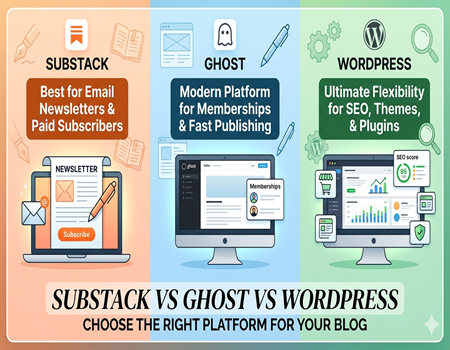
Choosing the right blogging platform is one of the most important decisions for any writer, creator, or business starting a blog. The platform you choose affects everything from how easily you can publish content to how well your website performs in search engines. A good platform also impacts customization, monetization options, and overall control over your content.
In recent years, many creators have started exploring platforms beyond traditional blogging systems. Tools like Substack and Ghost have become popular, especially among newsletter writers and independent publishers. These platforms focus on simplicity and built-in subscription systems, making them attractive for writers who want to build a direct relationship with their audience.
At the same time, WordPress continues to dominate the blogging world. Millions of websites use WordPress because it offers unmatched flexibility, powerful SEO capabilities, and thousands of plugins that extend website functionality. From personal blogs to large media websites, WordPress remains one of the most powerful publishing platforms available today.
However, this growing number of platforms has created confusion for many creators. Should you choose Substack for its simplicity? Is Ghost better for modern publishing? Or does WordPress still offer the best long-term solution for bloggers and content creators?
In this detailed guide, we will compare Substack vs Ghost vs WordPress to help you understand the strengths and limitations of each platform. By the end of this article, you will clearly know which platform is best for your blogging goals, audience growth, and long-term content strategy.
What Is Substack?
Substack is a publishing platform designed mainly for writers who want to create newsletters and build a paid subscriber community. It allows creators to send emails directly to their audience while also publishing the same content as blog-style posts on a public webpage. Because of its simplicity, many journalists, independent writers, and creators use Substack.
One of the biggest reasons for Substack’s popularity is its easy setup process. You do not need technical skills, hosting, or website development knowledge to start publishing. A writer can create an account, write a post, and send it to subscribers within minutes. This simplicity makes it very appealing for beginners who want to focus only on writing.
Substack is also known for its built-in monetization system. Writers can charge readers a monthly or yearly subscription to access premium content. The platform handles payments, subscriber management, and email delivery automatically. However, Substack takes a percentage of the revenue earned from paid subscriptions, which is something creators should consider.
While Substack is convenient, it does have limitations. Customization options are very limited compared to full blogging platforms. You cannot fully control design, advanced SEO settings, or website features the way you can on platforms like WordPress. For creators who want deeper control over their website and long-term growth strategies, this can become a drawback.
Overall, Substack is a simple and powerful platform for writers who want to focus on newsletters and direct audience relationships without dealing with technical website management.
What Is Ghost?
Ghost is a modern publishing platform designed for creators who want to run professional blogs, newsletters, and membership websites. It was created as an open-source alternative to traditional content management systems. Many independent publishers choose Ghost because it focuses on clean design, fast performance, and a distraction-free writing experience.
One of the biggest advantages of Ghost is its built-in membership and newsletter system. Creators can allow readers to sign up for free newsletters or offer paid memberships for exclusive content. Unlike many other platforms, Ghost integrates email newsletters directly into the publishing workflow, making it easier to manage subscribers and content in one place.
Ghost also offers a clean and minimal interface that is easy to use. The editor is designed for writers, allowing them to focus on content instead of complicated settings. At the same time, developers can customize Ghost because it is open source. This means users can modify themes, design layouts, and add features if they have technical knowledge.
Another strong point of Ghost is its performance and speed. Ghost websites are usually fast and lightweight, which is helpful for user experience and search engine visibility. The platform also includes basic SEO features such as meta tags, clean URLs, and structured content formatting that help content perform better in search engines.
However, Ghost still has some limitations when compared to larger platforms like WordPress. The number of themes, plugins, and third-party integrations is smaller. Because of this, Ghost is best suited for creators who want a simple, modern publishing platform without managing a large and complex website ecosystem.
What Is WordPress?
WordPress is the world’s most popular content management system and powers a large portion of websites on the internet. It is widely used by bloggers, businesses, media companies, and online stores. The platform is known for its flexibility, allowing users to create anything from a simple blog to a fully customized website.
There are two main versions of WordPress: WordPress.com and WordPress.org. WordPress.com is a hosted platform where the technical setup is managed for you. WordPress.org, often called self-hosted WordPress, gives users full control over their website, including hosting, themes, plugins, and customization options.
One of the biggest advantages of WordPress is its massive ecosystem. There are thousands of themes that control website design and more than fifty thousand plugins that add extra features. With plugins, users can improve SEO, create membership sites, run online stores, or add advanced functionality without needing deep technical knowledge.
WordPress is also considered one of the best platforms for search engine optimization. SEO plugins like Yoast SEO and Rank Math help users optimize content, meta tags, and technical SEO settings easily. This makes WordPress especially popular among bloggers, digital marketers, and businesses that rely on organic search traffic.
Another key benefit of WordPress is ownership and control. Unlike many publishing platforms, you fully own your website and content when using self-hosted WordPress. This freedom allows creators to scale their blogs, build brands, and monetize their websites in many different ways without platform restrictions.
Substack vs Ghost vs WordPress: Key Differences
Choosing between Substack, Ghost, and WordPress can be confusing because each platform is built for a slightly different purpose. While all three allow you to publish content online, they differ in flexibility, customization, SEO capabilities, and monetization options. Understanding these differences helps creators choose a platform that supports long-term growth.
Ease of Use
Substack is known for its simplicity. Writers can sign up, write a post, and send it to subscribers within minutes. The platform handles hosting, email delivery, and payments automatically. This makes Substack attractive for creators who want to focus only on writing without dealing with technical website setup.
Ghost is also designed to be clean and user-friendly. Its interface is modern and distraction-free, allowing writers to publish blogs and newsletters easily. However, compared to Substack, Ghost may require slightly more setup, especially if someone decides to self-host the platform.
Customization and Flexibility
Customization is where the platforms begin to differ significantly. Substack offers very limited design and layout options, which means creators cannot build a unique website experience. Ghost provides more control with themes and design adjustments, but the ecosystem is still smaller than larger CMS platforms.
WordPress offers the highest level of flexibility. With thousands of themes and plugins available, users can completely customize their website design, features, and functionality. This makes WordPress ideal for bloggers, businesses, and creators who want to build a fully scalable website.
SEO and Content Ownership
SEO capabilities also vary across the platforms. Substack has limited SEO control, which can restrict long-term organic traffic growth. Ghost includes basic SEO features and fast performance that can help improve visibility in search engines.
WordPress is widely considered the best platform for SEO because it allows advanced optimization through powerful plugins and technical settings. It also gives users full ownership of their website, which is important for creators who want complete control over their content and growth strategy.
Pricing Comparison: Which Platform Is More Affordable?
Pricing is an important factor when choosing a blogging platform. Substack, Ghost, and WordPress follow different pricing models, which can affect long-term costs for creators. Some platforms appear free at the beginning but take a share of your revenue later. Others require hosting or monthly subscriptions but allow you to keep full control of your earnings.
Substack is often considered a free platform because there is no upfront cost to start publishing. Writers can create an account, publish newsletters, and grow an audience without paying for hosting or website setup. This makes Substack attractive for beginners who want to focus only on writing instead of managing technical website details.
However, Substack charges a percentage of the revenue earned from paid subscriptions. The platform typically takes around ten percent of subscription income along with payment processing fees. When a creator starts earning more from paid subscribers, this percentage can become significant and reduce overall profit compared to other platforms.
Ghost follows a different pricing structure. The official hosted version of Ghost requires a monthly subscription based on the number of members or subscribers. These plans include hosting, security, maintenance, and updates, which means creators do not need to manage technical tasks while running their publication.
WordPress pricing depends mainly on hosting and optional tools. A self-hosted WordPress site requires a domain name and web hosting, which usually costs a small monthly amount. The biggest advantage is flexibility, because creators can start with minimal expenses and gradually invest in premium themes, plugins, or marketing tools as their blog grows.
SEO Capabilities: Which Platform Ranks Better on Google?
Search engine optimization plays a major role in the long-term success of any blog. A platform that provides strong SEO features helps content appear in Google search results and attract organic traffic. When comparing Substack, Ghost, and WordPress, the level of SEO control and optimization tools available on each platform is quite different.
Substack SEO
Substack focuses mainly on newsletters, so its SEO capabilities are limited. While posts can appear in search results, users do not get deep control over technical SEO settings. Customization options for meta tags, schema, advanced site structure, and optimization tools are minimal. Because of these limitations, Substack is not always ideal for creators who want to grow through organic search traffic.
Another limitation is that Substack websites have restricted customization for URLs, design structure, and advanced SEO improvements. Writers who rely heavily on Google traffic may find it difficult to scale their content strategy on Substack compared to more flexible publishing platforms.
Ghost SEO
Ghost provides stronger SEO features compared to Substack. The platform includes built-in tools such as customizable meta titles, meta descriptions, canonical tags, and clean URL structures. These features help search engines understand your content better and improve the chances of ranking in search results.
Ghost is also known for fast website performance, which is an important ranking factor for Google. Faster websites usually provide a better user experience and lower bounce rates. However, Ghost still has fewer SEO tools and integrations compared to larger platforms like WordPress.
WordPress SEO
WordPress is widely considered the most powerful platform for SEO. It offers complete control over technical settings and content optimization. With SEO plugins such as Yoast SEO or Rank Math, users can easily optimize titles, meta descriptions, schema markup, internal links, and many other ranking factors.
Another advantage of WordPress is its flexibility for building a strong content structure. Bloggers can create category pages, pillar content, internal linking strategies, and advanced site architecture. Because of this flexibility and extensive SEO tools, WordPress is often the preferred platform for bloggers and businesses that rely on organic search traffic.
Monetization Options
For many creators, monetization is one of the most important factors when choosing a blogging platform. The ability to generate income from content can influence which platform works best in the long run. Substack, Ghost, and WordPress each provide different ways for creators to earn money from their audience.
Substack focuses mainly on paid newsletters. Creators can offer free content to attract readers and then charge a monthly or yearly subscription for premium posts. The platform manages payments, subscriptions, and email delivery automatically. This makes monetization simple, especially for writers who want to build a paid subscriber community.
Ghost also supports membership-based monetization. Creators can allow readers to sign up for free newsletters or offer paid memberships that unlock exclusive content. Because Ghost integrates newsletters and memberships directly into the platform, it works well for publishers who want to run a subscription-based publication.
However, the monetization options on Substack and Ghost are mostly limited to subscriptions and memberships. Creators who want to expand into other revenue streams may find fewer options available on these platforms. This can become a limitation as a blog or publication grows over time.
WordPress offers the most flexible monetization opportunities. Bloggers can earn money through display advertising, affiliate marketing, sponsored content, online courses, digital products, or membership websites. WordPress also supports e-commerce through plugins like WooCommerce, allowing creators to sell physical or digital products directly from their website.
Because WordPress gives full control over website features and integrations, creators can experiment with multiple revenue streams at the same time. This flexibility makes WordPress a strong choice for bloggers, businesses, and content creators who want to build a long-term online income strategy.
Customization and Design Flexibility
Design and customization play a major role in building a strong online presence. A blogging platform should allow creators to control how their website looks and how users interact with content. When comparing Substack, Ghost, and WordPress, the level of design freedom and customization options varies significantly.
Substack keeps design very simple and minimal. The platform focuses mainly on writing and newsletters, so customization options are limited. Users can make small adjustments such as adding a logo, choosing basic colors, and updating a few layout settings. However, creators cannot fully control the design or build a unique website experience.
Ghost offers more flexibility compared to Substack. It supports themes that allow creators to customize the appearance of their blog. Many Ghost themes are designed for clean and modern publishing websites. While developers can make deeper changes to themes, the overall ecosystem of themes and extensions is still smaller than larger content management systems.
WordPress provides the highest level of customization among all three platforms. It offers thousands of themes that allow users to create almost any type of website design. Bloggers can also use page builders and design plugins to modify layouts, landing pages, and blog structures without needing advanced coding skills.
Another advantage of WordPress is its plugin ecosystem. These plugins allow creators to add features such as custom forms, membership systems, e-commerce functionality, and interactive elements. Because of this flexibility, WordPress is widely used by bloggers, brands, and businesses that want full creative control over their website design and user experience.
Who Should Use Substack, Ghost, or WordPress?
Choosing the right platform depends largely on your goals, audience, and the type of content you want to publish. While Substack, Ghost, and WordPress all support content publishing, each platform is designed for different types of creators. Understanding which platform suits your needs can help you build a more effective blogging or publishing strategy.
Substack is best suited for writers who want to focus mainly on newsletters and building a direct relationship with their readers. Journalists, independent writers, and newsletter creators often prefer Substack because it is simple to use and does not require technical knowledge. If your primary goal is to send email newsletters and build a paid subscriber base, Substack can work well.
Ghost is a good choice for independent publishers who want a modern blogging platform with built-in membership features. It is ideal for creators who want to run a professional publication with newsletters and paid memberships in one place. Ghost provides a clean writing environment and good performance, making it suitable for content-focused websites.
WordPress is the most flexible option and works well for bloggers, businesses, and digital marketers. It is especially useful for creators who want full control over their website design, SEO strategy, and monetization options. Because WordPress supports thousands of plugins and integrations, it can grow with your website as your audience expands.
Overall, the best platform depends on your long-term goals. Writers focused on newsletters may prefer Substack, independent publishers may choose Ghost, while bloggers and businesses looking for scalability and control often find WordPress to be the most powerful solution.
Why Many Creators Are Moving from Substack to WordPress
In recent years, many creators who started on Substack have begun moving their content to WordPress. One of the main reasons is the need for greater control over their website and long-term growth strategy. While Substack is simple and convenient for newsletters, it offers limited customization and fewer options for building a fully developed website.
Another major factor is search engine optimization. Substack provides only basic SEO capabilities, which can limit the ability of blog posts to rank well on search engines. WordPress, on the other hand, offers powerful SEO plugins and advanced optimization features that help creators improve visibility and attract consistent organic traffic.
Customization is also a common reason for migration. Substack websites have a simple layout with limited design flexibility. WordPress allows creators to build a completely customized website using themes, plugins, and page builders. This flexibility helps bloggers and businesses create a stronger brand identity and a better user experience.
Because of these advantages, many writers eventually decide to move their newsletters and content to WordPress. If you already have an audience on Substack and want more control, using a professional Substack To WordPress Migration Service can help transfer your content, subscribers, and data smoothly without losing your existing readership.
Final Verdict: Substack vs Ghost vs WordPress
Choosing between Substack, Ghost, and WordPress ultimately depends on your content goals and the type of platform you need. Each platform offers useful features, but they serve different types of creators. Understanding your long-term strategy can help you select the platform that supports your growth and audience engagement.
Substack is best for writers who want a simple way to publish newsletters and build a paid subscriber community. The platform handles email delivery, payments, and publishing in one place, making it easy for creators who want to focus purely on writing without managing technical website details.
Ghost is a strong option for independent publishers who want a modern blogging platform with built-in membership and newsletter features. It provides a clean writing environment and good performance. Ghost works well for creators who want to run a professional content publication with subscription-based access.
WordPress remains the most powerful and flexible platform among the three. It supports full website customization, advanced SEO capabilities, and multiple monetization options. Bloggers, businesses, and digital marketers often prefer WordPress because it allows them to scale their websites and implement long-term content strategies.
Overall, each platform has its strengths. Substack works well for newsletter-focused creators, Ghost suits modern publishing websites, and WordPress offers the highest level of control and scalability. For creators who want to build a long-term blog, improve SEO performance, and explore multiple revenue opportunities, WordPress is often considered the most reliable platform.