Monetization Options Beyond Substack
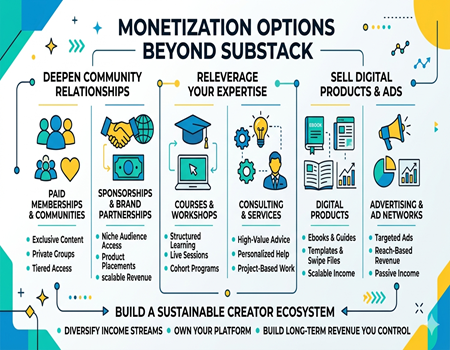
Substack made it easy for writers and creators to start paid newsletters without needing technical skills. You could focus on writing while the platform handled subscriptions, payments, and email delivery. Because of this simplicity, many creators quickly built audiences and began earning directly from readers who valued their content.
However, as creators grow, many start noticing limitations. Relying on a single platform means depending on its rules, fees, and features. When most of your revenue comes from one system, it can restrict how you experiment with new income streams, branding options, or marketing strategies.
Another challenge is that modern creators rarely depend on just one revenue source. Today, successful creators often combine newsletters with digital products, memberships, sponsorships, courses, or consulting services. These options allow them to earn in different ways instead of relying only on paid subscriptions.
Creators are also thinking more about ownership. Building content and an audience on a platform is helpful, but many want more control over their website, SEO traffic, and monetization systems. Owning your platform means you can design your business model the way you want, without being limited by a single tool.
This is why many writers and newsletter creators are exploring monetization options beyond Substack. By expanding their revenue streams and building a more flexible content ecosystem, creators can grow a sustainable business that goes far beyond a simple paid newsletter.
The Biggest Limits of Monetizing Only Through Substack
Substack made newsletter monetization simple by allowing writers to charge readers directly for subscriptions. This model works well for many creators, especially those who want to start quickly without managing technical tools. However, relying only on one monetization method can limit long-term growth and reduce flexibility as your audience expands.
One major limitation is the dependence on a single revenue stream. When subscriptions become your primary income source, your earnings depend heavily on how many people are willing to pay monthly or yearly. If subscriber growth slows down or cancellations increase, your revenue can drop quickly without other income streams to support your business.
Another issue is platform fees and revenue sharing. Substack takes a percentage of paid subscriptions along with payment processing costs. While this may seem small at first, the fees can become significant as your newsletter grows. Over time, creators may start looking for ways to keep more of their revenue.
Customization and branding can also feel limited. Many creators eventually want more control over their design, landing pages, and marketing funnels. Building a strong brand often requires flexibility in how your content, products, and offers are presented. Platforms with limited customization can make this more difficult.
There is also the challenge of discoverability and growth outside the platform. Relying only on a newsletter platform can limit opportunities to attract traffic through search engines, content marketing, and broader website strategies. Many creators want their content to reach people beyond email subscribers.
Because of these limitations, creators increasingly explore monetization options that provide greater control, multiple income streams, and long-term sustainability. Expanding beyond one platform allows writers to build a more stable and flexible creator business.
What “Beyond Substack” Really Means for Monetization
When people talk about monetization beyond Substack, they are usually referring to expanding income sources instead of relying only on paid newsletter subscriptions. Substack works well as a starting point, but many creators eventually realize that a single revenue stream can limit their long-term earning potential.
Moving beyond Substack means building a broader creator ecosystem. Instead of depending only on subscription payments, creators start exploring additional ways to earn. This can include sponsorships, digital products, memberships, courses, consulting services, and other forms of monetization that align with their expertise and audience interests.
Another important idea behind this shift is ownership. On a single platform, many decisions such as pricing structure, customization, and monetization features depend on the platform itself. When creators expand their setup, they gain more control over how their content is distributed, promoted, and monetized.
This approach also helps creators build a more sustainable business. If one revenue source slows down, other streams can continue generating income. Diversifying income is a common strategy used by successful online creators because it reduces risk and increases long-term stability.
In simple terms, monetization beyond Substack is about turning a newsletter into a complete content business. Instead of relying on one platform or one income model, creators build multiple opportunities to earn while maintaining greater control over their audience and growth.
Paid Memberships and Subscriber Communities
Paid memberships are one of the most effective monetization options beyond Substack because they allow creators to build a deeper relationship with their audience. Instead of offering only a paid newsletter, memberships give readers access to exclusive content, private discussions, and additional value that goes beyond regular email updates.
Many creators use memberships to provide premium content that is not available to the public. This might include detailed guides, behind-the-scenes insights, advanced tutorials, or member-only newsletters. When readers feel they are getting unique value, they are often more willing to pay for continued access.
Another advantage of memberships is the ability to build a community around your content. Instead of just sending emails, creators can create private groups, discussion forums, or live sessions where members interact with each other. This sense of community often increases engagement and makes subscribers feel more connected to the creator.
Tiered membership models also work very well. Creators can offer multiple levels such as basic membership, premium membership, or VIP access. Each level can provide different benefits like exclusive articles, live Q&A sessions, downloadable resources, or early access to new content.
Membership communities also create more predictable recurring revenue. When readers subscribe monthly or yearly, creators can estimate their income more easily compared to one-time purchases. This stability allows creators to plan better content strategies and invest more time in growing their audience.
Over time, a strong membership community can become the foundation of a creator business. Instead of focusing only on subscriber numbers, creators focus on building loyal readers who value the experience, insights, and connections they receive through the membership ecosystem.
Sponsorships and Brand Partnerships
Sponsorships and brand partnerships are becoming one of the most popular monetization options beyond Substack. Instead of relying only on reader subscriptions, creators can earn by collaborating with companies that want to reach their audience. This model works especially well for newsletters with a focused niche and an engaged readership.
Brands are often willing to pay for access to targeted audiences. If your newsletter serves a specific group such as marketers, entrepreneurs, designers, or investors, companies in that industry may want to promote their tools or services through your content. This makes sponsorships a natural revenue opportunity for many creators.
Sponsored placements can take different forms. Some creators include a short promotional section inside their newsletter, while others publish dedicated sponsored emails. These promotions usually highlight a product, tool, or service that aligns with the interests of the audience.
The key to successful sponsorships is maintaining trust with your readers. If promotions feel forced or unrelated, subscribers may lose interest in the content. Many creators carefully choose partners whose products genuinely benefit their audience. This approach helps maintain credibility while still generating revenue.
Another advantage of sponsorships is that they can scale with your audience growth. As your newsletter becomes larger and more influential, brands may be willing to pay higher rates for sponsorship placements. Some creators eventually generate a significant portion of their income through regular brand partnerships.
Sponsorships also work well alongside other monetization strategies. Creators can combine sponsored content with memberships, digital products, or courses. This mix allows them to build multiple income streams while continuing to provide valuable and informative content to their readers.
Advertising and Newsletter Ad Networks
Advertising is another practical way creators explore monetization options beyond Substack. Instead of depending only on subscriptions or sponsorship deals, ads allow creators to generate revenue based on audience reach and engagement. This method works well for newsletters with growing subscriber bases and consistent open rates.
One common approach is placing simple ads inside newsletter content. These ads may promote tools, platforms, or services related to the creator’s niche. Because readers already trust the newsletter, well-placed ads can feel natural rather than intrusive when they are relevant to the audience’s interests.
Ad networks are also becoming popular for newsletter creators. These networks connect publishers with advertisers who want to promote products in newsletters. Instead of finding sponsors manually, creators can receive ad opportunities automatically based on their audience size and niche.
Another advantage of advertising is flexibility. Creators can decide how often ads appear and where they are placed in the newsletter. Some prefer a single ad section near the middle of the email, while others place ads at the beginning or end to keep the main content uninterrupted.
However, advertising should be balanced carefully. Too many ads can reduce reader trust and harm the overall experience. Successful creators usually keep advertising minimal and ensure that promotions are relevant to their audience.
When used thoughtfully, advertising can become a steady revenue stream. Combined with subscriptions, sponsorships, and digital products, ads help creators diversify their income and build a more stable business around their newsletter.
Selling Digital Products
Selling digital products is one of the most effective monetization options beyond Substack because it allows creators to earn directly from their expertise. Instead of relying only on recurring subscriptions, creators can package their knowledge into valuable resources that readers can purchase and use whenever they need.
Digital products come in many forms depending on your niche and audience needs. Popular options include ebooks, templates, swipe files, research reports, and detailed guides. These products help readers solve specific problems while giving creators an opportunity to turn their knowledge into scalable income.
One advantage of digital products is that they require work only once but can generate revenue repeatedly. After creating a guide or template, it can be sold to new readers again and again without additional effort. This makes digital products an attractive option for creators who want long-term passive income.
Another benefit is flexibility in pricing and format. Some creators offer simple resources at affordable prices, while others sell comprehensive bundles that provide deeper insights. By testing different formats, creators can discover what their audience values the most and adjust their offers accordingly.
Digital products also integrate naturally with newsletter content. A creator can share helpful tips or insights through emails and then recommend a related product for readers who want a deeper solution. This approach feels helpful rather than promotional because the product directly supports the content being shared.
Over time, digital products can become an important part of a creator’s business model. Instead of depending entirely on subscriptions, creators build a library of useful resources that continue generating revenue while providing real value to their audience.
Courses, Workshops, and Paid Learning Content
Courses and workshops are powerful monetization options beyond Substack because they allow creators to turn their expertise into structured learning experiences. Many readers subscribe to newsletters because they want to learn something valuable. By offering educational content in a deeper format, creators can provide more value while generating higher revenue.
Online courses are a popular option for creators who want to teach a specific skill or topic. Instead of sharing small insights through newsletters, a course allows you to organize your knowledge into lessons, modules, and step-by-step guidance. This structured approach helps learners understand complex topics more easily.
Workshops are another effective format. Unlike recorded courses, workshops usually involve live sessions where creators teach, interact with participants, and answer questions in real time. These sessions can feel more engaging because learners get direct access to the creator’s expertise and personalized guidance.
Creators can also offer cohort-based programs where a group of participants learns together over a few weeks. These programs often include live sessions, assignments, and community discussions. Because of the interactive nature, cohort programs usually command higher prices compared to self-paced courses.
Paid learning content works well when it builds on the trust already developed through newsletters. Readers who consistently find value in your content are often willing to invest in deeper learning opportunities. This makes courses and workshops a natural extension of your existing audience relationship.
Over time, educational products can become a major revenue stream for creators. By combining newsletters with courses, workshops, and other learning experiences, creators can build a knowledge-based business that provides both value to the audience and sustainable income for the long term.
Consulting, Coaching, and Services
Consulting and coaching are strong monetization options beyond Substack, especially for creators who have deep expertise in a specific field. Many readers follow newsletters because they value the creator’s insights and experience. Offering services allows creators to turn that trust into personalized help for individuals or businesses.
Consulting usually involves helping clients solve specific problems using your professional knowledge. For example, a marketing expert might advise companies on growth strategies, while a writer might help brands improve their content strategy. These services can be offered through one-on-one sessions or project-based work.
Coaching is slightly different because it focuses on guiding people through learning or improvement. A creator might offer career coaching, business coaching, or skill development sessions depending on their niche. Coaching works well when readers want direct guidance rather than general information.
One advantage of consulting and coaching is that they often generate higher income compared to other monetization methods. Even with a smaller audience, a few clients can produce meaningful revenue. This makes services a good option for creators who want to monetize expertise without needing thousands of subscribers.
Newsletters can play an important role in attracting potential clients. By consistently sharing useful insights, case studies, or practical advice, creators demonstrate their expertise to readers. Over time, some readers may become interested in working directly with the creator for deeper support.
Many creators combine services with other monetization strategies like digital products, memberships, or courses. This approach creates multiple income streams while allowing creators to serve their audience in different ways based on their needs.
Building a Monetized Website Outside Substack
Why Owning Your Website Matters
Many creators eventually realize that relying only on a single platform can limit their growth. Having your own website gives you greater control over your content, audience, and monetization strategy. Instead of depending on platform rules or restrictions, you can design your website in a way that supports your long-term business goals.
Owning a website also helps creators build a stronger brand identity. You can customize design, layout, landing pages, and user experience according to your audience needs. This flexibility makes it easier to promote products, memberships, services, or courses in a way that feels natural and professional.
Another major advantage is search engine visibility. When content is published on your own website, it can rank in search engines and attract new readers organically. Over time, this creates a steady source of traffic that does not rely entirely on your existing email subscribers.
Expanding Monetization Opportunities
A personal website also opens the door to many additional monetization options. Creators can combine blogs, newsletters, digital products, memberships, and services all in one place. Instead of using separate platforms for each revenue stream, everything can be managed through a central hub.
This structure makes it easier to guide visitors through different offers. For example, someone might discover your content through search, subscribe to your newsletter, and later purchase a course or digital product. A well-structured website creates a smooth journey for readers to become long-term supporters.
If you decide to move your newsletter to a more flexible platform, it is important to plan the transition carefully. A professional Substack To WordPress Migration Service can help transfer your content, subscribers, and email system while preserving your audience and improving your long-term monetization opportunities.
How to Choose the Right Monetization Mix
Choosing the right monetization strategy is important when exploring options beyond Substack. Not every revenue model works for every creator. The best approach usually depends on your audience size, niche, and the type of value you provide through your content.
For creators with smaller but highly engaged audiences, services like consulting or coaching can be very effective. Even a few loyal readers may be interested in personalized guidance. This allows creators to generate meaningful income without needing a very large subscriber base.
If your audience enjoys learning and skill development, educational products such as courses, workshops, or detailed guides may work well. Readers who already trust your insights are often willing to invest in deeper knowledge that helps them achieve specific goals.
Creators who focus on content and storytelling may benefit more from sponsorships, advertising, or memberships. These models allow you to continue producing regular content while earning from brand partnerships or community support rather than direct services.
In many cases, the most successful creators combine multiple revenue streams instead of relying on a single method. For example, a newsletter might include sponsorships while also promoting digital products or offering premium memberships. This combination creates more stability and reduces dependence on one income source.
The key is to start with one or two monetization methods that fit naturally with your audience. As your newsletter and brand grow, you can gradually introduce new opportunities that strengthen your overall creator business.
Common Mistakes Creators Make When Leaving Substack
When creators start exploring monetization options beyond Substack, they often feel excited about the many opportunities available. However, this excitement can sometimes lead to mistakes that slow down growth. Moving beyond a single platform requires careful planning so that monetization strategies remain aligned with audience needs.
One common mistake is trying too many monetization methods at the same time. Some creators launch products, courses, memberships, and services all at once. This can confuse the audience and make it difficult to focus on delivering real value. Starting with one or two strong revenue streams usually works better.
Another mistake is ignoring the interests of the audience. Monetization should always match what readers actually want. If offers feel unrelated to the content or audience needs, engagement may drop. Successful creators pay attention to feedback and build products or services that solve real problems for their readers.
Some creators also overlook the importance of building owned assets. Relying entirely on platforms without developing a website, brand presence, or independent systems can limit long-term growth. Owning your platform gives you more control over how you publish content and generate revenue.
Finally, many creators underestimate the role of consistent content. Monetization strategies work best when supported by valuable and reliable content that keeps readers engaged and coming back regularly.
Final Thoughts: Build Revenue You Control
Exploring monetization options beyond Substack can open many new opportunities for creators who want to build a sustainable online business. While paid newsletters are a great starting point, relying on a single income stream can limit growth. Expanding your monetization strategy allows you to create a more flexible and stable creator ecosystem.
Many successful creators combine several revenue sources such as memberships, sponsorships, digital products, courses, and services. This approach reduces risk because income does not depend on just one platform or method. When different revenue streams support each other, creators can continue growing even if one source slows down.
Another important factor is ownership. Building your own platform, website, and audience systems gives you greater control over your content and monetization. Instead of being limited by platform rules, you can experiment with new ideas and adapt your business as your audience grows.
In the long run, the goal is not just to run a newsletter but to build a creator business that supports both your audience and your income. By thinking beyond Substack and creating multiple ways to deliver value, you can build revenue streams that you truly control.