Substack SEO vs WordPress SEO
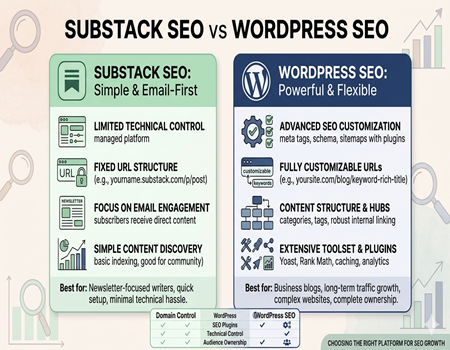
Substack and WordPress are two popular platforms used by writers, bloggers, and content creators to publish content online. Many creators start with Substack because it is simple and focused on newsletters. WordPress, on the other hand, is a full website platform that allows users to build blogs, business sites, and content hubs.
Search engine optimization, commonly known as SEO, plays an important role in growing an online audience. SEO helps content appear in search engine results when people look for information on Google. When a website ranks well in search results, it can attract consistent organic traffic without relying only on social media or paid promotion.
Substack provides a simple publishing system, but its SEO capabilities are somewhat limited. Creators mainly depend on email subscribers and direct readers rather than search engine traffic. For many writers this works well in the early stages, especially when their main goal is building a newsletter community.
WordPress offers much stronger SEO flexibility and customization. Creators can optimize their content, improve website structure, and use various tools to increase search visibility. Because of this, many creators eventually compare Substack SEO vs WordPress SEO to understand which platform is better for long-term traffic growth and audience expansion.
What Is SEO and Why It Matters for Content Creators
Search engine optimization, commonly known as SEO, is the process of improving a website or content so it can appear higher in search engine results. When people search for information on Google, SEO helps search engines understand the content and decide which pages should appear in the results.
For content creators, SEO is an important way to attract new readers. Instead of relying only on social media or existing subscribers, creators can reach people who are actively searching for information online. When content ranks well on search engines, it can bring consistent traffic for months or even years.
Organic traffic from search engines is often more sustainable than other sources. A well-optimized article can continue attracting visitors long after it is published. This means creators can build a long-term audience without constantly spending money on advertisements or promotions.
SEO also helps creators establish authority in their niche. When helpful and well-structured content appears in search results, readers begin to trust the creator as a reliable source of information. Over time, this trust can lead to more subscribers, loyal readers, and stronger audience engagement.
Another benefit of SEO is that it allows creators to expand beyond their existing audience. Even if someone has never heard of a newsletter or blog before, they can still discover it through search engines. This makes SEO a powerful growth strategy for bloggers, writers, and online publishers.
Understanding how SEO works is important when choosing a publishing platform. Some platforms offer limited SEO control, while others provide advanced tools to improve search visibility and content performance.
Overview of Substack as a Publishing Platform
Simplicity for Newsletter Creators
Substack has become a popular platform for writers, journalists, and independent creators who want to start a newsletter quickly. The platform focuses on simplicity, allowing users to publish content without worrying about technical setup. Creators can start writing and sending newsletters to subscribers within minutes.
This simplicity is one of Substack’s biggest strengths. Writers do not need coding knowledge or website management skills. Everything from publishing posts to managing email subscribers is handled directly inside the platform, making it attractive for creators who want to focus mainly on writing.
Built-in Audience and Email System
Another key feature of Substack is its built-in email subscription system. Every post published on Substack can be sent directly to subscribers’ inboxes. This helps creators build a loyal audience that regularly receives updates and newsletters without needing additional email marketing tools.
Substack also makes it easy to manage free and paid subscribers. Creators can track their subscriber growth, send emails, and publish premium content for paying members. This integrated system allows writers to monetize their audience without setting up complex technical systems.
SEO Capabilities of Substack
Substack does provide some basic SEO features that allow posts to appear in search engine results. Each article has a unique URL and can be indexed by search engines like Google. This means that readers can discover Substack content through search queries.
However, the platform offers limited control over advanced SEO settings. Creators cannot fully customize technical elements such as structured data, advanced site architecture, or deeper optimization options. Because of these limitations, Substack works well for email-first publishing but may not offer the same SEO flexibility as a full content management system.
Overview of WordPress as a Content Platform
Complete Website Ownership
WordPress is one of the most widely used content management systems in the world. It allows creators to build fully customized websites where they control the design, structure, and functionality. Unlike closed publishing platforms, WordPress gives creators full ownership of their website and content.
This level of ownership is important for creators who want long-term control over their brand. They can manage hosting, domain names, and website settings without depending on a single platform’s limitations. This flexibility allows creators to shape their website according to their business or content goals.
Publishing and Blogging Capabilities
WordPress started as a blogging platform but has evolved into a powerful system for publishing all types of content. Creators can publish blog posts, guides, landing pages, newsletters, and resource sections. This makes it easier to organize content in a structured way that both readers and search engines can understand.
Another advantage is the ability to categorize and link content properly. WordPress allows creators to build content clusters, internal links, and structured navigation menus. These features help readers explore related articles while also improving how search engines crawl and understand the website.
Advanced SEO Potential
One of the strongest advantages of WordPress is its advanced SEO potential. The platform supports various SEO plugins that help creators optimize their pages for search engines. Tools like Yoast SEO or Rank Math make it easier to manage titles, meta descriptions, and keyword optimization.
WordPress also allows creators to control technical SEO elements such as sitemaps, page speed optimization, and structured content formatting. This level of control makes it easier to improve search rankings and attract consistent organic traffic. Because of these capabilities, WordPress is often considered a strong platform for long-term SEO growth.
Key SEO Differences Between Substack and WordPress
Control Over Technical SEO
One of the biggest differences between Substack and WordPress is the level of control over technical SEO. Substack is designed mainly for publishing newsletters, so many technical SEO settings are managed automatically by the platform. While this simplicity helps beginners, it also limits the ability to fully optimize a website.
WordPress provides much deeper control over technical SEO elements. Creators can manage settings such as indexing rules, canonical URLs, structured data, and page performance. This flexibility allows website owners to optimize their content and technical setup according to SEO best practices.
URL Structure and Customization
URL structure plays an important role in search engine optimization. On Substack, creators have limited control over how URLs are structured. The platform automatically generates URLs for posts, which may not always be ideal for keyword optimization or content organization.
WordPress allows creators to fully customize URL structures and post slugs. This means users can include important keywords in their URLs, create organized categories, and build a logical content hierarchy. A clean and keyword-focused URL structure helps search engines understand the topic of a page more clearly.
Plugin and Optimization Tools
Another major difference between the two platforms is the availability of SEO tools. Substack does not support plugins, which means creators must rely on the platform’s built-in features for optimization. While basic SEO is possible, there are fewer options for advanced optimization.
WordPress supports a wide range of SEO plugins that make optimization easier and more effective. These tools provide recommendations for keyword placement, readability improvements, internal linking, and technical SEO fixes. As a result, creators can continuously improve their content performance.
Site Structure and Internal Linking
Website structure is another area where WordPress offers a strong advantage. Substack mainly organizes content in chronological order, similar to a newsletter archive. This structure works well for email readers but is not always ideal for search engines.
WordPress allows creators to build structured content hubs with categories, tags, and internal links. This helps search engines understand how different pages are connected. A strong internal linking system also guides readers to related articles and improves the overall SEO strength of the website.
On-Page SEO Comparison: Substack vs WordPress
On-page SEO focuses on optimizing individual pages so they can rank better in search engines. This includes elements such as titles, meta descriptions, headings, images, and keyword placement. Both Substack and WordPress allow creators to publish optimized content, but the level of control over these elements is quite different.
Substack provides basic on-page SEO features for published posts. Each article includes a title, readable URL, and structured content that search engines can index. This allows Substack posts to appear in search results. However, creators have limited control over detailed optimization settings compared to full website platforms.
Meta descriptions and advanced page optimization options are also restricted on Substack. Since the platform focuses mainly on newsletter publishing, creators cannot easily customize many technical elements of their posts. This makes it harder to fully optimize content for specific keywords or search engine ranking opportunities.
WordPress offers much stronger control over on-page SEO elements. Creators can customize titles, meta descriptions, heading structures, and image optimization for every page or article. SEO plugins also provide helpful suggestions that guide writers in improving keyword usage and overall readability.
Another advantage of WordPress is the ability to optimize images, add alt text, and improve page formatting. These small improvements help search engines understand the content better and also enhance user experience. Better formatting and readability often lead to longer time spent on the page.
Overall, while Substack supports basic on-page SEO, WordPress provides significantly more flexibility and optimization tools. This allows creators to fine-tune their content for search engines and improve their chances of ranking for important keywords over time.
Technical SEO Capabilities
Site Speed and Performance
Technical SEO plays an important role in how well a website performs in search engines. One important factor is website speed and overall performance. Substack manages hosting and performance automatically, which means creators do not need to worry about technical setup or server management.
However, creators also have very little control over performance optimization. They cannot customize caching systems, advanced performance settings, or other technical improvements. WordPress, on the other hand, allows creators to optimize website speed using caching plugins, content delivery networks, and performance optimization tools.
Schema Markup
Schema markup helps search engines understand the type of content on a webpage. It can improve how pages appear in search results by enabling rich snippets such as article previews, ratings, or structured content information. Substack provides limited control over structured data and schema implementation.
WordPress offers far more flexibility in this area. Creators can use SEO plugins or schema tools to add structured data to their content. This helps search engines interpret articles more clearly and may increase the chances of enhanced search result displays.
Sitemap and Indexing Control
Search engines rely on sitemaps to discover and index website content. Substack automatically generates a sitemap, which helps search engines find published posts. While this basic feature is helpful, creators cannot fully control how pages are indexed or excluded from search results.
WordPress provides detailed control over sitemap settings and indexing rules. With SEO plugins, creators can choose which pages should appear in search engines and which should remain hidden. This level of control helps optimize how search engines crawl the website.
Mobile Optimization
Mobile optimization is another important technical SEO factor. Most online traffic now comes from mobile devices, so websites must perform well on smaller screens. Substack designs are automatically responsive, ensuring that newsletters and posts display properly on mobile devices.
WordPress also supports mobile-friendly design through responsive themes. In addition, creators can further optimize mobile performance, improve page loading times, and enhance the mobile user experience through various customization options.
Content Strategy and SEO Growth Potential
Content strategy plays a major role in long-term SEO growth. Substack is mainly designed for publishing newsletters and sending content directly to subscribers’ inboxes. Because of this structure, most posts are created with email readers in mind rather than search engine traffic.
Substack content usually follows a chronological publishing style, similar to a newsletter archive. While these posts can appear in search results, the platform does not provide strong tools for building structured content strategies such as topic clusters, pillar pages, or resource hubs that help improve SEO authority.
WordPress offers much greater flexibility for building an SEO-focused content strategy. Creators can organize their content into categories, create long-form guides, and build interconnected articles around specific topics. This structure helps search engines understand the website’s expertise in a particular subject area.
Another advantage of WordPress is the ability to create evergreen content that attracts organic traffic over time. Blog posts, tutorials, comparison guides, and resource pages can continue generating visitors long after they are published. This type of content strategy supports long-term growth.
WordPress also allows creators to combine multiple types of content within one website. A creator can publish blog articles, newsletters, landing pages, and product pages while maintaining a clear SEO structure. This makes it easier to expand the website and attract different types of audiences through search engines.
Because of these advantages, WordPress is often preferred by creators who want to build a strong content ecosystem that supports both audience growth and search engine visibility.
When Substack SEO Works Well
Substack can work well for creators whose main focus is building a newsletter-based audience. Writers who already have an existing following on social media or other platforms often use Substack to connect directly with readers through email. In these cases, most traffic comes from subscribers rather than search engines.
The platform is especially useful for personal writers, journalists, and independent creators who publish opinion pieces, updates, or commentary. Their readers usually subscribe because they value the creator’s voice and insights. As a result, email distribution becomes more important than search engine visibility.
Substack also works well for creators who prefer a simple publishing system without dealing with website management or technical settings. Since the platform handles hosting, design, and email delivery automatically, writers can focus entirely on creating content and communicating with their audience.
Another situation where Substack performs well is when content is highly community-driven. Readers who subscribe often feel connected to the creator and engage regularly with the newsletter. This type of relationship can lead to strong subscriber loyalty even without relying heavily on search traffic.
While Substack does offer basic SEO visibility, its biggest strength lies in email distribution and direct audience engagement. For creators who prioritize newsletters and community interaction over search engine traffic, Substack can still be an effective publishing platform.
When WordPress SEO Is the Better Choice
WordPress becomes the better choice when creators want to grow their audience through search engines. Unlike newsletter-focused platforms, WordPress is designed to support a full content website. This allows creators to publish different types of content such as blogs, guides, tutorials, and landing pages that can rank in search results.
Businesses and professional bloggers often prefer WordPress because it supports a strong content marketing strategy. Instead of relying only on email subscribers, creators can attract visitors who are searching for specific topics on Google. This approach helps bring consistent organic traffic to the website.
WordPress is also useful for creators who want to build authority in a particular niche. By publishing helpful articles and connecting them through internal links, a website can develop strong topical relevance. Over time, search engines recognize this expertise and may rank the content higher for important keywords.
Another advantage of WordPress is the ability to expand monetization options. Creators can combine SEO content with memberships, courses, affiliate marketing, and digital products. This flexibility makes it easier to turn a content website into a long-term online business.
Because of these benefits, many creators eventually move from newsletter-only platforms to a more flexible system. When SEO growth becomes a priority, migrating to WordPress often provides better opportunities for long-term traffic and content visibility. This is one reason some creators consider moving their newsletters using a Substack To WordPress Migration Service to support their SEO strategy.
Migrating from Substack to WordPress for Better SEO
Many creators start their publishing journey on Substack because it is simple and easy to use. The platform allows writers to build a newsletter audience quickly without worrying about website setup or technical management. However, as the audience grows, many creators begin thinking about long-term traffic and discoverability.
One of the main reasons creators move from Substack to WordPress is to improve their SEO potential. WordPress offers much greater control over how content is optimized for search engines. Creators can manage titles, meta descriptions, internal links, and website structure, which helps improve visibility in search results.
Migrating to WordPress also allows creators to build a full content website instead of only publishing newsletters. They can create blog posts, guides, landing pages, and resource sections that attract organic traffic. Over time, this type of content strategy can bring consistent visitors from search engines.
Another advantage of WordPress is the ability to structure content in a more organized way. Categories, tags, and internal links help search engines understand the relationship between different articles. This structure improves site navigation and strengthens overall SEO performance.
However, migrating from Substack to WordPress requires careful planning. Subscriber data, content posts, and payment systems need to be moved properly to avoid disruptions. For creators who want a smooth transition, using a Substack To WordPress Migration Service can help manage the technical process and ensure that both subscribers and content move safely to the new platform.
Common SEO Mistakes Creators Make on Both Platforms
Many creators focus on publishing content regularly but overlook important SEO practices. One common mistake is ignoring keyword research before writing an article. Without understanding what people are searching for, creators may publish content that does not match user intent, which reduces the chances of ranking in search results.
Another frequent mistake is poor content structure. Articles that lack clear headings, organized sections, and readable formatting can be difficult for both readers and search engines to understand. Well-structured content with proper headings and logical flow helps improve readability and SEO performance.
Some creators also fail to use internal linking effectively. Internal links help connect related articles and guide readers to additional content on the website. This improves user experience and helps search engines understand how different pages on the site are related to each other.
Publishing short or low-value content is another issue that affects rankings. Search engines prioritize helpful and detailed content that answers user questions clearly. Articles that provide limited information or repeat common ideas without depth may struggle to gain visibility.
To achieve better SEO results, creators should focus on writing helpful content, using clear structure, and understanding search intent. Whether using Substack or WordPress, following strong SEO practices can significantly improve long-term content performance.
Conclusion: Choosing the Right Platform for SEO Growth
Choosing between Substack and WordPress depends largely on a creator’s long-term goals. Both platforms allow writers to publish content and build an audience, but they serve different purposes. Substack is designed primarily for newsletter publishing, while WordPress offers a full content management system for building and growing a website.
For creators who focus mainly on email newsletters and community engagement, Substack can be a convenient solution. The platform removes most technical challenges and allows writers to concentrate on producing content and communicating with subscribers directly.
However, creators who want to grow through search engines often find WordPress to be a stronger option. The platform offers advanced SEO tools, better content organization, and greater flexibility for expanding a content strategy. This allows websites to attract consistent organic traffic from search engines over time.
WordPress also supports multiple growth opportunities such as blogs, resource hubs, and different monetization models. These features make it easier to turn a content platform into a long-term online business.
Ultimately, the right choice depends on how creators want to grow their audience. Those focused on email-first publishing may prefer Substack, while creators aiming for long-term SEO growth often benefit from the flexibility and control offered by WordPress.