ExpressionEngine Security Issues and Alternatives
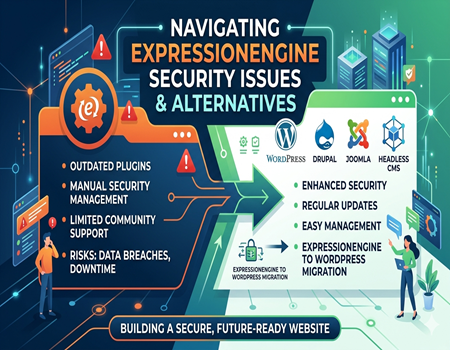
ExpressionEngine has long been a reliable content management system for developers who prefer flexibility and custom-built solutions. Over the years, many businesses have used it to create dynamic websites with tailored functionality. However, as technology evolves, so do the expectations around security, performance, and ease of management in modern web environments.
Today, website security is no longer optional—it is a critical factor that directly impacts user trust, search engine rankings, and overall business credibility. With increasing cyber threats, outdated systems or platforms with limited updates can expose websites to serious risks, including data breaches, malware attacks, and downtime that can harm both reputation and revenue.
Many website owners using ExpressionEngine are now starting to notice these growing challenges. While the platform still offers flexibility, it often requires manual effort to maintain security standards. This has led businesses to explore more modern and secure alternatives that provide built-in protection, regular updates, and a stronger support ecosystem.
As a result, migration has become a common consideration for those seeking long-term stability and better performance. Solutions like ExpressionEngine To WordPress Migration Service are gaining attention as businesses look for smoother transitions to platforms that are easier to manage, more secure, and better aligned with current SEO and user experience standards.
What is ExpressionEngine?
ExpressionEngine is a flexible content management system designed primarily for developers who want full control over how a website is built and managed. Unlike many beginner-friendly platforms, it does not rely heavily on pre-made themes or drag-and-drop builders. Instead, it allows users to create custom structures using templates, making it a preferred choice for highly tailored projects.
One of the key strengths of ExpressionEngine is its ability to handle complex content relationships and dynamic data. Developers appreciate its clean architecture, security-focused core, and the freedom it offers in building unique website experiences. It also provides features like channel entries, custom fields, and user role management, which help in organizing and controlling content effectively.
In the past, ExpressionEngine was widely used by agencies and businesses that needed custom-built websites without the limitations of traditional CMS platforms. It gained popularity for its stability and developer-centric approach, especially when compared to simpler tools that offered limited customization options.
However, in today’s fast-moving digital landscape, the relevance of ExpressionEngine has started to decline. The rise of more user-friendly and widely supported platforms has shifted the market. Businesses now prefer systems that offer easier maintenance, frequent updates, and a large community for support, making them more practical for long-term growth and scalability.
Why Website Security Matters in 2026
Website security has become one of the most important aspects of managing an online presence in 2026. With cyber threats increasing in both frequency and complexity, even small vulnerabilities can lead to serious consequences. Businesses are no longer just protecting a website—they are safeguarding customer data, financial information, and their overall digital reputation.
Search engines like Google also prioritize secure websites when ranking pages. A site that is vulnerable to attacks or lacks proper security measures can experience sudden drops in rankings, reduced visibility, and loss of organic traffic. This directly affects lead generation, conversions, and long-term growth, making security a key factor in SEO performance.
Another major concern is user trust. Visitors expect websites to be safe, fast, and reliable. If a website is hacked or displays warnings about security risks, users are likely to leave immediately and may never return. This not only impacts engagement but also damages the brand’s credibility in a competitive market.
Additionally, recovering from a security breach can be expensive and time-consuming. Businesses may face downtime, data loss, and the cost of fixing vulnerabilities, which can disrupt operations significantly. This is why choosing a secure and regularly updated platform is essential for maintaining stability, protecting users, and ensuring consistent business performance online.
Common ExpressionEngine Security Issues
Outdated Plugins and Add-ons
One of the most common security concerns in ExpressionEngine websites is the reliance on outdated plugins and add-ons. Many third-party extensions are not updated regularly, which creates vulnerabilities over time. When these plugins are left unpatched, they become easy entry points for hackers looking to exploit known security flaws.
In many cases, developers need to manually monitor and update these add-ons, which can be time-consuming and often overlooked. Unlike modern platforms that provide automated updates, ExpressionEngine requires more attention to maintain security. This increases the risk of running outdated components that may not meet current security standards.
Limited Community Support
ExpressionEngine has a smaller community compared to widely used CMS platforms. This limited ecosystem can slow down the process of identifying and fixing security vulnerabilities. When fewer developers are actively contributing, updates and patches may take longer to arrive, leaving websites exposed for extended periods.
A smaller community also means fewer resources, tutorials, and shared solutions for handling security issues. Businesses may struggle to find quick fixes or expert guidance when problems arise. This lack of support can make it difficult to maintain a secure website without dedicated technical expertise.
Manual Security Management
Security in ExpressionEngine often depends heavily on manual configuration and management. Website owners or developers must handle tasks such as updates, monitoring, and patching vulnerabilities on their own. This increases the chances of human error, especially for businesses without a dedicated technical team.
Manual security management also means there is no centralized system for automatic threat detection or prevention. Without built-in tools, websites may remain vulnerable until an issue is discovered. This reactive approach can lead to delays in addressing security risks, making the site more susceptible to attacks.
Vulnerabilities Due to Custom Development
ExpressionEngine is known for its flexibility, but this customization can also introduce security risks. Custom-built features, if not properly coded or tested, can create loopholes that attackers can exploit. Even small coding errors can result in significant vulnerabilities if not handled carefully.
Since every website can be structured differently, identifying and fixing these issues becomes more complex. Businesses relying on custom development must ensure that their code is regularly reviewed and updated. Without proper maintenance, these custom elements can weaken the overall security of the website.
Lack of Modern Security Integrations
Modern CMS platforms often come with built-in security features or easy integration with advanced security tools. ExpressionEngine, however, lacks many of these modern integrations. This makes it harder to implement features like real-time threat monitoring, firewall protection, and automated malware scanning.
As cyber threats continue to evolve, relying on outdated or limited security tools can put websites at risk. Businesses may need to invest additional time and resources to integrate third-party solutions manually. This not only increases complexity but also highlights the gap between ExpressionEngine and more advanced, security-focused platforms available today.
Real Risks Businesses Face with ExpressionEngine
Businesses using ExpressionEngine often face serious risks that go beyond just technical issues. One of the biggest concerns is data breaches, where sensitive customer information such as emails, passwords, or payment details can be exposed. Such incidents not only harm users but can also lead to legal complications and long-term damage to the brand’s reputation.
Another major risk is website downtime caused by security attacks or system failures. When a website goes offline, even for a short period, it can result in lost sales, reduced traffic, and a poor user experience. For businesses that rely heavily on online operations, this downtime can directly impact revenue and customer retention.
Search engine optimization can also suffer due to security issues. If a website is flagged for malware or suspicious activity, search engines may lower its rankings or even remove it from search results. This leads to a significant drop in visibility, making it harder for potential customers to find the business online and reducing overall growth opportunities.
Lastly, loss of customer trust is one of the most damaging outcomes. Users expect websites to be safe and reliable, and once that trust is broken, it is difficult to rebuild. Along with reputational damage, businesses may also face financial losses due to recovery costs, security fixes, and potential legal penalties, making security a critical priority.
Signs It’s Time to Move Away from ExpressionEngine
One of the clearest signs that it’s time to move away from ExpressionEngine is frequent technical issues or security concerns. If your website experiences repeated errors, slow performance, or even minor security breaches, it indicates that the platform may no longer be able to support modern requirements effectively. These issues can disrupt user experience and harm your business credibility over time.
Another major indicator is the rising cost of maintenance. ExpressionEngine often requires skilled developers for updates, fixes, and customizations. If you find yourself spending more time and money just to keep the website running smoothly, it may not be a cost-effective solution anymore. Modern platforms offer easier management with lower long-term expenses.
Difficulty in finding experienced developers is also a growing challenge. As the platform becomes less popular, fewer professionals specialize in it. This can lead to delays in resolving issues or implementing new features, which ultimately slows down your business growth and innovation.
Lastly, limited scalability can hold your website back. As your business grows, you need a platform that can handle increased traffic, new functionalities, and evolving user expectations. If ExpressionEngine starts to feel restrictive or outdated, it’s a strong sign that exploring better alternatives could be the right move for long-term success.
Best Alternatives to ExpressionEngine
WordPress
WordPress is widely considered the most popular and user-friendly alternative to ExpressionEngine. It powers a large percentage of websites worldwide and offers a perfect balance between flexibility and ease of use. Whether you are a beginner or an experienced developer, WordPress provides tools that make website management simple and efficient.
One of its biggest strengths is its strong security ecosystem. With regular updates, a massive community, and powerful security plugins like Wordfence and Sucuri, WordPress makes it easier to protect your website from threats. It also offers thousands of themes and plugins, allowing businesses to build and scale their websites without heavy custom development.
Drupal
Drupal is another powerful alternative known for its strong focus on security and performance. It is often used by large organizations, government websites, and enterprises that require high levels of data protection and customization. Drupal provides a robust framework that allows developers to create complex and secure digital experiences.
However, Drupal is more technical compared to other platforms and usually requires experienced developers to manage it effectively. While it may not be as beginner-friendly as WordPress, it remains a solid choice for businesses that prioritize advanced security and scalability over simplicity.
Joomla
Joomla offers a balanced approach between ease of use and customization. It is more flexible than WordPress in some aspects and easier to use than Drupal, making it suitable for medium-sized businesses and websites with moderate complexity. Joomla provides built-in features for content management, user access control, and multilingual support.
Although it has a smaller community compared to WordPress, Joomla still offers a decent range of extensions and templates. It can be a good alternative for users who want more control than WordPress but do not need the complexity of Drupal.
Headless CMS Options
Headless CMS platforms like Strapi and Contentful are becoming increasingly popular in modern web development. These platforms separate the backend content management from the frontend design, allowing developers to deliver content across multiple channels such as websites, mobile apps, and APIs.
This approach provides greater flexibility and performance, especially for businesses looking to build scalable and future-ready digital experiences. However, headless CMS solutions usually require technical expertise and are best suited for teams that have development resources available. For businesses aiming for innovation and speed, they offer a modern alternative to traditional CMS platforms like ExpressionEngine.
Why WordPress is the Most Recommended Alternative
WordPress has become the most recommended alternative to ExpressionEngine because of its simplicity, flexibility, and strong ecosystem. Unlike complex platforms that require constant developer involvement, WordPress allows users to manage content easily without technical expertise. Its intuitive dashboard and wide range of themes make it accessible for businesses of all sizes.
Another major advantage is its powerful security system. WordPress regularly releases updates to fix vulnerabilities and improve performance. In addition, there are trusted security plugins like Wordfence and Sucuri that offer features such as firewall protection, malware scanning, and login security. This makes it easier for businesses to maintain a safe and stable website environment.
From an SEO perspective, WordPress is highly optimized and supports popular plugins like Yoast SEO and Rank Math. These tools help improve on-page SEO, manage meta tags, and enhance overall visibility on search engines. This gives businesses a competitive edge when it comes to attracting organic traffic and growing their online presence.
For businesses planning to switch platforms, using a professional ExpressionEngine To WordPress Migration Service can make the transition smooth and risk-free. It ensures that all content, data, and SEO value are preserved during migration. With better usability, stronger security, and long-term scalability, WordPress stands out as a reliable and future-ready solution.
ExpressionEngine to WordPress Migration: What You Need to Know
Migrating from ExpressionEngine to WordPress may sound complex, but with the right approach, it can be a smooth and well-structured process. The migration typically begins with a detailed analysis of your existing website, including content, database structure, URLs, and design elements. This step ensures that nothing important is missed during the transition.
The next stage involves transferring all essential data such as pages, blog posts, images, and user information to WordPress. It is important to maintain the same URL structure or implement proper redirects to avoid losing search engine rankings. Preserving SEO value is a critical part of migration, as it helps maintain traffic and visibility after the switch.
Design and functionality are also carefully handled during migration. Your existing website layout can be recreated using WordPress themes and plugins, often with improved performance and responsiveness. Any custom features from ExpressionEngine can be rebuilt or replaced with more efficient solutions available in the WordPress ecosystem.
To ensure a hassle-free transition, many businesses choose a professional ExpressionEngine To WordPress Migration Service. This helps avoid common issues such as data loss, broken links, or downtime. With expert handling, the migration process becomes faster, more secure, and aligned with modern SEO and performance standards, allowing businesses to move forward with confidence.
Benefits of Migrating from ExpressionEngine
Migrating from ExpressionEngine to a modern platform like WordPress offers several practical benefits that directly improve website performance and security. One of the biggest advantages is enhanced security. With regular updates, active community support, and advanced security plugins, businesses can protect their websites more effectively against modern cyber threats.
Another key benefit is improved performance and speed. Modern platforms are optimized for faster loading times, better responsiveness, and smoother user experiences. This not only keeps visitors engaged but also positively impacts search engine rankings, helping businesses attract more organic traffic and increase conversions over time.
Ease of management is also a major factor. Unlike ExpressionEngine, which often requires technical expertise, platforms like WordPress allow users to manage content, update pages, and add features with minimal effort. This reduces dependency on developers and makes day-to-day operations more efficient and cost-effective for businesses.
Finally, migration opens the door to better scalability and future growth. As your business expands, you need a platform that can adapt to new technologies, integrations, and user expectations. Moving away from ExpressionEngine ensures that your website is built on a flexible, modern system that supports long-term success and continuous improvement.
Final Thoughts
ExpressionEngine has served many businesses well in the past, especially for custom-built websites. However, with evolving security challenges and modern digital demands, relying on a platform with limited updates and support can create long-term risks. Businesses today need solutions that are secure, scalable, and easy to manage.
Exploring better alternatives like WordPress can help overcome these limitations while improving performance, security, and overall user experience. Making the switch is not just about fixing current issues but also about preparing your website for future growth and stability.
If you are considering a transition, choosing a reliable ExpressionEngine To WordPress Migration Service can ensure a smooth and secure process. It helps preserve your existing data and SEO value while giving your website a stronger, more future-ready foundation.