ExpressionEngine vs Modern CMS Platforms: Which CMS is Right for You?
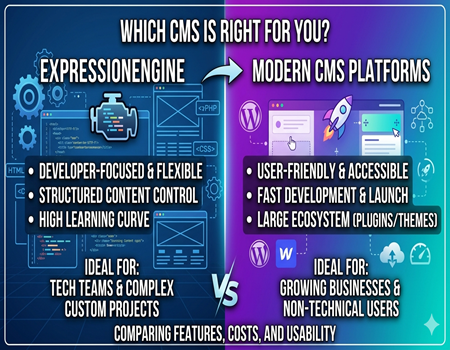
Choosing the right content management system (CMS) is one of the most important decisions for any business or website owner. A CMS not only controls how your website looks but also how easily you can manage content, improve SEO, and scale your online presence over time. With so many options available today, making the right choice can feel confusing.
ExpressionEngine has been a reliable CMS for many years, especially for developers who prefer flexibility and control. It is known for its powerful customization features and structured approach to content management. However, it often requires technical expertise, which can make it less accessible for beginners or non-technical users.
On the other hand, modern CMS platforms like WordPress, Webflow, and headless systems have changed the way websites are built and managed. These platforms focus on user-friendliness, faster deployment, and built-in tools for SEO and marketing. As a result, many businesses are now exploring better and more scalable options.
In this blog, we will compare ExpressionEngine with modern CMS platforms in detail. You will learn about their features, advantages, and limitations so you can decide which option fits your business needs best.
What is ExpressionEngine?
ExpressionEngine is a flexible and developer-focused content management system (CMS) that allows users to build highly customized websites. It was originally released in the early 2000s and quickly gained popularity among developers who wanted more control over how content is structured and displayed. Unlike many drag-and-drop builders, ExpressionEngine focuses on clean coding and structured design.
One of the main strengths of ExpressionEngine is its flexibility. Developers can create custom fields, templates, and content structures without being limited by predefined themes or layouts. This makes it a strong choice for complex or unique projects where standard CMS platforms may feel restrictive. It also provides a secure framework, which is important for businesses handling sensitive data.
However, this flexibility comes with a learning curve. ExpressionEngine is not as beginner-friendly as many modern CMS platforms. Users often need technical knowledge of HTML, CSS, and server management to fully utilize its capabilities. This can increase development time and costs, especially for small businesses or individuals without a technical background.
ExpressionEngine is commonly used by agencies, developers, and businesses that already have legacy websites built on the platform. While it still offers strong customization, its smaller community and limited plugin ecosystem compared to modern platforms have led many users to explore alternative CMS solutions.
What Are Modern CMS Platforms?
Modern CMS platforms are advanced content management systems designed to make website creation, management, and scaling easier for both beginners and professionals. Unlike older systems, these platforms focus on user experience, flexibility, and integration with modern digital tools. They allow users to build and manage websites without needing deep technical knowledge.
Popular modern CMS platforms include WordPress, Webflow, Shopify, and headless CMS options like Strapi. Each platform offers unique features, but they all aim to simplify content management while providing powerful customization options. From drag-and-drop builders to ready-made themes and plugins, these tools help users launch websites quickly and efficiently.
One of the biggest advantages of modern CMS platforms is their ease of use. Most platforms come with intuitive dashboards, visual editors, and built-in tools that reduce dependency on developers. This makes them ideal for businesses that want to manage their content, update pages, and optimize SEO without constant technical support.
Another key feature is scalability and integration. Modern CMS platforms easily connect with marketing tools, analytics software, and third-party applications. This allows businesses to automate tasks, track performance, and improve their digital strategy. As a result, modern CMS platforms have become the preferred choice for startups, growing businesses, and content-driven websites.
ExpressionEngine vs Modern CMS Platforms: Key Differences
Ease of Use
One of the biggest differences between ExpressionEngine and modern CMS platforms is ease of use. ExpressionEngine is built for developers, which means it requires technical knowledge to manage templates, content structures, and updates. Beginners often find it difficult to navigate and operate without proper coding skills or expert support.
Modern CMS platforms, on the other hand, are designed with user-friendliness in mind. Tools like WordPress and Webflow offer intuitive dashboards, visual editors, and drag-and-drop functionality. This allows users to manage content, design pages, and publish updates without needing advanced technical expertise, making them more accessible to a wider audience.
Customization & Flexibility
ExpressionEngine is known for its deep customization capabilities. Developers can create fully custom templates and define how content is structured from scratch. This level of control is ideal for complex or unique projects where standard themes and layouts may not meet specific requirements.
Modern CMS platforms also offer customization but in a different way. Instead of coding everything from scratch, users can rely on themes, plugins, and extensions. While this may seem limiting in some cases, it significantly speeds up development and allows even non-developers to build feature-rich websites with minimal effort.
SEO Capabilities
When it comes to SEO, ExpressionEngine provides basic tools, but much of the optimization depends on manual implementation. Users often need to configure metadata, URLs, and other SEO elements themselves, which can be time-consuming and requires expertise.
Modern CMS platforms excel in SEO with built-in features and powerful plugins. For example, WordPress offers tools that help optimize content, manage meta tags, and improve readability. This makes it easier for businesses to rank higher on search engines without needing deep technical knowledge.
Performance & Speed
Performance in ExpressionEngine largely depends on how well the website is developed and hosted. Since it is a developer-centric platform, optimization needs to be handled manually. If done correctly, it can deliver strong performance, but it requires ongoing technical effort.
Modern CMS platforms provide various tools and integrations to improve performance. From caching plugins to CDN support, users can easily enhance website speed. However, performance can be affected if too many plugins are used or if the site is not properly optimized.
Security
ExpressionEngine is often considered secure due to its structured architecture and smaller user base. Fewer users mean fewer common vulnerabilities, and developers have more control over security implementation. This makes it a reliable choice for projects requiring strict security measures.
Modern CMS platforms are also secure, but their popularity makes them a common target for attacks. However, regular updates, security plugins, and best practices help maintain strong protection. With proper management, modern CMS platforms can be just as secure as ExpressionEngine.
Cost & Maintenance
ExpressionEngine can involve higher costs due to licensing fees, development expenses, and ongoing maintenance. Since it requires technical expertise, businesses often need to hire developers for updates and improvements, which increases long-term costs.
Modern CMS platforms are generally more cost-effective. Many of them are open-source or offer affordable plans, and their large ecosystem reduces development costs. Users can manage many tasks independently, which helps save money on maintenance and ongoing website management.
Pros and Cons of ExpressionEngine
ExpressionEngine offers a high level of flexibility, making it a strong choice for developers who want complete control over website structure and functionality. It allows the creation of custom fields, templates, and content layouts without being restricted by predefined themes. This makes it ideal for complex projects that require unique design and advanced customization.
Another advantage of ExpressionEngine is its secure architecture. Since it has a smaller user base compared to popular CMS platforms, it is less frequently targeted by common attacks. Developers also have more control over how security is implemented, which can be beneficial for websites handling sensitive data or requiring strict security measures.
However, ExpressionEngine comes with several limitations that can affect usability and growth. One of the biggest challenges is its steep learning curve. Non-technical users often find it difficult to manage content or make updates without developer support. This can slow down workflows and increase dependency on technical teams.
Additionally, ExpressionEngine has a smaller community and limited ecosystem. Compared to modern CMS platforms, it offers fewer plugins, integrations, and resources. This can make it harder to add new features or find quick solutions to common problems, especially for growing businesses.
Another drawback is the cost involved in development and maintenance. Since it often requires experienced developers, the overall expense can be higher than other CMS options. For many businesses, this becomes a key reason to explore more affordable and user-friendly alternatives.
Pros and Cons of Modern CMS Platforms
Modern CMS platforms have become the preferred choice for many businesses because of their ease of use and accessibility. They are designed for both beginners and professionals, offering intuitive dashboards and visual editors. Users can easily create, edit, and manage content without needing advanced technical skills, which saves time and reduces dependency on developers.
Another major advantage is the large ecosystem of themes, plugins, and integrations. Platforms like WordPress and Webflow provide thousands of ready-made solutions that help users add features such as SEO tools, eCommerce functionality, and analytics. This makes it easier to build a fully functional website without starting from scratch.
Modern CMS platforms are also highly scalable. As a business grows, these platforms can handle increased traffic, content, and functionality requirements. They integrate easily with marketing tools, CRM systems, and automation software, helping businesses expand their digital presence efficiently and effectively.
However, there are some downsides to consider. Many modern CMS platforms rely heavily on plugins, which can sometimes lead to compatibility issues or performance problems if not managed properly. Overusing plugins can slow down the website and create technical challenges over time.
Security can also be a concern, especially for widely used platforms. Their popularity makes them a common target for hackers. However, with regular updates, proper configuration, and the use of security tools, these risks can be minimized and managed effectively.
Why Businesses Are Migrating from ExpressionEngine
High Maintenance and Development Costs
One of the main reasons businesses are moving away from ExpressionEngine is the high cost of maintenance and development. Since the platform requires technical expertise, companies often need dedicated developers to manage updates, fix issues, and build new features. This increases long-term expenses and slows down everyday content management tasks.
In contrast, modern CMS platforms reduce these costs significantly. With user-friendly dashboards and ready-made solutions, businesses can handle many tasks internally. This not only saves money but also allows teams to work faster without relying heavily on technical support for small updates or changes.
Limited Ecosystem and Scalability
ExpressionEngine has a smaller community and limited plugin ecosystem compared to modern CMS platforms. This means fewer integrations, fewer extensions, and limited access to new features. As businesses grow and need advanced tools, this limitation becomes a major challenge.
Modern CMS platforms offer a wide range of integrations with marketing tools, CRM systems, and analytics platforms. This makes it easier for businesses to scale their operations and improve their digital strategy. The ability to quickly add new features gives modern platforms a strong advantage.
Growing Need for Better SEO and Marketing Tools
Today, SEO and digital marketing play a crucial role in business growth. ExpressionEngine provides basic SEO capabilities, but most optimizations require manual setup. This can be time-consuming and less effective for businesses that rely heavily on organic traffic.
Modern CMS platforms come with built-in SEO features and powerful plugins that simplify optimization. From meta tags to content analysis, these tools help businesses improve search rankings without needing deep technical knowledge. This is a key reason why many companies are making the switch.
Upgrade Path with Migration Services
As businesses look for better performance, scalability, and ease of use, many are choosing to migrate from ExpressionEngine to more modern platforms. A smooth transition ensures that existing data, content, and SEO value are preserved during the process.
This is where professional solutions like ExpressionEngine To WordPress Migration Service become important. Such services help businesses move their websites efficiently while minimizing downtime and technical issues, making the shift to a modern CMS much easier and more reliable.
ExpressionEngine vs WordPress: A Quick Comparison
When comparing ExpressionEngine with WordPress, the differences become clear in terms of usability and popularity. ExpressionEngine is designed for developers who prefer full control over website structure, while WordPress is built for a wider audience, including beginners, marketers, and business owners who want an easy way to manage content.
WordPress stands out because of its simplicity and accessibility. With a user-friendly dashboard and visual editor, users can create pages, publish blogs, and manage media without technical knowledge. In contrast, ExpressionEngine requires coding skills for most tasks, which can slow down content updates and increase dependency on developers.
Another major difference is the ecosystem. WordPress offers thousands of plugins and themes that allow users to add features like SEO tools, eCommerce functionality, and performance optimization. ExpressionEngine, on the other hand, has a limited number of extensions, which can restrict functionality and make development more time-consuming.
SEO is another area where WordPress has an advantage. It provides powerful plugins that help optimize content, manage metadata, and improve search engine rankings. ExpressionEngine supports SEO, but most optimizations need to be done manually, requiring more effort and expertise.
Overall, WordPress is often the preferred choice for businesses looking for a scalable, cost-effective, and easy-to-manage solution. While ExpressionEngine offers strong customization, WordPress provides a better balance between flexibility and usability for most users.
When Should You Stick with ExpressionEngine?
ExpressionEngine can still be a good choice in certain situations, especially if your website is already stable and performing well. If your current setup meets your business needs and does not require frequent updates or new features, continuing with ExpressionEngine can help you avoid unnecessary migration costs and disruptions.
It is also suitable for businesses that have access to experienced developers who are comfortable working with the platform. With the right technical support, ExpressionEngine can handle complex and highly customized projects efficiently, making it a reliable option for specific use cases.
Additionally, if your website does not heavily depend on SEO, marketing tools, or third-party integrations, staying with ExpressionEngine can be practical. In such cases, the platform’s flexibility and control may still provide enough value without needing to switch to a modern CMS.
When Should You Switch to a Modern CMS?
Switching to a modern CMS becomes important when your business starts growing and your current system cannot keep up with new demands. If managing content feels slow or requires constant developer support, it can affect productivity. Modern CMS platforms simplify these tasks and allow teams to work more efficiently without technical barriers.
Another strong reason to switch is the need for better SEO and digital marketing capabilities. Modern platforms come with built-in tools and plugins that help optimize content, improve search rankings, and track performance. This makes it easier for businesses to attract organic traffic and stay competitive in search results.
Budget and cost efficiency also play a major role in this decision. Maintaining a developer-heavy platform can become expensive over time. Modern CMS platforms reduce these costs by offering easy-to-use interfaces and ready-made solutions, allowing businesses to manage updates and features without high development expenses.
If your business requires scalability, integrations, and faster updates, moving to a modern CMS is a smart choice. It helps you stay flexible, improve user experience, and adapt quickly to changing digital trends without unnecessary complications.
Final Verdict: Which CMS is Better in 2026?
In 2026, modern CMS platforms clearly stand out as the better choice for most businesses and website owners. They offer a perfect balance of ease of use, scalability, and powerful features that support growth, SEO, and digital marketing. With intuitive interfaces and strong ecosystems, they make website management faster and more efficient.
ExpressionEngine still holds value in specific scenarios, especially for projects that require deep customization and have dedicated developer support. However, for the majority of users, its complexity and higher maintenance needs can become limiting over time.
Overall, if your goal is to build a scalable, user-friendly, and future-ready website, modern CMS platforms are the smarter option. They align better with current trends and business needs, making them the preferred choice in today’s digital landscape.