MODX vs WordPress for Content Marketing Teams
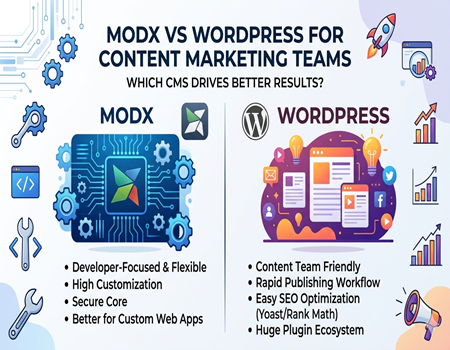
Content marketing today depends heavily on the right content management system (CMS). A good CMS helps teams publish faster, manage content efficiently, and optimize pages for search engines. For growing businesses, choosing the right platform is not just a technical decision—it directly impacts traffic, leads, and overall marketing performance.
Two popular options that often come up in discussions are MODX and WordPress. Both platforms offer unique features, but they are built with different types of users in mind. While MODX is known for its flexibility and developer-friendly structure, WordPress is widely recognized for its ease of use and strong ecosystem for content creation.
For content marketing teams, the choice becomes even more important. Teams need a system that supports collaboration, simplifies SEO, and allows quick publishing without technical hurdles. In this blog, we will compare MODX vs WordPress in detail, focusing on what truly matters for marketers. By the end, you will clearly understand which platform is better suited for your content marketing goals.
What is MODX?
MODX is a flexible and developer-focused content management system designed for building highly customized websites. Unlike traditional CMS platforms, it does not rely heavily on pre-built themes or plugins. Instead, it gives developers complete control over how content is structured, displayed, and managed on a website.
One of the biggest strengths of MODX is its flexibility. Developers can create fully custom designs and functionalities without being restricted by templates. This makes it a strong choice for businesses that need unique digital experiences. It also allows clean code implementation, which can improve performance and provide better control over website behavior.
Another important feature of MODX is its focus on security. Since it does not depend on a large number of third-party plugins, the risk of vulnerabilities is generally lower. It also provides built-in tools that allow developers to manage access control and permissions effectively, which is useful for complex projects.
However, MODX is mostly used by developers or technically skilled teams. It is not very beginner-friendly, especially for content marketers who want to publish and manage content without technical support. While it is powerful and highly customizable, it often requires ongoing developer involvement to handle updates, SEO settings, and content structure changes.
What is WordPress?
WordPress is the most popular content management system in the world, powering millions of websites across different industries. It is widely known for its simplicity, flexibility, and strong ecosystem. Unlike developer-heavy platforms, WordPress is designed so that even non-technical users can easily create, manage, and publish content without coding knowledge.
One of the biggest advantages of WordPress is its massive plugin ecosystem. With thousands of plugins available, users can add features like SEO optimization, contact forms, analytics, and more without any complex setup. Themes also make it easy to design websites quickly, allowing businesses to launch and scale faster without heavy development work.
For content marketing teams, WordPress offers a very user-friendly experience. The built-in editor, including the Gutenberg block editor, allows users to create visually appealing content with ease. Teams can manage multiple authors, schedule posts, and update content regularly without relying on developers, which improves productivity and consistency.
Another reason why WordPress is preferred is its strong support for SEO. With tools like Yoast SEO and Rank Math, optimizing content for search engines becomes simple and efficient. Overall, WordPress is an ideal choice for businesses that want to focus on content growth, digital marketing, and long-term scalability without technical barriers.
MODX vs WordPress: Key Differences Overview
| Feature | MODX | WordPress |
|---|---|---|
| Ease of Use | Requires technical knowledge | Beginner-friendly and easy to use |
| SEO Capabilities | Manual setup required | Plugins make SEO easy |
| Customization | Highly flexible (developer-focused) | Flexible with plugins and themes |
| Cost | Higher developer cost | Lower initial cost, scalable |
| Scalability | Good but needs technical handling | Highly scalable with plugins |
| Community Support | Smaller community | Large global community |
When comparing MODX and WordPress, the differences mainly come down to usability and purpose. MODX is built for developers who want complete control over customization and structure. It offers flexibility but requires technical expertise for most tasks, including SEO and content updates.
On the other hand, WordPress is designed for ease and efficiency. It allows content marketing teams to work independently without relying on developers. With built-in features and plugins, managing content, optimizing for SEO, and scaling a website becomes much simpler.
For businesses focused on content marketing, speed, and growth, WordPress clearly provides a more practical and user-friendly solution.
Ease of Use for Content Marketing Teams
For content marketing teams, ease of use plays a critical role in daily operations. A CMS should allow team members to create, edit, and publish content quickly without depending on developers. This is where WordPress stands out, as it is built with simplicity in mind and offers an intuitive dashboard for users of all skill levels.
WordPress provides a clean and user-friendly interface that makes content management straightforward. The Gutenberg editor allows users to create content using blocks, making it easy to design pages without coding. Marketers can add images, videos, and other elements with just a few clicks, which improves efficiency and saves time.
In contrast, MODX is not as beginner-friendly. It is designed with developers in mind, which means most tasks require technical understanding. Even basic content updates can sometimes involve working with templates or backend configurations. This can slow down content teams and create a dependency on developers for routine tasks.
Another important factor is workflow management. WordPress supports multiple users with different roles, allowing teams to collaborate smoothly. Content can be scheduled, reviewed, and updated without complications. MODX can offer similar functionality, but it usually requires custom setup, which adds complexity and time.
Overall, for content marketing teams that need speed, flexibility, and independence, WordPress is the better choice. It reduces technical barriers and allows teams to focus on creating and optimizing content instead of dealing with system limitations.
SEO Capabilities Comparison
WordPress SEO Advantages
WordPress is widely known for its strong SEO capabilities, especially because of its powerful plugin ecosystem. Tools like Yoast SEO and Rank Math make it easy to optimize content without technical knowledge. Users can manage meta titles, descriptions, keywords, and schema markup directly from the dashboard, which simplifies the entire SEO process.
Another major advantage is automation. WordPress plugins can automatically generate XML sitemaps, handle redirects, and improve on-page SEO elements. This saves time for content marketing teams and ensures that every page follows SEO best practices. Even beginners can optimize content effectively without needing deep technical expertise.
WordPress also supports clean URL structures, mobile responsiveness, and fast indexing, all of which are important ranking factors. With the right setup, content teams can focus more on strategy and content quality rather than technical SEO challenges.
MODX SEO Capabilities
MODX also offers strong SEO potential, but it works very differently. It does not rely on ready-made plugins like WordPress. Instead, most SEO features need to be configured manually. While this gives developers more control, it makes the process more complex for non-technical users.
Tasks such as adding meta tags, creating sitemaps, or implementing schema often require custom coding or additional setup. This means content marketing teams usually depend on developers for SEO-related changes. As a result, optimization can become slower and less efficient in fast-paced marketing environments.
Which Platform is Better for SEO?
For content marketing teams, WordPress is clearly the better option for SEO. It simplifies optimization, reduces dependency on developers, and allows faster implementation of strategies. While MODX offers flexibility, WordPress provides a more practical and scalable solution for achieving consistent search engine rankings.
Content Management & Workflow
For content marketing teams, managing large volumes of content efficiently is essential. WordPress is built to handle this need with ease. It offers a structured dashboard where users can create, edit, organize, and publish content without confusion. The interface is simple, making it easy for teams to maintain consistency in their publishing process.
One of the key strengths of WordPress is its support for multi-author environments. Teams can assign different roles such as editor, author, and contributor, ensuring smooth collaboration. Content can be scheduled in advance, revised when needed, and updated regularly. This makes it ideal for businesses that rely on continuous content production.
WordPress also provides built-in features like version history and autosave. These features help teams track changes and avoid content loss. Managing media files such as images and videos is also straightforward, as everything can be uploaded and organized within the platform. This improves workflow and reduces time spent on content handling.
On the other hand, MODX offers content management capabilities, but they are not as straightforward. It allows custom workflows, which can be powerful, but they often require setup and developer involvement. For teams without technical expertise, this can create challenges in day-to-day content operations.
Overall, WordPress provides a more efficient and user-friendly workflow for content marketing teams. It allows faster publishing, better collaboration, and easier content management, making it the preferred choice for businesses focused on scaling their content strategy.
Customization & Flexibility
Customization is one area where both MODX and WordPress offer strong capabilities, but they approach it differently. MODX is known for its high level of flexibility, especially for developers who want complete control over website structure and design. It allows you to build everything from scratch without relying on predefined themes or templates.
This makes MODX a powerful option for projects that require unique functionality or complex design elements. Developers can create custom components, control every aspect of the frontend, and optimize performance according to specific needs. However, this level of flexibility also means more time, effort, and technical expertise are required to build and maintain the website.
WordPress, on the other hand, offers flexibility in a more user-friendly way. Instead of building everything from scratch, users can choose from thousands of themes and plugins to customize their website. This allows businesses to quickly implement features like contact forms, landing pages, or SEO tools without needing advanced coding skills.
While WordPress may not offer the same level of raw control as MODX, it provides a practical balance between customization and ease of use. For content marketing teams, this is a major advantage. They can make changes, experiment with layouts, and add new features without depending heavily on developers, making WordPress a more efficient and scalable choice.
Performance & Security
Performance and security are important factors when choosing a CMS, especially for businesses that rely on consistent traffic and user trust. MODX is known for its lightweight structure, which can deliver fast performance when properly developed. Since it does not rely heavily on third-party plugins, it reduces unnecessary code and potential slowdowns.
From a security perspective, MODX has an advantage because of its smaller ecosystem. Fewer plugins mean fewer vulnerabilities, and developers have better control over security configurations. This makes it a reliable choice for projects where security and performance are top priorities.
WordPress, on the other hand, can also deliver excellent performance, but it requires proper optimization. Since many websites use multiple plugins and themes, performance can be affected if not managed carefully. However, with good hosting, caching tools, and optimized plugins, WordPress websites can achieve fast loading speeds.
In terms of security, WordPress is often targeted because of its popularity. However, regular updates, trusted plugins, and security practices can make it safe for most businesses. Overall, both platforms can perform well, but WordPress requires more active management compared to MODX.
Cost & Maintenance
Cost and maintenance are key factors for businesses when choosing between MODX and WordPress. WordPress is generally more affordable to start with, as it offers free core software along with a wide range of free and paid themes and plugins. Businesses can launch a website quickly without heavy upfront investment.
However, ongoing costs in WordPress can include hosting, premium plugins, security tools, and maintenance services. While these costs can add up over time, they are usually manageable and scalable based on business needs. Content teams can also handle many tasks without hiring developers, which helps reduce long-term expenses.
MODX, on the other hand, often involves higher development costs from the beginning. Since it requires custom setup and coding, businesses usually need experienced developers to build and maintain the website. This increases both initial investment and ongoing maintenance expenses.
In terms of maintenance, WordPress is easier for non-technical users, as updates and content changes can be managed from the dashboard. MODX requires more technical involvement, which can slow down updates and increase dependency on developers. Overall, WordPress is a more cost-effective and practical choice for content-driven businesses.
When Should You Choose MODX?
MODX is a strong choice when your project requires complete control over design, functionality, and content structure. It works best for businesses that have access to experienced developers and need a highly customized website. If your goal is to build a unique digital experience without relying on pre-built themes or plugins, MODX can deliver that flexibility.
It is also suitable for projects where security and performance are top priorities. Since MODX uses fewer third-party extensions, it allows better control over potential vulnerabilities. This makes it a reliable option for complex or enterprise-level applications that demand stability and customization.
However, for content marketing teams, MODX may not be the most practical option. Its technical nature can slow down publishing and require ongoing developer support, which can limit speed and efficiency in content-driven strategies.
When Should You Choose WordPress?
WordPress is the ideal choice for businesses that focus heavily on content marketing and need a platform that is easy to manage. It works best for teams that want to publish content regularly, optimize for SEO, and scale their digital presence without relying on developers for every small change.
One of the biggest advantages of WordPress is its simplicity. Content creators, marketers, and editors can easily manage blogs, landing pages, and media without technical skills. This makes it perfect for teams that need speed and efficiency in their workflow while maintaining high-quality content output.
WordPress is also highly suitable for SEO-driven strategies. With the help of plugins and built-in features, teams can quickly optimize content, track performance, and improve rankings. This allows businesses to grow organic traffic consistently without complex setups.
Overall, if your goal is to build, manage, and scale a content-driven website with minimal technical barriers, WordPress is the more practical and efficient choice for long-term success.
Why Many Businesses Migrate from MODX to WordPress
Many businesses start with MODX because of its flexibility, but over time they face challenges in managing and scaling their content. As content marketing becomes a priority, the need for a user-friendly and efficient CMS becomes more important. This is where WordPress often becomes the preferred choice.
One common issue with MODX is its complexity. Content updates, SEO changes, and workflow management usually require developer involvement, which slows down marketing efforts. For teams that need to publish content frequently, this dependency can limit growth and reduce overall productivity.
WordPress solves these problems by offering an easy-to-use interface and powerful tools that simplify content management. Teams can handle publishing, SEO optimization, and updates on their own without technical support. This improves speed, consistency, and overall marketing performance.
If you are planning to switch platforms, choosing professional MODX to WordPress Migration Services can help ensure a smooth and error-free transition. A well-executed migration protects your data, maintains SEO rankings, and allows your team to start working efficiently on WordPress without disruptions.
Conclusion
Choosing between MODX and WordPress depends on your business goals and team requirements. MODX is a powerful platform for developers who need complete control and customization. It works well for complex projects where flexibility and security are the main priorities.
However, for content marketing teams, WordPress clearly offers more advantages. Its user-friendly interface, strong SEO capabilities, and easy content management system make it a practical choice for businesses focused on growth. Teams can publish faster, optimize content easily, and scale their strategy without technical barriers.
Overall, while MODX has its strengths, WordPress stands out as the better option for most content-driven businesses. It allows teams to focus on what truly matters—creating valuable content and driving results through effective marketing strategies.