SEO Issues with Liferay Portals
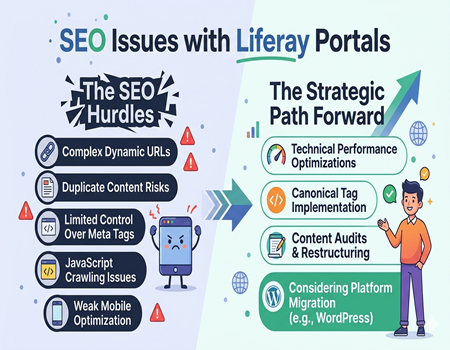
Liferay is a powerful platform used by many enterprises to build portals, intranet systems, and large websites. It offers flexibility, security, and integration capabilities, which make it a popular choice among organizations. However, when it comes to search engine optimization, Liferay often creates challenges that are difficult to ignore.
Many businesses invest heavily in building their Liferay portals but later struggle to get organic traffic. This is not because their content is poor, but because the platform itself has certain SEO limitations. These issues affect visibility, indexing, and ultimately, rankings on search engines like Google.
In this blog, we will explore the most common SEO issues with Liferay portals, how they impact your business, and what solutions you can consider. We will also discuss why many businesses are shifting toward more SEO-friendly platforms to improve their digital growth.
What is Liferay?
Liferay is an enterprise-level digital experience platform that allows businesses to create websites, portals, and web applications. It is widely used for building corporate portals, customer dashboards, and internal systems where multiple users interact with content and services in one place.
One of the main reasons companies choose Liferay is its strong customization capability. Developers can create complex workflows, integrate with third-party tools, and manage large-scale content systems efficiently. This makes it ideal for enterprises that require advanced functionality and control over their digital environment.
However, this flexibility comes at a cost. The platform is often complex and requires technical expertise to manage. For non-technical users, especially marketers and SEO professionals, managing content and optimizing pages becomes difficult. This is where most SEO-related problems begin to appear in Liferay portals.
Why SEO is Important for Liferay Portals
SEO plays a crucial role in bringing organic traffic to any website, including enterprise portals built on Liferay. Without proper optimization, even the most well-designed portal can fail to reach its target audience. Search engines need clear structure, fast performance, and optimized content to rank pages effectively.
When SEO is ignored in Liferay portals, businesses often face issues like low visibility, poor search rankings, and reduced website traffic. This directly impacts lead generation, conversions, and overall digital performance. Even if your portal is rich in features, it won’t deliver results without proper SEO.
For enterprise-level platforms, SEO becomes even more important because competition is high. Businesses are competing for the same keywords and audience. If your Liferay portal is not optimized, your competitors will easily outrank you, leading to missed opportunities and potential revenue loss.
Common SEO Issues with Liferay Portals
Complex URL Structure
One of the most common issues in Liferay portals is the complex and dynamic URL structure. URLs often include unnecessary parameters, numbers, or system-generated strings that make them difficult to read. This not only confuses users but also creates problems for search engines while crawling and indexing pages.
Clean and meaningful URLs are important for SEO because they help search engines understand the content of the page. In Liferay, achieving this requires technical customization, which is not always easy. As a result, many websites end up with poorly structured URLs that negatively impact their rankings.
Duplicate Content Issues
Duplicate content is another major challenge in Liferay portals. Multiple versions of the same page can be created due to parameters, session IDs, or different navigation paths. This confuses search engines and dilutes the ranking potential of the content.
When search engines find duplicate pages, they struggle to decide which version to index. This can lead to lower rankings or even complete removal from search results. Managing duplicate content in Liferay often requires technical fixes like canonical tags, which are not easy for non-technical users to implement.
Poor Page Speed and Performance
Liferay portals are often heavy because of their complex architecture and multiple integrations. This can slow down page loading speed, which is a critical ranking factor in SEO. Slow websites not only rank lower but also provide a poor user experience.
Users expect websites to load quickly, especially on mobile devices. If your portal takes too long to load, visitors may leave before even viewing your content. Improving performance in Liferay requires server optimization, caching strategies, and technical expertise, making it a challenging task for many businesses.
Limited Control Over Meta Tags
Meta tags like title and description play a key role in SEO. In Liferay, managing these elements is not always straightforward. Often, marketers have limited control and need developer support to update or optimize meta information.
This lack of flexibility makes it difficult to implement SEO strategies effectively. Without optimized meta tags, your pages may not attract clicks even if they appear in search results. This reduces your overall traffic and limits your growth potential.
JavaScript Rendering Issues
Liferay heavily relies on JavaScript for rendering content, which can create issues for search engine crawlers. Although modern search engines can process JavaScript, they may not always do it efficiently. This can lead to incomplete indexing of your website.
If important content is not properly rendered, search engines may miss it entirely. This directly affects your visibility and rankings. Fixing JavaScript-related SEO issues often requires advanced technical knowledge and careful implementation.
Weak Mobile Optimization
Mobile optimization is essential in today’s digital landscape, but Liferay portals may not always deliver a smooth mobile experience. Poor responsiveness, slow loading, and complex layouts can negatively impact mobile users.
Search engines prioritize mobile-friendly websites, and any issues in this area can hurt your rankings. Ensuring proper mobile optimization in Liferay requires additional effort and technical adjustments, which many businesses struggle to manage effectively.
Difficult Content Management for SEO
Managing content in Liferay can be challenging, especially for non-technical users. The interface is not always intuitive, and simple SEO tasks like updating headings, adding keywords, or optimizing images may require developer involvement.
This dependency slows down the content optimization process and makes it difficult to implement timely SEO changes. As a result, businesses often fall behind in their SEO efforts, affecting their ability to compete in search results.
Technical SEO Challenges in Liferay
Liferay portals often face technical SEO challenges that go beyond basic optimization. Issues like improper indexing, missing XML sitemaps, and incorrect robots.txt configurations can prevent search engines from crawling your website efficiently. These problems reduce your chances of appearing in search results.
Another common challenge is handling canonical tags and managing duplicate URLs. Without proper implementation, search engines may index multiple versions of the same content. This splits your ranking power and creates confusion, making it harder for your pages to perform well in search engines.
Crawl budget is also affected in Liferay portals. Search engines may waste time crawling unnecessary or duplicate pages instead of focusing on important content. This reduces the efficiency of your SEO efforts and limits your website’s visibility.
Fixing these technical issues often requires experienced developers and continuous monitoring. For many businesses, maintaining this level of technical SEO becomes costly and time-consuming, leading them to explore alternative platforms that offer better SEO capabilities.
How These SEO Issues Impact Your Business
SEO issues in Liferay portals can directly affect your business performance. When your website is not optimized, it struggles to rank on search engines, resulting in low organic traffic. This means fewer potential customers discovering your services or products online.
Lower visibility also leads to reduced brand awareness. Even if your business offers high-quality solutions, it becomes difficult to compete with competitors who have better SEO strategies. Over time, this gap continues to grow, making it harder to catch up.
Another major impact is on conversions. Poor user experience, slow loading speed, and unclear navigation can drive visitors away. This not only affects your traffic but also reduces your chances of generating leads and sales, ultimately impacting your revenue.
How to Fix SEO Issues in Liferay
Basic Fixes
Some basic SEO issues in Liferay can be improved with simple changes. Optimizing URLs, updating meta tags, and improving content structure can make a noticeable difference. These steps help search engines understand your pages better and improve your chances of ranking higher.
Regular content audits are also important. Identifying duplicate content, fixing broken links, and updating outdated pages can enhance your overall SEO performance. These basic improvements are a good starting point for addressing Liferay SEO challenges.
Technical Fixes
Advanced SEO issues require technical solutions. Improving page speed through caching, optimizing server performance, and ensuring mobile responsiveness are essential steps. These improvements not only boost rankings but also enhance user experience.
Implementing proper canonical tags, fixing JavaScript rendering issues, and optimizing crawl efficiency are also important. However, these tasks often require developer expertise, making them more complex and time-consuming for businesses.
Limitations of Fixing Liferay SEO
Despite these fixes, Liferay has inherent limitations that make SEO optimization difficult. Many changes require technical support, and even small updates can take time. This slows down the implementation of SEO strategies.
For businesses looking to scale quickly, these limitations become a major hurdle. Continuous dependency on developers and high maintenance efforts often lead companies to consider alternative platforms that offer better SEO flexibility and ease of use.
Why Businesses Are Moving Away from Liferay
Many businesses are now moving away from Liferay due to its complexity and SEO limitations. While the platform is powerful, it often requires significant time and resources to manage effectively. This makes it less suitable for companies focused on growth and digital marketing.
High maintenance costs and the need for technical expertise further add to the challenges. Businesses find it difficult to adapt quickly to changing SEO trends and user expectations. This lack of agility affects their ability to stay competitive in the market.
As a result, companies are exploring more user-friendly platforms that offer better SEO capabilities. These platforms allow marketers to manage content easily, implement SEO strategies quickly, and achieve better results without heavy technical dependency.
Why WordPress is Better for SEO
WordPress is widely considered one of the most SEO-friendly platforms available today. It offers clean URL structures, easy content management, and powerful plugins that simplify optimization. This makes it an ideal choice for businesses looking to improve their search visibility.
With plugins like Yoast SEO and Rank Math, users can easily manage meta tags, optimize content, and track performance. These tools provide real-time suggestions, making it easier for even non-technical users to implement effective SEO strategies.
Another major advantage is flexibility and performance. WordPress websites can be optimized for speed, mobile responsiveness, and user experience without complex development work. This helps businesses achieve better rankings and higher engagement.
If your current portal is struggling with SEO, considering a Liferay To WordPress Migration Service can be a smart move. It allows you to shift to a more SEO-friendly platform while improving performance, usability, and long-term growth potential.
When Should You Consider Migration?
If your Liferay portal is not generating organic traffic despite consistent efforts, it may be a sign that SEO limitations are holding you back. Frequent technical issues, slow performance, and difficulty in managing content are clear indicators that something needs to change.
Another important factor is scalability. If your business is growing but your platform cannot support your SEO and content needs efficiently, migration becomes a practical solution. A flexible platform can help you adapt quickly and stay competitive.
Considering a reliable Liferay To WordPress Migration Service at the right time can help you overcome these challenges. It ensures a smooth transition while preserving your existing SEO value and setting a strong foundation for future growth.
Best Practices for Smooth Migration
Migrating from Liferay to another platform requires careful planning. One of the most important steps is setting up proper URL redirections to ensure that your existing rankings are not lost. This helps search engines understand the new structure and maintain your visibility.
Content migration should also be handled carefully. Ensuring that all pages, images, and metadata are transferred correctly is essential for maintaining SEO performance. Any missing or broken elements can negatively impact your rankings.
Testing and monitoring are crucial after migration. Regularly checking for errors, tracking performance, and making necessary adjustments will help you achieve the best results. A well-planned migration can significantly improve your website’s SEO and overall performance.
Conclusion
Liferay is a powerful platform, but it comes with several SEO challenges that can limit your online growth. From complex URLs to technical limitations, these issues can affect your visibility, traffic, and conversions if not addressed properly.
While it is possible to fix some of these problems, the process is often complex and resource-intensive. For many businesses, switching to a more SEO-friendly platform becomes a more practical and effective solution.
By understanding these challenges and exploring better alternatives, you can make informed decisions that support your digital growth. Investing in the right platform and strategy will help you achieve better rankings, improved user experience, and long-term success.