When Substack Makes Sense — And When It Doesn’t
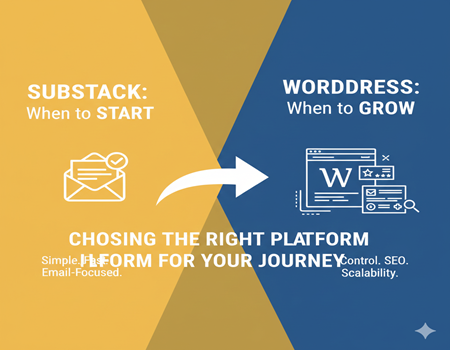
Substack has quickly become one of the most talked-about platforms for writers, creators, and independent thinkers. Its promise is simple and appealing: write what you care about, publish instantly, and get paid directly by your audience—without worrying about websites, plugins, or technical setup. For many people, especially those just starting out, this simplicity feels like a breath of fresh air in an otherwise complicated digital world.
But popularity doesn’t always mean suitability. While Substack works exceptionally well for some creators, it can be limiting or even counterproductive for others, particularly those thinking long term. Many users sign up because it’s easy, not because it aligns with their broader content or business goals. Over time, that mismatch can lead to frustration, stalled growth, or difficult decisions about moving elsewhere.
This is where a clearer, more practical conversation is needed. Instead of asking whether Substack is “good” or “bad,” the more useful question is: When does Substack actually make sense—and when does it not? The answer depends on factors like your goals, audience, growth plans, and how much control you want over your content.
In this guide, we’ll take a balanced, user-focused look at Substack. You’ll learn where it truly shines, where it falls short, and how to decide if it’s the right platform for you—now and in the future.
What Is Substack? A Quick Overview for New Creators
Substack is an online publishing platform designed primarily for writers who want to share content through newsletters. At its core, it allows creators to write posts, send them directly to subscribers’ inboxes, and optionally charge readers for premium access. Unlike traditional blogging platforms, Substack combines writing, email delivery, and payments into one simple system.
The platform is built with ease of use in mind. You don’t need to set up hosting, buy a domain, or manage technical settings. Once you create an account, you can start writing immediately. Substack handles email distribution, subscriber management, and payment processing, making it especially appealing to people who want to focus only on content creation.
Substack supports both free and paid newsletters. Creators can publish public posts to grow their audience while reserving exclusive content for paying subscribers. Readers can follow writers, discover new publications, and interact through comments and community features.
However, it’s important to understand what Substack is—and what it isn’t. It’s not a full website builder or a traditional content management system. Substack is best viewed as a newsletter-first platform, built around direct audience relationships rather than search-driven or highly customized web experiences.
When Substack Makes Sense: Ideal Use Cases
Substack is not a one-size-fits-all platform, but in the right situations, it can be extremely effective. Its biggest strength lies in simplicity and direct audience connection. Below are the scenarios where Substack genuinely makes sense and can deliver strong results for creators.
Independent Writers and Journalists
Substack works especially well for independent writers, journalists, and commentators whose primary asset is their voice. If your main goal is to write regularly, share opinions, analysis, or stories, and build a loyal reader base, Substack removes almost every technical barrier. You don’t need to worry about site maintenance, design decisions, or publishing workflows. This allows writers to focus entirely on producing high-quality content and engaging with readers, which is often the most valuable use of their time.
Creators With an Existing Audience
Substack becomes even more powerful when you already have an audience elsewhere. Writers with followers on platforms like LinkedIn, X (Twitter), or an existing email list can quickly convert attention into subscribers. Because Substack has built-in subscription and payment features, monetization can happen immediately without extra tools or setup. This makes it ideal for creators who want to move from free content to a paid model without building complex infrastructure.
People Who Want Zero Technical Hassle
For creators who are not comfortable with technology, Substack offers peace of mind. There is no need to manage hosting, security, updates, or integrations. Everything—from publishing to email delivery and payments—is handled by the platform. This is particularly appealing to writers who want a predictable, low-maintenance setup and are happy to trade flexibility for convenience.
Short-Term or Experimental Projects
Substack is also a smart choice for testing ideas. If you want to validate a niche, experiment with a writing format, or launch a temporary publication, Substack allows you to start quickly with minimal commitment. You can gauge reader interest, engagement, and willingness to pay before investing time and money into a larger platform. For early-stage experiments, this speed and simplicity can be a major advantage.
In these use cases, Substack is not just convenient—it’s strategic.
Benefits of Using Substack
One of the biggest reasons Substack has gained widespread adoption is the range of benefits it offers to writers and creators who value simplicity and direct audience access. When used for the right purpose, the platform can remove many common barriers associated with online publishing.
First, Substack offers an extremely fast and easy setup. You can create an account and publish your first post within minutes, without dealing with hosting providers, themes, or plugins. This low entry barrier makes it ideal for writers who want to focus on creating content rather than managing technology. Everything is handled in one place, which reduces distractions and complexity.
Another major advantage is built-in email delivery. Every post you publish can be sent directly to your subscribers’ inboxes, helping you maintain a consistent and personal connection with your audience. Unlike traditional blogs that rely heavily on search traffic or social media algorithms, Substack allows you to communicate directly with readers who have opted in to hear from you.
Substack also simplifies monetization. The platform supports both free and paid subscriptions, and it manages payment processing for you. There’s no need to integrate third-party tools or set up complicated checkout systems. This makes it easier for creators to experiment with paid content and build recurring revenue.
Discoverability within Substack’s ecosystem is another benefit. Readers can find and follow publications based on their interests, which can help new writers gain visibility without aggressive promotion. Additionally, features like comments and community interactions encourage engagement and help strengthen reader relationships.
Overall, Substack’s biggest benefit is focus. It allows creators to write, publish, and monetize without friction, making it a powerful tool when simplicity and speed are the top priorities.
When Substack Doesn’t Make Sense: The Hidden Limitations
While Substack offers convenience and speed, it also comes with limitations that are often overlooked at the beginning. These drawbacks may not matter to everyone, but for creators with long-term growth, branding, or business goals, they can become serious obstacles over time.
Limited SEO and Organic Growth Control
Substack is not built with search engine optimization as a priority. While your posts are technically indexable, you have very limited control over key SEO elements such as site structure, advanced metadata, schema markup, internal linking strategies, and performance optimization. This makes it harder to rank consistently on search engines and attract evergreen organic traffic. If your content strategy relies on being discovered through Google over months or years, Substack can significantly restrict your visibility and growth potential.
Platform Dependency and Ownership Risks
When you publish on Substack, you are building on someone else’s platform. Although you own your content, Substack controls the infrastructure, rules, and monetization policies. Changes in fees, terms of service, or platform direction can directly affect your income and reach. There is also the long-term risk of platform dependency—your entire publishing system, audience experience, and distribution are tied to a single company you do not control.
Branding and Customization Limits
Substack offers only basic design customization. You can adjust colors and logos, but you cannot create a truly unique brand experience. Layout options are limited, and every Substack publication follows a similar structure. For creators or businesses that want strong visual identity, custom landing pages, or tailored user journeys, this lack of flexibility can be frustrating. Over time, it becomes harder to differentiate yourself from thousands of similar-looking newsletters.
Not Ideal for Businesses and Content Marketing
Substack is designed for writers, not for businesses running full-scale content marketing strategies. It lacks advanced features such as custom landing pages, conversion funnels, lead magnets, detailed analytics, and CRM integrations. If you want to use content to generate leads, sell services, or support a broader marketing ecosystem, Substack quickly feels restrictive. Businesses often outgrow it once they need more data, control, and flexibility.
Scaling Problems Over Time
As your content library and audience grow, Substack’s limitations become more noticeable. Adding new features, expanding into courses or products, or integrating external tools is difficult. Many creators eventually face the challenge of migrating content and subscribers to a more flexible platform—a process that can become complex if delayed too long. What starts as a simple solution can later turn into a growth bottleneck.
In these scenarios, Substack shifts from being a helpful tool to a limiting factor.
Substack vs WordPress: A Practical Comparison
Choosing between Substack and WordPress isn’t about which platform is “better” overall—it’s about which one aligns with your goals. Both serve very different purposes, and understanding those differences can help you make a smarter, long-term decision.
Content ownership is one of the biggest distinctions. With Substack, your content lives on their platform, under their structure and rules. While you can export your data, you are still dependent on Substack’s ecosystem. WordPress, on the other hand, gives you full ownership. Your content, domain, and site structure are entirely under your control, which is critical for creators who see their content as a long-term asset.
When it comes to SEO flexibility, WordPress clearly stands out. It allows full control over URLs, metadata, internal linking, site speed, schema markup, and technical optimization. This makes WordPress ideal for creators and businesses that want to build search-driven traffic over time. Substack offers basic indexing but lacks the tools needed for a robust SEO strategy, making organic growth harder to scale.
Monetization options also differ significantly. Substack focuses on subscriptions and keeps the system simple, which is great for writers selling paid newsletters. WordPress supports subscriptions too, but it also allows ads, affiliate marketing, digital products, courses, services, and custom payment flows. This flexibility makes WordPress better suited for diversified revenue models.
In terms of customization and branding, WordPress offers near-total freedom. You can design unique layouts, create custom landing pages, and tailor user journeys to match your brand. Substack’s customization is minimal, which can limit brand differentiation as your audience grows.
Finally, long-term scalability is where WordPress shines. As your needs evolve, you can add features, integrations, and advanced functionality without changing platforms. Substack works best as a focused publishing tool, while WordPress functions as a full content hub. Understanding this difference helps you choose strategically rather than emotionally.
When Creators Start Outgrowing Substack
Many creators begin their journey on Substack because it feels simple and efficient. In the early stages, this approach works well. However, as goals evolve and audiences grow, certain needs start to emerge that Substack is not designed to support. This is often the point where creators realize they are outgrowing the platform.
One common sign is the need for stronger search visibility. As content libraries expand, creators often want their articles to rank on Google and bring in consistent, long-term traffic. Substack’s limited SEO controls make this difficult, especially for creators who now see content as a growth engine rather than just a newsletter.
Another indicator is the desire for full brand ownership. Over time, creators may want a custom website that reflects their identity, values, and offerings more clearly. This includes custom pages, unique layouts, and a professional online presence that goes beyond a standard newsletter format. Substack’s design limitations can make this transition feel restrictive.
Outgrowing Substack also happens when creators expand their offerings. Selling services, launching digital products, hosting courses, or building resource hubs requires flexibility, integrations, and advanced analytics. Substack is not built to support complex funnels or multi-layered content strategies, which can limit future growth.
Finally, many creators reach a point where they want control—not just over content, but over data, distribution, and audience experience. At this stage, Substack no longer feels like a growth platform; it feels like a constraint. Recognizing this moment early allows creators to plan their next move strategically rather than reactively.
Moving from Substack to WordPress: What to Know Before You Decide
For many creators, reaching the limits of Substack naturally leads to considering WordPress as the next step. This transition can feel intimidating at first, especially if you’ve built a solid library of content and a loyal subscriber base. However, understanding what the move involves—and why it’s often worthwhile—can make the decision much clearer.
One of the most common concerns is content migration. Creators worry about losing published posts, breaking links, or disrupting their audience’s experience. In reality, moving content from Substack to WordPress is very manageable when done correctly. Posts can be transferred, structured properly, and optimized to perform better in search engines than they ever could on Substack.
Another major concern is subscribers. Your email list is one of your most valuable assets, and the idea of losing it can be stressful. The good news is that subscriber data can be preserved and reconnected to a new email system on WordPress, allowing you to continue communicating with your audience without interruption.
SEO impact is also a frequent worry. A poorly handled migration can harm visibility, but a well-planned one can actually improve it. WordPress allows better URL control, internal linking, and long-term optimization, turning existing content into a discoverable resource rather than a closed newsletter archive.
This is why many creators choose a professional Substack to WordPress Migration Service at this stage. It helps ensure that content, subscribers, and search performance are protected while the transition is handled smoothly.
Ultimately, the move to WordPress is less about abandoning Substack and more about unlocking flexibility. If your goals now include growth, ownership, and scalability, understanding the migration process is a crucial step toward building a future-proof content platform.
How to Decide What’s Right for You
Choosing between Substack and a more flexible platform like WordPress is not a technical decision—it’s a strategic one. The right choice depends on your goals, your audience, and how you see your content evolving over time. Instead of following trends, it helps to step back and evaluate what you truly need from a publishing platform.
Start by clarifying your primary goal. If your focus is purely on writing and building a small, loyal readership through email, Substack may be enough. However, if you see your content as a long-term asset meant to attract traffic, generate leads, or support a business, you’ll likely need more control than Substack can offer.
Next, consider how you plan to grow. Are you relying mainly on social media and direct subscribers, or do you want search engines to bring in consistent traffic? SEO-driven growth requires flexibility in site structure, internal linking, and optimization—areas where traditional websites perform better.
Monetization is another key factor. If subscriptions are your only revenue model, Substack keeps things simple. But if you want to offer services, products, partnerships, or multiple income streams, you’ll need a platform that supports more complex setups.
Also think about branding and ownership. Ask yourself whether you’re comfortable building your presence on a platform you don’t fully control. Having your own site means owning your brand, your data, and your user experience.
Finally, consider your long-term vision. Where do you want your content to be in two or five years? Platforms should support growth, not limit it. Making a thoughtful choice now can save you time, effort, and difficult transitions later.
Final Verdict: Use Substack Strategically, Not Emotionally
Substack is neither a magic solution nor a flawed platform—it is simply a tool. When used strategically, it can be incredibly effective for the right type of creator at the right stage. Its simplicity, speed, and built-in monetization make it an excellent choice for writers who want to focus on publishing and building direct relationships with readers.
At the same time, Substack is not designed to support every goal. As content grows from a passion project into a long-term asset or business, limitations around SEO, branding, customization, and scalability become more visible. This doesn’t mean starting on Substack was a mistake; it means your needs have evolved.
The smartest approach is to separate convenience from strategy. Choosing a platform because it’s easy today can create challenges tomorrow if it doesn’t align with your long-term vision. Thinking ahead—about ownership, growth, and flexibility—helps you make decisions that support sustainable success.
Ultimately, the best platform is the one that supports your goals, not just your comfort level. Whether you stay on Substack, move to WordPress, or combine both at different stages, using Substack intentionally rather than emotionally allows you to build content that grows with you, not against you.