DNN vs WordPress for Government Sites
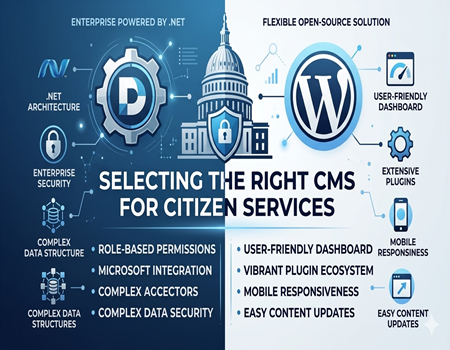
Government websites play a critical role in delivering information, services, and official updates to citizens. These portals often manage large volumes of data and serve thousands or even millions of users. Because of this responsibility, selecting the right content management system (CMS) becomes extremely important for stability, performance, and long-term sustainability.
Two platforms that are often compared for government websites are DNN (DotNetNuke) and WordPress. Both systems provide tools for building and managing websites, but they are built on very different technologies. DNN is based on the Microsoft .NET framework and has traditionally been used by enterprises and government organizations.
WordPress, on the other hand, is an open-source CMS that powers millions of websites worldwide. It is known for its flexibility, ease of use, and strong community support. Many organizations today are evaluating WordPress as a modern alternative to older CMS platforms.
In this guide, we will explore the key differences between DNN and WordPress. We will compare usability, security, customization, cost, and scalability to help government organizations understand which platform is better suited for modern digital services.
What is DNN (DotNetNuke)?
DNN, also known as DotNetNuke, is a web content management system built on the Microsoft .NET framework. It was created to help organizations develop and manage complex websites, web portals, and enterprise applications. Because it integrates well with Microsoft technologies, many large organizations and government institutions have used it for digital platforms.
One of the main strengths of DNN is its structured permission system. Administrators can assign roles to different users and control who can view, edit, or publish content. This feature is especially useful for government websites where multiple departments manage different sections of the portal.
DNN also supports strong enterprise integrations. Since it runs on the .NET ecosystem, it can connect with tools like Microsoft Active Directory, SharePoint, and enterprise databases. This compatibility allows organizations to integrate their website with internal systems and digital services.
Another important feature of DNN is its modular architecture. Developers can create custom modules to add specific functionality to the platform. These modules allow organizations to build tailored solutions based on their operational needs.
However, developing and maintaining DNN modules usually requires experienced .NET developers. This can make the platform more complex for organizations that want quick updates or frequent changes to their websites.
What is WordPress?
WordPress is the most widely used content management system in the world. It is an open-source platform that allows users to build and manage websites without deep technical knowledge. Millions of websites across different industries rely on WordPress because it offers flexibility and ease of use.
One of the biggest advantages of WordPress is its user-friendly dashboard. Content editors can easily create pages, upload documents, publish updates, and manage media files. This simplicity makes it easier for government staff to keep information updated without relying heavily on developers.
Another major strength of WordPress is its plugin ecosystem. Plugins allow users to add new features such as security tools, accessibility support, forms, analytics, and SEO optimization. Instead of building features from scratch, organizations can extend their website functionality with trusted plugins.
WordPress also benefits from a very large global community. Thousands of developers contribute to improving the platform and releasing updates. These regular improvements help WordPress stay aligned with modern web standards and security practices.
Because of its flexibility and ease of management, many organizations and public institutions are now adopting WordPress to build modern government websites.
Why Government Websites Need a Strong CMS
Government websites are an essential communication channel between public institutions and citizens. These platforms provide access to services, policies, announcements, and public records. Because of this responsibility, the CMS used for these websites must be reliable, secure, and scalable.
Security is one of the most important requirements for government portals. These websites may store sensitive information or provide access to public services. A strong CMS must include secure authentication systems, user permissions, and protection against cyber threats.
Accessibility is another key requirement. Government websites must comply with accessibility standards so that people with disabilities can easily access information. A modern CMS should support accessible design, screen reader compatibility, and structured content.
Scalability is also important because government websites often experience traffic spikes during major announcements or public service updates. The CMS must be capable of handling large numbers of visitors without slowing down or crashing.
Finally, government websites require efficient content management. Different departments must be able to publish information independently while maintaining overall control and consistency. A reliable CMS ensures that content is organized, updated regularly, and accessible to the public.
DNN vs WordPress: Key Differences
| Feature | DNN | WordPress |
|---|---|---|
| Ease of Use | More technical and developer-focused | Very user-friendly |
| Security | Enterprise-level structure | Strong with plugins and updates |
| Customization | Requires .NET development | Plugins and themes available |
| Cost | Higher development cost | More affordable |
| Community Support | Smaller community | Very large community |
| Flexibility | Limited to .NET ecosystem | Highly flexible |
Both platforms can support complex websites, but they differ in usability and ecosystem. DNN is often preferred in environments where Microsoft infrastructure is already in place.
WordPress offers a more flexible environment supported by a large community. Its plugin ecosystem allows organizations to quickly add new features without complex development.
Cost and developer availability also create a clear difference between the two platforms. WordPress projects are usually easier to scale and maintain because of the wide availability of developers and tools.
Ease of Use and Content Management
Managing a government website involves frequent updates, announcements, documents, and policy information. Because multiple departments contribute content, the CMS must be simple enough for non-technical users to operate efficiently.
DNN offers a structured content management system, but its interface can be complex for users who are not familiar with the .NET environment. Many organizations rely on developers or trained administrators to handle updates.
WordPress provides a much simpler content management experience. Its dashboard allows users to create pages, upload media, and edit content quickly. Even users with limited technical knowledge can manage the website effectively.
Another advantage of WordPress is its flexible user role system. Administrators, editors, and contributors can be assigned specific permissions. This allows departments to manage their content independently while maintaining overall security.
Because government websites require constant updates, an easy-to-use CMS can significantly improve workflow and productivity.
Security Comparison: DNN vs WordPress
Security in DNN
DNN is often considered secure because it is built on the Microsoft .NET framework. It includes strong authentication systems, role-based permissions, and controlled development environments.
Organizations can create structured access controls to ensure that only authorized users manage specific sections of the website. This helps maintain security across different departments.
Security in WordPress
WordPress is frequently updated by a large community of developers. Security patches and improvements are released regularly to address potential vulnerabilities.
In addition, WordPress offers many security plugins that provide firewall protection, malware scanning, and login monitoring. When combined with secure hosting and regular updates, WordPress can provide a highly secure environment for government websites.
Customization and Development Flexibility
DNN customization usually involves creating custom modules using the .NET framework. This allows developers to build complex features tailored to enterprise systems.
However, building these modules requires specialized .NET developers. This can slow down development and increase costs when organizations want to add new features.
WordPress offers much greater flexibility through themes and plugins. Developers can quickly implement features such as forms, service portals, and document libraries without extensive development.
The availability of WordPress developers worldwide also makes it easier for organizations to build and maintain their websites over time.
Cost Comparison for Government Websites
Cost is a major factor for public sector projects. Government organizations must manage budgets carefully while maintaining high-quality digital services.
DNN projects often involve higher development costs because they require experienced .NET developers. Custom modules, updates, and integrations can increase the overall cost of the platform.
WordPress is generally more cost-effective because it is open source and supported by a large ecosystem. Many features can be implemented through plugins instead of custom development.
Developer availability also reduces costs. Organizations can easily find WordPress developers, which helps reduce long-term maintenance expenses.
Performance and Scalability
Government websites must handle high levels of traffic, especially during public announcements or service launches. The CMS must support scalability and maintain performance under heavy load.
DNN performs well when hosted on properly configured Microsoft infrastructure. It can support enterprise-level portals with strong server resources and optimized environments.
WordPress can also scale effectively with the right hosting, caching tools, and performance optimization techniques. Many high-traffic websites run on WordPress without performance issues.
With modern cloud hosting solutions, WordPress can easily handle large government portals while maintaining fast loading times.
Why Many Government Sites Are Migrating from DNN to WordPress
Many organizations are now reconsidering their existing CMS platforms as digital transformation becomes more important. Government agencies want systems that are flexible, cost-effective, and easier to manage.
DNN platforms sometimes require higher maintenance costs and specialized development teams. This can make it difficult for organizations to update their websites quickly.
WordPress offers a more modern ecosystem with easier content management and faster development cycles. The platform allows teams to implement new features quickly and keep websites updated.
Because of these advantages, many organizations are exploring migration strategies to move from DNN to WordPress.
When to Consider DNN to WordPress Migration
Organizations may consider migration when their existing DNN system becomes difficult to maintain or upgrade. High maintenance costs, limited developer availability, and outdated design are common reasons for migration.
Modern government websites require better accessibility, mobile responsiveness, and SEO optimization. WordPress provides tools that make it easier to implement these improvements.
Many organizations choose professional migration solutions to ensure that content, data, and URLs are transferred correctly. Services like DotNetNuke To WordPress Migration Service help organizations move their websites smoothly without losing important content or search visibility.
A well-planned migration can improve performance, usability, and long-term scalability for government websites.
Challenges During Migration
Migrating from one CMS to another requires careful planning. Government websites often contain large amounts of data, documents, and complex content structures.
One challenge is content mapping. Pages, media files, and modules must be transferred correctly to ensure that no information is lost during the migration.
Another important consideration is SEO. URL structures must be preserved or properly redirected to prevent ranking losses in search engines.
Security and data integrity are also important during migration. Proper testing and staging environments help ensure that the new website operates smoothly before it goes live.
Best Platform for Government Websites: Final Verdict
Both DNN and WordPress have strengths that can support government websites. DNN offers strong enterprise integration and structured security systems within the Microsoft ecosystem.
However, WordPress provides greater flexibility, lower development costs, and easier content management. Its large ecosystem of plugins and developers makes it easier to expand and maintain government portals.
For many organizations focused on modern digital services, WordPress offers a more adaptable and scalable solution.
Conclusion
Choosing the right CMS is an important decision for government organizations. Websites must be secure, accessible, scalable, and easy to manage to support public services effectively.
DNN has served many organizations well, especially those using Microsoft infrastructure. However, modern digital needs are pushing many institutions toward more flexible platforms.
WordPress provides a powerful combination of usability, customization, and cost efficiency. Its large community and extensive ecosystem make it a strong choice for building modern government websites.
As digital transformation continues, many organizations are exploring migration strategies to ensure their websites remain efficient, secure, and future-ready.