Sitecore Licensing Costs Explained
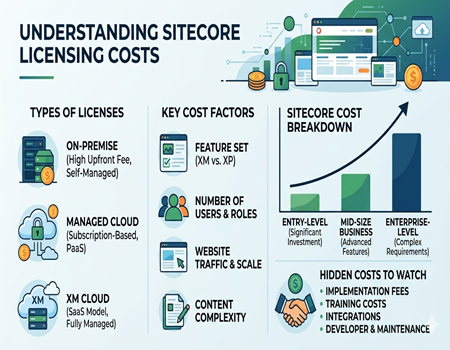
Sitecore is a powerful digital experience platform used by large businesses to manage websites, content, and customer journeys. It is more than a simple content management system because it offers personalization, analytics, and marketing automation features. That is why many enterprise companies choose Sitecore for complex digital needs.
However, one of the biggest concerns for businesses is understanding the cost. Sitecore licensing is often confusing, especially for companies that are new to enterprise-level platforms. The pricing is not straightforward, and many factors influence the final cost, which makes decision-making difficult.
In this blog, you will get a clear and simple explanation of Sitecore licensing costs. We will break down how pricing works, what factors affect it, and what you should expect before investing. This guide will help you make a better and more informed decision.
If you are planning to use Sitecore or comparing it with other platforms, this blog will give you a practical understanding. By the end, you will know whether Sitecore fits your business needs and budget or if you should explore alternative options.
What is Sitecore Licensing?
Sitecore licensing refers to the cost you pay to use the Sitecore platform. Unlike basic CMS tools, Sitecore is an enterprise solution, so its licensing structure is more complex. You are not just paying for software, but for a complete digital experience platform with advanced capabilities.
In simple terms, a license gives you the right to install, access, and use Sitecore features based on your chosen plan. Different packages offer different levels of functionality, which directly impacts the price. This is why businesses often see large variations in Sitecore costs.
Another important point is the difference between licensing and subscription. Traditional Sitecore licensing involves a large upfront payment along with yearly maintenance fees. In contrast, newer cloud-based models follow a subscription approach where you pay regularly, usually monthly or yearly.
Sitecore is considered expensive because it is designed for enterprise use. It includes advanced tools for personalization, automation, and integration, which are not needed by every business. That is why it is mostly used by large organizations with complex digital requirements.
Types of Sitecore Licenses
Sitecore provides multiple licensing models to match different business needs. Each model comes with its own cost structure, setup requirements, and level of control. Understanding these options helps you avoid unnecessary expenses and choose the right solution based on your business goals.
On-Premise Licensing
On-premise licensing means hosting Sitecore on your own servers. This model requires a high upfront license fee along with infrastructure investment. Businesses choosing this option usually want full control over their data, security, and system configuration.
However, managing everything internally increases responsibility. You need a dedicated IT team for maintenance, updates, and security. This adds to the overall cost, making it one of the more expensive options in the long run.
Managed Cloud (PaaS)
Managed Cloud, also known as PaaS, allows businesses to host Sitecore in a cloud environment. Infrastructure management is handled partially, which reduces technical workload. This makes it easier for teams to focus on content and marketing activities.
The cost in this model is often subscription-based or a mix of license and hosting fees. It offers better scalability compared to on-premise, but the overall investment is still high, especially for growing businesses.
XM Cloud (SaaS Model)
XM Cloud is Sitecore’s fully managed SaaS solution. Everything from hosting to updates is handled by Sitecore, reducing operational complexity. This makes it ideal for companies that want faster deployment and minimal technical management.
Although it simplifies operations, XM Cloud still comes with premium pricing. It offers flexibility and predictable billing, but businesses need to evaluate whether the cost aligns with their actual usage and requirements.
Key Factors That Affect Sitecore Licensing Cost
Sitecore licensing cost is not fixed and can vary significantly depending on several factors. Two businesses using the same platform may pay very different amounts based on their requirements. Understanding these factors helps in planning your budget more accurately and avoiding unexpected expenses.
Number of Users and Roles
The number of users accessing the platform plays a major role in cost calculation. More users mean higher resource usage and increased licensing fees. Different roles such as developers, marketers, and content editors can also impact pricing depending on access levels.
Website Traffic and Scale
Traffic volume directly affects the infrastructure and performance requirements. High-traffic websites need more resources, which increases both hosting and licensing costs. Large-scale operations usually require advanced setups, leading to higher overall investment.
Features and Product Version
Choosing between Sitecore XM, XP, or other variants impacts pricing significantly. Advanced features like personalization, analytics, and automation increase the cost. Businesses should only pay for features they actually need to avoid overspending.
Hosting Type
Your choice between on-premise and cloud hosting also affects pricing. On-premise requires heavy upfront investment, while cloud-based models involve recurring costs. Each option has its own financial impact depending on long-term usage.
Integrations and Add-ons
Integrating Sitecore with third-party tools like CRM systems or analytics platforms adds to the cost. Some features are available as add-ons, which means additional charges beyond the base license.
Content Complexity
Managing multiple websites, languages, or complex content structures increases system requirements. This leads to higher implementation and licensing costs, especially for enterprise-level projects.
Estimated Sitecore Licensing Cost Breakdown
Sitecore does not publicly list its pricing, but industry estimates provide a general idea of how much businesses can expect to spend. The cost varies depending on company size, features, and deployment model. Understanding these ranges helps set realistic expectations before investing.
Entry-Level Cost
Even at the entry level, Sitecore requires a significant investment. Businesses can expect to spend a large upfront amount for licensing, along with additional costs for setup and hosting. This makes it less suitable for small businesses with limited budgets.
In addition to licensing, initial development and implementation costs must also be considered. These combined expenses make the starting cost much higher than typical CMS platforms.
Mid-Size Business Cost
For mid-sized businesses, costs increase due to the use of advanced features like personalization and integrations. Annual expenses can reach a substantial level, especially when ongoing maintenance and upgrades are included.
This level requires careful planning because long-term costs can grow quickly. Businesses need to ensure that the platform delivers enough value to justify the investment.
Enterprise-Level Cost
Large enterprises often spend significantly more on Sitecore due to complex requirements. Costs can scale very high depending on traffic, regions, and feature usage. Dedicated teams and infrastructure further increase the total investment.
At this level, Sitecore becomes part of a larger digital ecosystem. The overall cost includes not just licensing but also development, support, and continuous optimization.
Hidden Costs
Hidden costs are often overlooked but can have a major impact. These include maintenance, upgrades, developer hiring, and infrastructure expenses. Over time, these costs can exceed the initial licensing fee.
Proper budgeting should include all these elements to avoid surprises. Understanding the full cost picture is essential before making a long-term commitment.
Sitecore XP vs XM vs XM Cloud Cost Comparison
Sitecore offers different versions such as XP, XM, and XM Cloud, each designed for specific business needs. Their pricing depends on features, scalability, and deployment type. Choosing the right option is important because selecting a more advanced version than required can increase costs unnecessarily.
Sitecore XP (Experience Platform)
Sitecore XP is the most feature-rich version, offering advanced personalization, analytics, and marketing automation. It is designed for enterprises that need full control over customer experience across multiple channels.
Because of its capabilities, XP has the highest licensing and operational cost. It also requires skilled developers and continuous maintenance, making it suitable mainly for large organizations with strong budgets.
Sitecore XM (Experience Manager)
Sitecore XM focuses on content management without advanced marketing features. This makes it more affordable compared to XP. Businesses that need a strong CMS without heavy automation can benefit from XM.
It helps reduce unnecessary spending on features that are not required. This makes it a practical choice for companies that want scalability while maintaining better cost control.
Sitecore XM Cloud (SaaS Model)
XM Cloud is a fully managed cloud-based solution with a subscription pricing model. It removes the need for infrastructure management and simplifies operations. This allows teams to focus more on content and user experience.
Although it offers predictable pricing, XM Cloud still falls into the premium category. It is best for businesses that want flexibility, faster deployment, and reduced maintenance effort without handling technical complexities.
Hidden Costs You Should Not Ignore
When businesses plan for Sitecore, they often focus only on licensing fees. However, the real cost goes far beyond that. Many hidden expenses come into play over time, which can significantly increase the total investment. Ignoring these costs can lead to budget issues and unexpected financial pressure later.
One major hidden cost is implementation. Setting up Sitecore is not simple and requires experienced developers and consultants. This process can take weeks or even months depending on the project size. The more complex your requirements are, the higher your implementation cost will be from the beginning.
Another important factor is developer and maintenance cost. Sitecore requires skilled professionals for updates, bug fixes, and ongoing improvements. Hiring or outsourcing these experts can be expensive. Over time, these recurring costs can become a major part of your overall budget.
Training is also a cost that many businesses overlook. Teams need to learn how to use Sitecore effectively, especially when advanced features are involved. This includes training for marketers, content editors, and developers. Without proper training, the platform may not deliver its full value.
Customization and integrations add another layer of cost. Most businesses need to connect Sitecore with tools like CRM systems, analytics platforms, or marketing software. Each integration requires development effort, which increases both initial and ongoing expenses.
Finally, scalability and upgrades can impact long-term costs. As your business grows, you may need to upgrade your system or add new features. These changes are not free and often require additional licensing, development, and infrastructure investment.
Is Sitecore Worth the Cost?
Sitecore is a powerful platform, but whether it is worth the cost depends entirely on your business needs. It is designed for large organizations that require advanced features like personalization, customer data tracking, and marketing automation. If your business can fully use these capabilities, the investment can deliver strong long-term value.
For enterprises managing multiple websites, regions, and complex customer journeys, Sitecore provides a centralized solution. It helps improve user experience, increase engagement, and support data-driven marketing decisions. In such cases, the high cost can be justified because the platform directly contributes to revenue growth and efficiency.
However, Sitecore may not be the right choice for every business. If your requirements are limited to content management and basic website functionality, then Sitecore can feel unnecessarily complex and expensive. Many companies end up paying for features they never fully use, which reduces overall return on investment.
Another important factor is the total cost of ownership. Beyond licensing, businesses need to consider development, maintenance, and infrastructure costs. If these ongoing expenses outweigh the benefits, then Sitecore may not be a practical solution, especially for small to mid-sized businesses.
In simple terms, Sitecore is worth the cost only when your business truly needs its advanced capabilities. If your focus is on scalability, personalization, and enterprise-level marketing, it can be a strong investment. Otherwise, exploring more cost-effective platforms may be a smarter decision.
Sitecore vs WordPress: Cost Comparison
When comparing Sitecore and WordPress, cost is one of the biggest deciding factors for businesses. Both platforms serve different purposes, but many companies evaluate them side by side while planning their digital strategy. Understanding the cost difference helps in choosing the right platform based on budget and requirements.
Licensing and Setup Cost
Sitecore comes with a high licensing fee, which can range from lakhs to crores depending on the business size and features. In addition to this, setup and implementation costs are also significant because it requires expert developers and a complex configuration process.
On the other hand, WordPress is open-source and free to use. Businesses only need to pay for hosting, themes, and plugins. This makes the initial setup cost much lower compared to Sitecore, making it accessible even for small and mid-sized companies.
Development and Maintenance Cost
Sitecore requires skilled developers for development, customization, and ongoing maintenance. These professionals are expensive, and long-term support adds to the overall cost. Regular updates and system management also require technical expertise, increasing operational expenses.
WordPress, in comparison, has a large developer community and lower development costs. Maintenance is simpler, and many tasks can be handled without deep technical knowledge. This reduces the dependency on expensive resources and helps control long-term expenses.
Flexibility and Total Cost
Sitecore offers advanced features like personalization and automation, but these come at a high price. If a business does not fully use these features, the investment may not be justified. The total cost of ownership becomes very high over time.
WordPress provides flexibility with thousands of plugins and themes at a much lower cost. It can handle most business needs without heavy investment. That is why many companies eventually consider switching platforms to reduce costs and simplify operations.
For businesses facing high expenses and complexity, choosing a Sitecore To WordPress Migration Service can be a practical solution. It helps move from a costly enterprise setup to a more flexible and budget-friendly platform without losing important functionality.
When Should You Consider Migrating from Sitecore?
Sitecore is a powerful platform, but it is not always the best fit for every business. Over time, many companies realize that the cost and complexity outweigh the benefits. Identifying the right time to migrate can help you save money and improve efficiency without affecting your digital performance.
One clear sign is rising costs without matching returns. If you are continuously spending on licensing, development, and maintenance but not seeing proportional growth, it may be time to reconsider your platform. High investment should always deliver measurable value, and if it does not, switching becomes a logical step.
Another common issue is complexity. Sitecore requires technical expertise to manage and update. If your team struggles with daily operations or depends heavily on developers for simple tasks, it can slow down your workflow. A simpler platform can help your team work faster and more efficiently.
Limited usage of features is also a strong indicator. Many businesses pay for advanced capabilities like personalization and automation but never fully use them. In such cases, you are paying for features that do not contribute to your business goals, which reduces overall ROI.
Switching to a simpler platform like WordPress can offer better flexibility and lower costs. It allows easier content management, faster updates, and reduced dependency on technical teams. This makes it ideal for businesses that want efficiency without heavy investment.
If you are planning to move, using a Sitecore To WordPress Migration Service can make the transition smooth. It ensures that your content, SEO value, and functionality are preserved while shifting to a more cost-effective and manageable platform.
How to Reduce Sitecore Costs
Reducing Sitecore costs is possible if you plan your usage carefully and avoid unnecessary features. Many businesses overspend because they choose higher-tier solutions without fully understanding their needs. A smart approach to licensing and implementation can help you control expenses while still getting value from the platform.
One of the most effective ways is to choose the right product version. If your business does not need advanced marketing automation, selecting a simpler option like XM instead of XP can significantly reduce licensing costs. Paying only for required features helps avoid unnecessary financial burden.
Another important step is optimizing your licensing and user access. Limit the number of users and assign roles carefully based on actual requirements. Reducing unused accounts and access levels can lower overall licensing expenses without affecting operations.
You should also evaluate your hosting choice. Cloud-based solutions may offer predictable pricing, while on-premise setups may require higher upfront investment. Choosing the right hosting model based on your long-term strategy can help balance costs effectively.
Finally, avoid over-customization and unnecessary integrations. Complex setups increase both development and maintenance costs. Keeping your implementation simple and focused on business goals will help you manage expenses better while maintaining performance.
Final Thoughts
Sitecore is a powerful platform designed for enterprise-level businesses that need advanced digital experience capabilities. It offers features like personalization, automation, and scalability, but these benefits come with a high cost. Understanding its licensing structure and total cost is essential before making any decision.
For large organizations with complex requirements, Sitecore can deliver strong value and long-term returns. However, for businesses with simpler needs, the platform may feel expensive and difficult to manage. In such cases, choosing a more flexible and cost-effective solution can be a better option.
Before investing, it is important to evaluate your goals, budget, and actual feature usage. This helps ensure that you are not overpaying for capabilities you do not need. Making an informed decision will save both time and money in the long run.
If cost and complexity are becoming a challenge, exploring a Sitecore To WordPress Migration Service can help you transition to a simpler and more affordable platform while maintaining your website performance and growth potential.