Sitecore to WordPress Case Study Framework
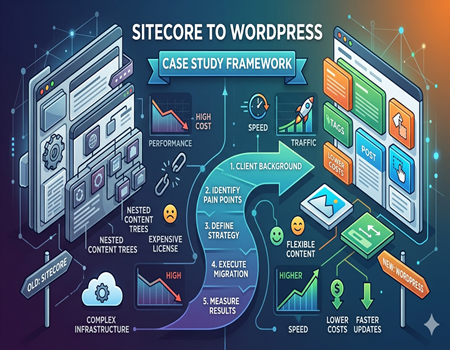
A case study is one of the most powerful ways to show real results and build trust with potential clients. Instead of just talking about services, it shows what actually worked in a real project. In the context of CMS migration, case studies help explain how a complex process was handled successfully.
Today, many businesses are moving from Sitecore to WordPress for better flexibility and lower costs. But decision-makers often want proof before making such a shift. This is where a well-structured case study becomes important.
In this blog, you will learn a simple and practical framework to create an effective Sitecore to WordPress case study. This guide will help you present your work clearly and make it useful for both users and potential clients.
What is a Case Study in CMS Migration?
A case study in CMS migration is a detailed explanation of how a website was moved from one platform to another. It focuses on the challenges faced, the steps taken, and the results achieved after migration. This helps others understand the process in a real-world context.
It usually starts with the background of the client, followed by the problem they were facing. After that, it explains the solution implemented and how the migration was executed step by step. Finally, it highlights the outcomes and improvements achieved.
Case studies are important because they provide proof of work. Instead of making claims, they show actual results. This builds confidence among potential clients who are considering a similar migration.
A well-written case study should be simple, clear, and focused on value. It should not be too technical and should be easy for non-technical users to understand.
Why Case Studies Matter for Sitecore to WordPress Migration
Case studies play a key role in helping businesses make informed decisions. When someone is planning to migrate from Sitecore to WordPress, they want to see real examples of how others have done it successfully.
They help build trust by showing real results instead of just promises. When you show before and after improvements, it becomes easier for clients to understand the value of migration.
Case studies also help explain the process in a simple way. Many people think migration is complex, but a clear case study can break it down into understandable steps.
If you offer a Sitecore To WordPress Migration Service, case studies can act as strong proof of your expertise. They not only attract potential clients but also help convert them by showing real success stories.
Key Elements of a Strong Case Study
Background of the Client
The first part of a case study should explain who the client is and what kind of website they have. This includes their industry, size, and type of business. This helps readers relate to the situation and understand the context.
Problem Statement
Next, clearly describe the problem the client was facing. It could be high costs, slow performance, or difficulty in managing content. This section should highlight the pain points that led to the decision to migrate.
Goals and Objectives
Explain what the client wanted to achieve through migration. This could include improving website speed, reducing costs, or making content management easier. Clear goals help measure success later.
Solution Implemented
This section explains how the migration was done. It should include the approach, tools, and strategies used. Keep it simple and focus on how problems were solved.
Results Achieved
Finally, show the outcomes of the migration. This can include improved performance, better SEO, cost savings, or higher engagement. Real numbers make this section more powerful and convincing.
Step-by-Step Sitecore to WordPress Case Study Framework
Understand Client Background
Start by gathering complete information about the client. Understand their business, audience, and website structure. This helps in creating a case study that is relevant and meaningful.
Identify Pain Points
Find out the main challenges the client was facing with Sitecore. These could include high maintenance costs, slow updates, or technical complexity. Clearly defining problems makes the case study stronger.
Define Migration Strategy
Plan how the migration will be carried out. Decide how content, media, and structure will be moved. A clear strategy ensures a smooth process and helps avoid errors.
Execute Migration Process
Carry out the migration step by step. This includes exporting data, transforming it, and importing it into WordPress. Make sure everything is tested properly during this stage.
Measure Results
After migration, track performance and improvements. Compare metrics like speed, traffic, and usability. This helps show the real impact of the migration.
Present Before and After Comparison
Show a clear comparison of the website before and after migration. This makes it easier for readers to understand the value and results achieved.
Real Example Structure (Sample Case Study Format)
Let’s take a simple example to understand the structure. Imagine a company with a large website built on Sitecore. They were facing high maintenance costs and slow content updates, which affected their marketing efforts.
The goal was to reduce costs and make content management easier. The team decided to migrate the website to WordPress using a structured approach.
During the migration, content was mapped properly, and SEO elements were preserved. The new WordPress website was faster and easier to manage.
After migration, the company saw improvements in website speed, reduced costs, and faster content updates. This example shows how a simple structure can clearly present a case study.
Metrics to Include in Your Case Study
Metrics are important because they show real results. One of the most common metrics is traffic growth. After migration, websites often see an increase in visitors due to better performance and SEO.
Page speed improvement is another key metric. Faster websites provide a better user experience and help improve search rankings.
Cost reduction is also an important factor. Moving from Sitecore to WordPress often reduces maintenance and development costs.
SEO performance should also be included. This can be measured through rankings, impressions, and click-through rates.
Conversion rate is another useful metric. It shows how many users are taking action on the website after migration.
Common Mistakes in Case Study Writing
One common mistake is making the case study too technical. This can confuse readers and reduce its impact. It is important to keep the language simple and easy to understand.
Another mistake is not showing clear results. Without data or measurable outcomes, the case study loses its value. Always include numbers and improvements.
Some case studies also lack proper structure. Without a clear flow, it becomes difficult for readers to follow the story.
Poor storytelling is another issue. A good case study should feel like a journey from problem to solution. This keeps readers engaged and interested.
How to Use Case Studies for Marketing
Case studies can be used in many ways for marketing. They can be published on your website to attract organic traffic through SEO. This helps bring potential clients who are searching for solutions.
They can also be used in sales presentations to show proof of your work. This builds confidence and increases chances of conversion.
Case studies can be shared on social media and used in ads to reach a wider audience. They help communicate value in a real and relatable way.
If you provide a Sitecore To WordPress Migration Service, using case studies in your marketing strategy can help you stand out and attract more clients.
Tips to Make Your Case Study More Effective
Keep your case study simple and easy to understand. Avoid using too much technical language so that it is accessible to a wider audience.
Always use real data to support your claims. Numbers make your case study more credible and impactful.
Focus on storytelling. Present the case study as a journey from problem to solution. This makes it more engaging.
Highlight the results clearly. This is the most important part of the case study and should be easy to notice.
Conclusion
A well-structured case study can be a powerful tool for building trust and showcasing your expertise. It helps potential clients understand your process and the value you can deliver.
By following a clear framework, you can create case studies that are both informative and engaging. This not only improves your content quality but also supports your marketing efforts.
If you present your work clearly and focus on results, your case studies can become a strong asset for your business growth.