MODX Maintenance Costs Explained
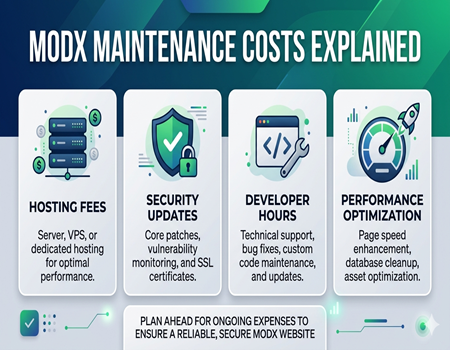
In today’s digital world, choosing the right CMS is only the first step. Maintaining that system over time is where real costs begin to show. MODX is known for its flexibility and customization, making it a popular choice for developers who want full control over website functionality. However, this flexibility often comes with ongoing maintenance responsibilities.
Many business owners focus only on the initial development cost and overlook the long-term expenses involved in keeping a MODX website running smoothly. Regular updates, security checks, performance optimization, and technical support all contribute to maintenance costs. Without proper planning, these expenses can increase over time and impact overall business budgets.
This blog will break down MODX maintenance costs in a simple and practical way. You’ll understand what factors influence pricing, what hidden costs to expect, and how to manage them effectively. By the end, you’ll have a clear idea of whether MODX is cost-efficient for your needs or if exploring alternative solutions makes more sense.
What is MODX and Why Maintenance Matters
MODX is a flexible and developer-focused CMS that allows businesses to build highly customized websites. Unlike many drag-and-drop platforms, MODX gives complete control over design and functionality. This makes it a strong choice for projects that need unique features, but it also means more technical involvement is required.
Because MODX is not a plug-and-play system, ongoing maintenance becomes an essential part of managing a website. Regular updates are needed to keep the system secure and compatible with modern technologies. Without proper maintenance, websites can become slow, vulnerable to attacks, or experience functionality issues that affect user experience.
Another important aspect is the difference between development and maintenance costs. While the initial build may seem like a one-time investment, maintaining a MODX website requires continuous effort. Tasks like fixing bugs, updating extensions, optimizing performance, and ensuring uptime all add to long-term expenses.
Maintenance also plays a key role in business growth. A well-maintained website performs better in search rankings, loads faster, and provides a smoother experience to users. On the other hand, ignoring maintenance can lead to higher repair costs later, making it a critical factor for any business using MODX.
Core Factors That Influence MODX Maintenance Costs
Website Size and Complexity
The size and complexity of a MODX website play a major role in determining maintenance costs. A simple business website with limited pages requires less effort to manage compared to a large platform with dynamic features. More pages, custom templates, and complex structures increase the time needed for updates, monitoring, and optimization.
Level of Custom Development
MODX is known for its flexibility, which often leads to heavy customization. While custom development allows unique functionality, it also increases maintenance effort. Each custom feature may require manual updates, testing, and debugging. Unlike plugin-based systems, there is no quick fix, which directly impacts the overall cost of maintaining the website.
Hosting and Server Requirements
Hosting is another key factor influencing maintenance costs. MODX websites often perform better on advanced hosting environments such as VPS or dedicated servers. These hosting solutions provide better speed and control but come at a higher price. Additionally, server management, backups, and uptime monitoring also add to ongoing expenses.
Frequency of Updates and Backups
Regular updates and backups are essential for keeping a MODX website secure and functional. The more frequently updates are required, the higher the maintenance effort. Backups also need to be properly managed and tested to ensure data safety. This ongoing process requires time and technical expertise, which increases overall costs.
Third-Party Integrations and APIs
Many MODX websites rely on third-party tools and APIs for additional functionality. These integrations require regular monitoring and updates to ensure compatibility. If any external service changes or stops working, it can impact the website’s performance. Fixing such issues often requires developer support, adding to maintenance expenses.
Developer Dependency and Availability
One of the biggest cost factors is the dependency on skilled MODX developers. Compared to more popular CMS platforms, the developer community for MODX is smaller. This makes it harder to find experienced professionals and often results in higher hourly rates. Limited availability can also delay updates and increase long-term costs.
Detailed Breakdown of MODX Maintenance Costs
Developer Charges and Support Costs
One of the biggest components of maintaining a MODX website is developer cost. Since MODX requires technical expertise, most businesses depend on skilled developers for regular updates, bug fixes, and improvements. Developers may charge hourly or offer monthly retainers, depending on the scope of work.
Hourly rates can vary widely based on experience and location, but they are generally higher due to the smaller talent pool. Even minor changes or troubleshooting tasks can take time, especially when dealing with custom-built features. Over time, these recurring expenses can significantly increase the overall maintenance budget.
Hosting and Infrastructure Expenses
Hosting is another essential cost that directly affects performance and stability. MODX websites typically run better on VPS or dedicated hosting environments rather than shared hosting. While these options provide better speed and control, they also come with higher monthly or yearly costs.
In addition to hosting, businesses may need to invest in server monitoring, backups, and security layers. These infrastructure-related expenses ensure that the website remains accessible and protected, but they add to the ongoing financial commitment required for maintenance.
Security Updates and Monitoring
Security is a continuous process, not a one-time task. MODX websites require regular updates to prevent vulnerabilities and protect sensitive data. This includes updating the core system, checking for security patches, and monitoring for potential threats.
If security is not handled properly, the cost of fixing a hacked or compromised website can be much higher than regular maintenance. That’s why many businesses invest in ongoing security monitoring services, which adds to the monthly maintenance cost but reduces long-term risks.
Performance Optimization and Bug Fixing
Maintaining website performance is crucial for user experience and SEO. Over time, websites may slow down due to outdated code, heavy scripts, or server issues. Regular performance optimization helps keep the website fast and responsive.
Bug fixing is another ongoing task that cannot be ignored. Since many MODX websites are custom-built, even small issues may require developer intervention. Identifying and resolving these problems takes time, making it an important part of the maintenance budget.
Content Updates and Technical Maintenance
Apart from technical work, content updates also contribute to maintenance costs. Adding new pages, updating existing content, or making layout changes often requires technical support in MODX. Unlike simpler CMS platforms, content changes may not always be straightforward.
Regular technical maintenance ensures that all parts of the website function correctly. From fixing broken links to ensuring compatibility with modern browsers, these small but important tasks collectively add to the overall cost of maintaining a MODX website.
Hidden Costs of Maintaining a MODX Website
Limited Developer Availability
One of the most overlooked costs of using MODX is the limited availability of skilled developers. Compared to mainstream platforms, fewer professionals specialize in MODX. This makes hiring more challenging and often leads to higher hourly rates, especially when you need urgent fixes or ongoing technical support.
Because of this scarcity, businesses may also face delays in resolving issues. Even small problems can take longer to fix if the right developer isn’t readily available. This time delay can indirectly impact business operations, conversions, and user experience, adding to the overall hidden cost.
Expensive Custom Module Maintenance
MODX websites are often built with custom modules to achieve specific functionality. While this offers flexibility, maintaining these modules can become expensive over time. If the original developer is not available, understanding and updating the custom code can be complex and time-consuming for a new developer.
As technology evolves, older modules may stop working properly or become incompatible with newer systems. Fixing or rebuilding these modules requires additional investment, making it a recurring hidden expense that many businesses don’t initially consider.
Upgrade and Compatibility Challenges
Upgrading a MODX website is not always a simple process. Major updates may require thorough testing to ensure all custom features and integrations continue to work correctly. In some cases, upgrades can even break existing functionality, leading to additional repair costs.
Compatibility issues with third-party tools and APIs can also arise over time. When external services update their systems, your website may need adjustments to stay functional. These unexpected changes often require developer intervention, increasing maintenance costs without prior planning.
Time and Efficiency Costs
Apart from direct financial expenses, time is another hidden cost. Managing updates, troubleshooting issues, and coordinating with developers can consume valuable business time. This reduces efficiency and diverts focus from core operations.
Over time, these small inefficiencies add up and can affect overall productivity. While they may not appear as direct costs, they play a significant role in increasing the true cost of maintaining a MODX website.
MODX vs WordPress Maintenance Cost Comparison
Ease of Maintenance and Usability
When comparing MODX with WordPress, one of the biggest differences is ease of maintenance. WordPress is designed to be user-friendly, allowing even non-technical users to handle basic updates and content changes. In contrast, MODX often requires developer support for even small modifications, increasing dependency and cost.
WordPress also provides automatic updates, a simple dashboard, and a large support ecosystem. This reduces the time and effort needed for routine maintenance. MODX, while flexible, demands more manual work, making it less convenient for businesses without a dedicated technical team.
Plugins vs Custom Development
WordPress offers thousands of ready-to-use plugins for almost every feature, from SEO to security and performance optimization. These plugins reduce the need for custom coding, which helps lower maintenance costs. Most issues can be resolved quickly by installing or updating a plugin.
On the other hand, MODX relies heavily on custom development. While this provides flexibility, it also means every change or update may require coding. This increases both time and cost, especially when dealing with complex features or integrations that need continuous maintenance.
Developer Cost and Availability
Another major factor is developer cost. WordPress has a massive global community, making it easier and more affordable to hire skilled developers. Competition keeps pricing relatively reasonable, and businesses have more options to choose from.
In comparison, MODX developers are fewer, and their expertise often comes at a premium. This limited availability not only increases hourly rates but also makes it harder to find quick support when needed. Over time, this difference significantly impacts the total cost of ownership.
Long-Term ROI and Scalability
From a long-term perspective, WordPress often provides better return on investment. Lower maintenance costs, easier scalability, and faster implementation of features make it a practical choice for growing businesses. MODX may work well for highly customized projects, but ongoing costs can rise as the website evolves.
This is why many businesses eventually consider switching to WordPress. Companies looking to simplify operations and reduce expenses often explore solutions like MODX to WordPress Migration Services, especially when dealing with complex CMS platforms. Migrating to WordPress can streamline maintenance and improve overall efficiency.
How to Reduce MODX Maintenance Costs
Reducing maintenance costs for a MODX website starts with a proactive approach. Regular updates and monitoring help prevent major issues before they become expensive problems. Keeping the core system, extensions, and server environment updated ensures better security and performance, ultimately reducing the need for frequent emergency fixes.
Choosing the right hosting solution also plays an important role in cost control. A reliable hosting provider with good performance and support can minimize downtime and technical issues. While cheaper hosting may seem attractive initially, it often leads to slower performance and higher maintenance effort in the long run.
Another effective way to reduce costs is by limiting unnecessary customizations. While custom features provide flexibility, they also increase complexity and maintenance requirements. Focusing only on essential functionalities makes the website easier to manage and reduces dependency on developers for frequent updates or fixes.
Hiring the right developer or agency can also make a big difference. Experienced professionals can build and maintain the website more efficiently, saving both time and money. Instead of relying on ad-hoc fixes, opting for a structured maintenance plan ensures consistent support and predictable costs, helping businesses manage their budgets more effectively.
When Should You Consider Switching from MODX?
There comes a point when maintaining a MODX website starts costing more than the value it delivers. If you notice that regular updates, bug fixes, and small changes require constant developer support, it may be a sign that the platform is becoming inefficient for your business needs.
Another clear indicator is rising maintenance costs over time. If your budget for keeping the website functional continues to increase without significant improvements in performance or growth, it’s worth reconsidering your CMS choice. High developer dependency and slow turnaround times can also impact your ability to scale and respond quickly to business needs.
You should also think about switching when upgrades and integrations become difficult. If adding new features or integrating tools requires heavy customization or leads to compatibility issues, it can slow down your business operations. In such cases, a more flexible and widely supported platform may be a better fit.
Many businesses facing these challenges explore solutions like moving to WordPress for easier management and lower long-term costs. Options such as MODX to WordPress Migration Services are often considered when transitioning from complex CMS platforms to more scalable and cost-efficient solutions.
Conclusion
Managing a MODX website involves more than just initial development. Long-term maintenance costs—ranging from developer support and hosting to security updates and performance optimization—can add up quickly. Understanding these expenses in advance helps businesses plan better and avoid unexpected financial strain.
Throughout this guide, it’s clear that while MODX offers flexibility and control, it also demands consistent technical involvement. Hidden costs such as limited developer availability, complex upgrades, and ongoing customizations can make it less cost-effective over time, especially for growing businesses that need agility and scalability.
That’s why it’s important to regularly evaluate whether your current CMS is still meeting your needs. Many businesses eventually shift to platforms like WordPress to reduce maintenance efforts and improve efficiency. Exploring options such as MODX to WordPress Migration Services can be a practical step toward lowering costs and simplifying website management in the long run.