DNN vs WordPress for Corporate Websites
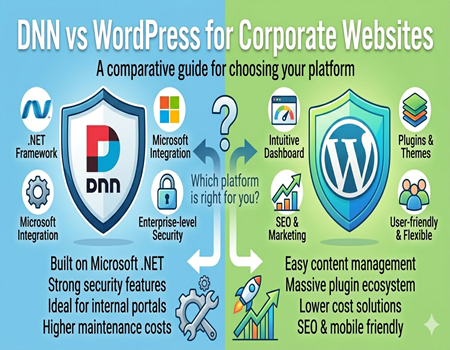
Choosing the right platform for a corporate website is a critical decision that directly impacts performance, scalability, and long-term growth. Businesses today need websites that are not only visually appealing but also easy to manage, secure, and optimized for search engines.
Two popular platforms that often come into comparison are DNN (DotNetNuke) and WordPress. Both have their own strengths and are used by organizations worldwide, but they serve slightly different purposes depending on technical requirements and business goals.
In this blog, we will break down DNN vs WordPress in simple terms so you can clearly understand which platform is better suited for your corporate website. Whether you are planning a new website or thinking about switching platforms, this guide will help you make a smart decision.
Understanding DNN (DotNetNuke)
DNN, also known as DotNetNuke, is a content management system built on the Microsoft .NET framework. It is commonly used by enterprises that already rely on Microsoft technologies and prefer a structured, secure environment for managing their digital presence.
One of the biggest advantages of DNN is its strong integration with the Microsoft ecosystem. Businesses using tools like Azure or other .NET applications often find it easier to manage their website within the same environment without compatibility issues.
DNN is also known for its enterprise-level security and scalability. It offers role-based access control and advanced permissions, which makes it suitable for organizations that require strict control over user access and content management.
Understanding WordPress
WordPress is the most popular content management system in the world, powering millions of websites across different industries. It is known for its ease of use, flexibility, and ability to handle everything from small blogs to large corporate websites.
One of the main reasons businesses prefer WordPress is its user-friendly interface. Even non-technical users can easily manage content, update pages, and publish blogs without needing coding knowledge, which makes it highly accessible.
Another major advantage of WordPress is its massive ecosystem of plugins and themes. These tools allow businesses to customize their website according to their needs without building everything from scratch, saving both time and cost.
Core Differences Between DNN and WordPress
Technology and Ease of Use
DNN is built on the .NET framework, which makes it more suitable for developers who are familiar with Microsoft technologies. It requires technical expertise to manage and customize, which can increase dependency on developers for regular updates.
WordPress, on the other hand, is based on PHP and is designed for ease of use. It provides a simple dashboard where users can manage content, install plugins, and customize the site without technical knowledge, making it ideal for businesses that want flexibility.
Customization and Flexibility
DNN offers customization options, but they are often limited compared to WordPress. Custom development in DNN can be complex and time-consuming, especially when building unique features for a corporate website.
WordPress stands out when it comes to flexibility. With thousands of plugins and themes available, businesses can easily add features like contact forms, SEO tools, or e-commerce functionality without heavy development work.
Cost and Hosting Requirements
DNN generally requires specialized hosting environments that support .NET, which can be more expensive. Additionally, development and maintenance costs are often higher due to the need for skilled developers.
WordPress is more cost-effective as it works on a wide range of hosting providers. It also offers free and premium plugins, making it easier for businesses to manage budgets while still building a powerful corporate website.
Performance and Scalability Comparison
Performance is an important factor for any corporate website, especially when handling large amounts of traffic. DNN is known for its stable performance in enterprise environments, particularly when hosted on optimized Microsoft servers.
However, achieving high performance with DNN often requires proper configuration and experienced developers. Without optimization, the platform may not deliver the expected speed, especially for content-heavy websites.
WordPress, when properly optimized with caching and performance plugins, can deliver excellent speed and performance. It can handle high traffic volumes efficiently, making it suitable for growing businesses and content-driven websites.
Security Comparison
Security is a top concern for corporate websites, and both DNN and WordPress offer strong security features when managed correctly. DNN has a reputation for enterprise-grade security, making it a preferred choice for organizations with strict compliance requirements.
It includes built-in features like role-based permissions and secure architecture, which help in controlling access and protecting sensitive data. This makes it ideal for internal portals and enterprise applications.
WordPress is also secure, but it requires proper maintenance. Regular updates, secure plugins, and best practices like strong passwords can make WordPress just as safe for corporate use when handled responsibly.
SEO and Marketing Capabilities
Search engine optimization plays a major role in the success of any corporate website. WordPress has a clear advantage in this area due to its wide range of SEO plugins and easy content management system.
Businesses can easily optimize pages, manage meta tags, and create SEO-friendly content without technical complexity. This makes WordPress a powerful choice for companies focusing on digital marketing and organic growth.
DNN, while capable of SEO, does not offer the same level of flexibility and tools as WordPress. Managing SEO elements can be more complex, which may limit marketing efficiency for businesses relying heavily on search visibility.
Cost and Maintenance
Cost is often a deciding factor when choosing a platform for a corporate website. DNN usually involves higher initial development costs due to its technical nature and the need for skilled developers.
Maintenance costs can also be higher because updates and customizations require technical expertise. Hosting expenses may add to the overall budget, especially when using enterprise-level infrastructure.
WordPress is more budget-friendly in comparison. It offers affordable hosting options and a large number of free tools, making it easier for businesses to manage costs while still maintaining a high-quality website.
When Should You Choose DNN?
DNN is a good choice for businesses that are already working within the Microsoft ecosystem. If your company relies heavily on .NET applications and needs seamless integration, DNN can provide a stable and compatible environment.
It is also suitable for organizations that require strict security and controlled access to content. Enterprises with internal portals or complex user roles may benefit from the structured approach offered by DNN.
However, it is important to consider the long-term cost and dependency on developers before choosing this platform for your corporate website.
When Should You Choose WordPress?
WordPress is ideal for businesses that want flexibility, ease of use, and strong SEO capabilities. It allows companies to manage their website without technical complexity, making it perfect for marketing teams and content creators.
It is also a great option for businesses that want to scale quickly. With its vast ecosystem, WordPress can adapt to changing requirements without requiring major redevelopment.
For companies focused on digital growth, content marketing, and user experience, WordPress offers a more practical and efficient solution compared to DNN.
DNN to WordPress Migration – Why Businesses Are Switching
Many businesses today are moving from DNN to WordPress due to changing digital needs and the demand for more flexible platforms. One of the main reasons is the complexity and cost associated with maintaining DNN websites over time.
WordPress provides a more user-friendly environment where teams can easily manage content, update pages, and implement marketing strategies without relying heavily on developers. This shift allows businesses to become more agile and responsive.
Another major reason for migration is SEO and marketing performance. WordPress makes it easier to optimize content and improve search visibility, which directly impacts traffic and lead generation.
Businesses looking for reliable Dot Net Nuke (DNN) to WordPress Migration Services often aim to improve performance, reduce costs, and gain better control over their website.
Challenges in Migration
Migrating from DNN to WordPress is not always a simple process. One of the biggest challenges is transferring data such as content, images, and user information without losing important details.
Another issue is maintaining the existing URL structure. If not handled properly, it can affect search engine rankings and lead to traffic loss, which is why careful planning is required.
To ensure a smooth transition, businesses should consider professional support. Proper migration strategies can help minimize risks and ensure that the new website performs better than the old one.
Final Verdict: Which Platform is Better for Corporate Websites?
Both DNN and WordPress have their own strengths, and the right choice depends on your business needs. DNN is suitable for enterprises that require strong security and integration with Microsoft technologies.
However, for most businesses, WordPress offers a better balance of flexibility, cost-effectiveness, and ease of use. It allows companies to focus on growth rather than technical complexities.
If your goal is to build a modern, scalable, and SEO-friendly corporate website, WordPress is often the more practical choice in today’s competitive digital landscape.
Conclusion
Choosing between DNN and WordPress is an important decision that can impact your business in the long run. While DNN provides a structured and secure environment, it may not be the best fit for companies looking for flexibility and ease of management.
WordPress stands out as a powerful and user-friendly platform that supports growth, marketing, and scalability. It allows businesses to adapt quickly and stay competitive in the digital space.
Before making a decision, it is important to evaluate your requirements carefully. If needed, consider expert guidance to ensure that your website platform aligns perfectly with your business goals.