DNN vs WordPress: Maintenance & Licensing Costs
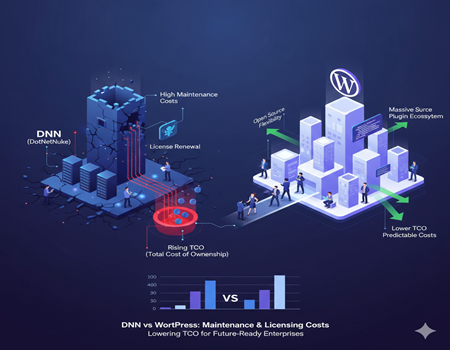
For enterprises, choosing a content management system is no longer just a technical decision—it is a long-term financial commitment. While features, security, and scalability are often discussed, maintenance and licensing costs quietly become the largest expenses over time. Many organizations realize too late that their CMS drains budgets through ongoing upgrades, developer dependency, infrastructure requirements, and licensing renewals.
In 2026, enterprises are under intense pressure to optimize operational costs while still delivering fast, secure, and flexible digital experiences. Marketing teams expect rapid updates, IT teams want stability, and leadership wants predictable budgets. This is where CMS total cost of ownership (TCO) becomes critical.
DNN and WordPress are both well-known platforms, but their cost structures differ significantly. While DNN was once favored by enterprises operating in Microsoft-heavy environments, WordPress has evolved into a powerful enterprise CMS with a very different financial model.
This blog breaks down maintenance costs, licensing fees, hidden expenses, and long-term ROI to help enterprises make informed decisions. If cost efficiency, scalability, and future readiness matter to your organization, this comparison will give you the clarity you need.
Understanding DNN and WordPress at a High Level
DotNetNuke (commonly known as DNN) is a CMS built on the Microsoft .NET framework. It gained enterprise adoption due to its structured permissions, modular design, and compatibility with Windows-based infrastructure. Historically, it suited organizations with centralized IT control and strict governance.
WordPress, on the other hand, is an open-source CMS that started as a blogging platform but has evolved into a full-fledged enterprise solution. Today, it powers complex corporate websites, media portals, and high-traffic global platforms.
From a cost perspective, these platforms follow very different philosophies. DNN leans toward licensed editions and paid modules, while WordPress relies on open-source flexibility with optional paid components. Understanding this difference is essential before comparing maintenance and licensing costs in detail.
Licensing Costs: DNN vs WordPress
Licensing is one of the most visible cost differences between DNN and WordPress.
DNN follows a commercial licensing model for its advanced editions. Enterprises often require features available only in paid versions, which involve annual license fees. These licenses may also need renewal to access updates, security patches, and support. Additionally, many DNN modules essential for enterprise functionality are paid, increasing upfront and recurring costs.
Licensing expenses do not stop at the CMS level. Enterprises may need multiple licenses across environments such as staging, testing, and production. Over time, this creates a layered cost structure that grows with scale.
WordPress operates under an open-source license, meaning there is no mandatory licensing cost to use the core platform. Enterprises are free to install, customize, and scale without paying CMS license fees. Costs arise only when organizations choose premium themes, plugins, or managed services.
This difference makes WordPress licensing far more predictable. Enterprises pay for what they need rather than paying to access the platform itself. Over multiple years, this licensing model alone can lead to substantial savings compared to DNN.
Core Maintenance Costs Explained
CMS maintenance goes beyond occasional updates. It includes security patching, performance optimization, compatibility testing, backups, infrastructure monitoring, and troubleshooting.
As websites grow, maintenance becomes more frequent and complex. Enterprises must also ensure minimal downtime, especially for revenue-generating or customer-facing platforms. This makes maintenance planning and budgeting essential.
The real cost difference between DNN and WordPress becomes clear when examining how much effort, expertise, and time is required to keep each platform running smoothly. Maintenance costs are not just financial—they impact productivity, speed, and innovation.
DNN Maintenance Costs: What Enterprises Pay Long-Term
DNN maintenance is typically developer-heavy. Most updates, module changes, and performance improvements require skilled .NET developers familiar with the platform’s architecture. These specialists are often costly and harder to source.
Upgrading DNN versions can be complex. Enterprises must test module compatibility, address deprecated features, and plan downtime. Even security updates may involve manual intervention, increasing operational overhead.
Another cost factor is customization. Many enterprise DNN implementations rely on custom-built modules. While powerful, these custom components require long-term maintenance, documentation, and developer continuity. When original developers leave, knowledge gaps increase support costs.
Over time, enterprises find that DNN maintenance becomes less about innovation and more about keeping the system stable. This ongoing effort significantly impacts budgets and slows digital progress.
WordPress Maintenance Costs: Enterprise Perspective
WordPress offers a much more flexible maintenance model. Core updates are frequent, well-documented, and often automated. Enterprises can choose between manual updates, managed hosting, or professional maintenance services.
The availability of WordPress developers is another cost advantage. Enterprises are not limited to niche skill sets, which reduces hiring and support expenses. Many routine tasks can be handled without developer involvement, empowering content and marketing teams.
Managed WordPress hosting further simplifies maintenance by bundling updates, backups, security monitoring, and performance optimization into predictable monthly costs. This allows enterprises to plan budgets with confidence.
Overall, WordPress maintenance costs are generally lower, more scalable, and easier to control compared to DNN—especially for organizations managing multiple websites or regions.
Plugin & Module Ecosystem Cost Comparison
DNN relies heavily on paid modules for advanced functionality. While some free options exist, enterprises often require premium modules to meet performance, security, or integration needs. Limited competition in the marketplace keeps prices relatively high.
WordPress benefits from a massive plugin ecosystem. Enterprises can choose from thousands of plugins, many of which are free or competitively priced. This variety encourages innovation and cost efficiency.
Additionally, WordPress integrations with analytics, CRM systems, marketing automation tools, and eCommerce platforms are often readily available, reducing the need for custom development and associated costs.
Hosting & Infrastructure Cost Differences
DNN hosting typically requires Windows servers and SQL Server, which can be more expensive than alternative environments. Scaling infrastructure often involves additional licensing and configuration complexity.
WordPress supports a wide range of hosting options, including Linux-based servers, cloud platforms, and fully managed environments. Enterprises can optimize performance and cost based on traffic patterns and regional needs.
This flexibility allows WordPress hosting costs to scale efficiently, making it easier to manage global or high-traffic enterprise websites without excessive infrastructure spending.
Security, Compliance & Hidden Maintenance Costs
Security costs are often underestimated. With DNN, enterprises must actively monitor vulnerabilities, apply patches, and ensure compliance through manual processes. Delays in updates increase risk exposure.
Hidden costs also arise from compliance audits, penetration testing, and incident response. These tasks demand specialized expertise and time.
WordPress, when managed properly, benefits from continuous security improvements, automated updates, and a large security-focused community. Many managed services include proactive monitoring, reducing both risk and internal workload.
Over time, these hidden maintenance savings make a noticeable difference in total CMS cost.
Cost Comparison Table: DNN vs WordPress
| Cost Area | DNN | WordPress |
|---|---|---|
| CMS Licensing | Paid editions | Free (core) |
| Module/Plugin Costs | Mostly paid | Many free options |
| Developer Dependency | High | Moderate to low |
| Hosting Costs | Higher | Flexible |
| Long-Term ROI | Declining | Strong |
This comparison highlights why enterprises are reassessing CMS investments. WordPress offers better cost transparency and adaptability.
When Cost Becomes the Reason to Migrate
Cost becomes a migration trigger when maintenance consumes more budget than innovation. Enterprises stuck in long upgrade cycles, rising licensing fees, and increasing developer dependency often reach a tipping point.
At this stage, organizations explore options to modernize while preserving content, SEO, and functionality. Many enterprises consider a structured approach to Migrate Website from DotNetNuke To WordPress, ensuring cost reduction without operational disruption.
Migration is not just about saving money—it is about reallocating budgets toward growth, performance, and digital strategy.
Which Platform Is More Cost-Efficient in 2026?
In 2026, cost efficiency is defined by predictability, scalability, and control. WordPress aligns better with these priorities due to its open-source model, large ecosystem, and flexible maintenance options.
DNN still serves certain use cases, but for most enterprises, its cost structure feels restrictive compared to modern alternatives. Organizations focused on long-term digital agility increasingly favor platforms that reduce operational friction.
Conclusion: Making a Smarter CMS Investment Decision
Comparing DNN vs WordPress from a maintenance and licensing perspective reveals a clear shift in enterprise priorities. While DNN played a strong role in earlier enterprise CMS adoption, its ongoing costs and rigidity are driving organizations to reconsider.
WordPress offers lower entry costs, predictable maintenance, and a future-ready ecosystem that supports growth and innovation. For enterprises aiming to optimize budgets while improving digital performance, WordPress represents a smarter long-term investment.
Ultimately, the right CMS is not the one with the most features—it is the one that delivers value without unnecessary cost.