When Sitecore Still Makes Sense
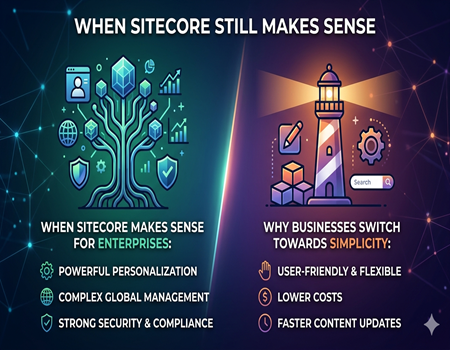
Sitecore is known as a powerful enterprise-level content management system that offers advanced features like personalization, automation, and integration. Many large businesses have used it for years to manage complex digital experiences. However, in recent times, many companies have started exploring simpler platforms like WordPress.
Even though the trend is shifting, Sitecore is not outdated. It still makes sense in specific situations where businesses need high-level customization and control. The decision to stay or move depends on your goals, budget, and technical requirements.
This blog will help you understand when Sitecore is still the right choice and when it might not be. By the end, you will have a clear idea of whether continuing with Sitecore is beneficial for your business or if you should consider alternatives.
What is Sitecore and Why It’s Popular?
Sitecore is an enterprise content management system designed to handle complex websites and digital experiences. It allows businesses to manage content, customer data, and marketing campaigns from a single platform. This makes it a strong choice for organizations that require advanced digital capabilities.
One of the main reasons for its popularity is its personalization feature. Sitecore can deliver different content to users based on their behavior, location, and preferences. This helps businesses create better user experiences and improve engagement.
It is also highly scalable, which means it can handle large websites with heavy traffic. Many global brands use Sitecore because it can manage multiple websites, languages, and regions from one system.
Another reason is its integration capability. Sitecore can connect with other enterprise tools like CRM systems and marketing platforms. This makes it suitable for companies that rely on data-driven strategies and complex workflows.
Why Many Businesses Are Moving Away from Sitecore
Despite its powerful features, many businesses are moving away from Sitecore due to its high cost. Licensing fees, maintenance, and development expenses can become difficult to manage, especially for small and medium-sized businesses.
Another major issue is complexity. Sitecore often requires skilled developers for even small changes. This slows down content updates and increases dependency on technical teams. For marketing teams, this can be frustrating and time-consuming.
There are also faster and simpler alternatives available today. Platforms like WordPress allow businesses to manage content easily without heavy technical involvement. This is one of the reasons why migration is becoming common.
If you are planning to switch, a Sitecore To WordPress Migration Service can help you move your content smoothly while maintaining structure and SEO. This ensures that your transition is efficient and risk-free.
When Sitecore Still Makes Sense
For Large Enterprise Websites
Sitecore is still a strong choice for large enterprises that manage high-traffic websites. These organizations often require complex systems to handle multiple users, large amounts of content, and global operations. Sitecore provides the stability and scalability needed for such environments.
It also supports multi-site management, allowing businesses to control several websites from a single platform. This is especially useful for companies operating in multiple regions with different branding or content strategies.
When Personalization is Critical
If your business relies heavily on personalized user experiences, Sitecore can be a great fit. It allows you to deliver tailored content based on user behavior, preferences, and past interactions. This level of personalization is difficult to achieve with simpler platforms.
For example, e-commerce or service-based businesses can use Sitecore to show different content to different users, improving engagement and conversions over time.
Complex Content and Data Structures
Sitecore is ideal for websites with complex content structures and data relationships. If your website includes multiple content types, dynamic components, or integrations with external systems, Sitecore can handle it effectively.
It allows you to create flexible templates and manage structured data in a way that supports advanced functionality. This makes it suitable for large-scale digital ecosystems.
Strong Security and Compliance Needs
Enterprises that deal with sensitive data often require strong security measures. Sitecore provides enterprise-level security features that help protect data and ensure compliance with regulations.
Industries like finance, healthcare, and government benefit from these capabilities because they need secure and reliable systems to manage user information.
Multi-language and Global Management
Sitecore is also a good choice for businesses operating globally. It supports multiple languages and regions, making it easier to manage content for different audiences.
You can control localization and translation from one system, ensuring consistency across all markets. This is important for brands that want to maintain a unified global presence.
Key Benefits of Staying on Sitecore
One of the biggest benefits of staying on Sitecore is its advanced personalization capabilities. Businesses can create highly targeted experiences for users, which can improve engagement and conversion rates. This makes it a valuable tool for companies focused on customer experience.
Another advantage is its strong integration capabilities. Sitecore can connect with various enterprise tools, allowing businesses to manage data and marketing efforts more effectively. This creates a seamless workflow across different systems.
Scalability is another key benefit. Sitecore can handle large volumes of traffic and content without performance issues. This makes it suitable for growing businesses with complex needs.
It also provides a centralized platform for managing content, marketing, and customer data. This helps organizations maintain consistency and improve efficiency in their digital operations.
Limitations You Should Still Consider
Despite its advantages, Sitecore comes with certain limitations. The most significant one is cost. Licensing fees, hosting, and development expenses can add up quickly, making it less suitable for smaller businesses.
Another limitation is the dependency on developers. Even simple updates may require technical expertise, which slows down the workflow and increases costs. This can be challenging for teams that need quick changes.
Maintenance is also complex. Regular updates, security patches, and performance optimization require ongoing effort and resources. This adds to the overall workload.
The learning curve is another factor. Sitecore is not easy to use for beginners, and it takes time to understand its features. This can make onboarding difficult for new team members.
Sitecore vs WordPress: Quick Decision Guide
Choose Sitecore If
You should choose Sitecore if your business requires enterprise-level features, advanced personalization, and complex integrations. It is suitable for organizations with large teams and the budget to support ongoing development and maintenance.
It is also a good option if your website needs to handle multiple regions, languages, and high traffic volumes without compromising performance.
Choose WordPress If
WordPress is a better choice if you want simplicity and flexibility. It allows you to manage content easily without heavy technical involvement. This makes it ideal for small and medium-sized businesses.
It is also more cost-effective and faster to implement. If you are planning to switch, using a Sitecore To WordPress Migration Service can help you move your website smoothly without losing important data or SEO value.
Signs It’s Time to Move Away from Sitecore
One clear sign is increasing cost without matching value. If you are spending a lot on maintenance and development but not seeing significant returns, it may be time to reconsider your platform.
Another sign is slow content updates. If your team struggles to make quick changes, it can affect your marketing and growth. A simpler system may be more suitable in such cases.
Low usage of advanced features is also an indicator. If you are not using Sitecore’s full capabilities, you may be paying for features you do not need.
An overcomplicated setup can also become a problem. If your system feels too complex for your needs, switching to a simpler platform can improve efficiency.
How to Decide: Stay or Migrate?
The decision depends on your business goals and requirements. If you need advanced features and have the resources to manage them, staying on Sitecore may be the right choice.
You should also consider your team’s capabilities. If your team prefers simplicity and faster workflows, WordPress may be a better option.
Budget is another important factor. Compare the cost of maintaining Sitecore with the value it provides. This will help you make a practical decision.
Think about future growth as well. Choose a platform that supports your long-term strategy and helps you scale effectively.
Conclusion
Sitecore is still a powerful platform, but it is not the right fit for every business. It works best for enterprises that need advanced features, strong security, and complex integrations.
At the same time, many businesses are moving to simpler platforms like WordPress for better flexibility and lower costs. The right choice depends on your needs and goals.
By understanding when Sitecore makes sense, you can make a smarter decision for your business and ensure long-term success.